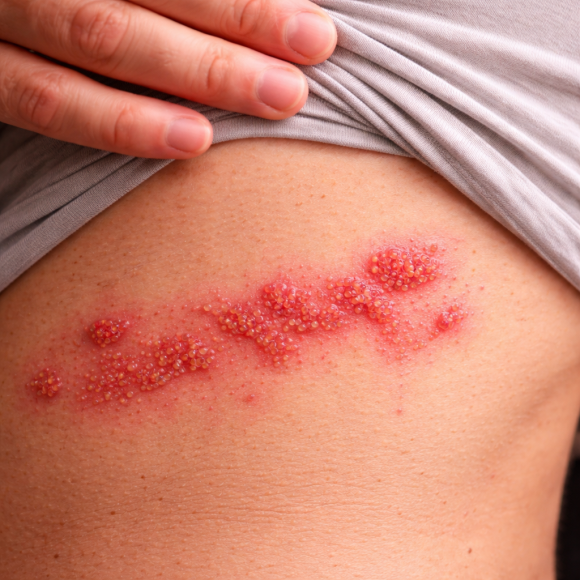
Can Adult Shingles Spread and Lead to Chickenpox in Babies?
If someone in the family gets shingles at home, the first worry is usually, “Could it spread to the baby?”
Especially if you are raising an infant or young child whose immune system has not yet fully developed, it is only natural to be more concerned.
To give the conclusion first, shingles does not spread in the same form, but it can be transmitted to a baby as chickenpox.
However, the way it spreads and the level of risk are a little different from what many people usually think.
- Why does shingles happen, and how does it spread?
Shingles is a disease that occurs when the chickenpox virus (Varicella-zoster virus), which has been dormant in the body, becomes active again when the immune system weakens.
The important point is that this virus is not a completely new infection, but a “reactivation.”
However, because the shingles patient’s blisters still contain the virus,
if someone who has never had chickenpox comes into direct contact with these blisters, they can become infected.
In other words,
-
Adult → shingles
-
Baby → chickenpox
It can appear in these different forms.
- How dangerous is it for babies?
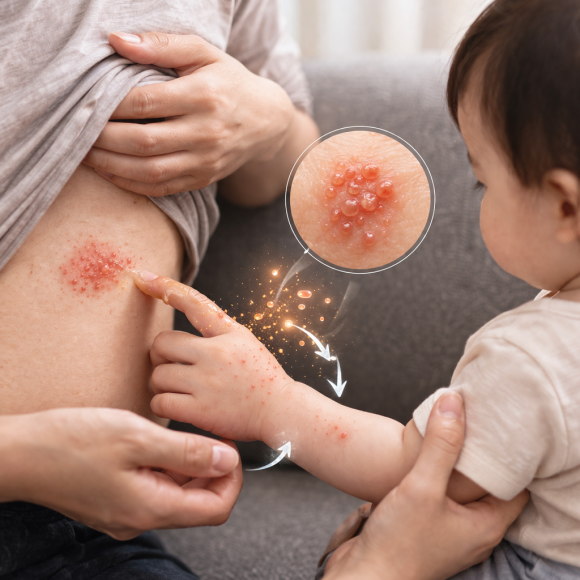
In the case of babies, since they have not yet had chickenpox, exposure to the virus may lead to chickenpox.
The risk of infection is especially higher in situations such as the following.
-
Touching the area with blisters directly
-
Coming into contact with fluid from the blisters
-
When hygiene management is not properly maintained
On the other hand, because shingles is not mainly spread through the air, simply being in the same space does not usually mean it will spread right away.
In other words, the key is “contact.”
- What should you do in practice?
If complete isolation is difficult, following just the three steps below can greatly reduce the risk.
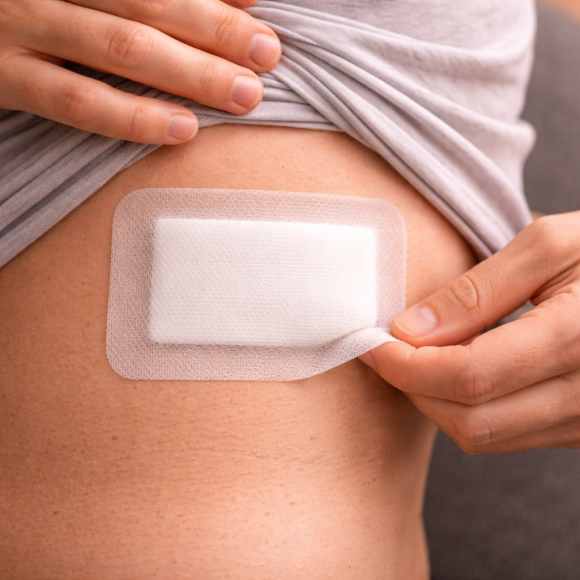
Make sure the shingles area is covered with clothing or gauze so the baby does not touch it directly.
- Maintain thorough hand hygiene
Before changing diapers or touching the baby, be sure to wash your hands, and use hand sanitizer if needed.
In particular, be careful that the area with blisters does not touch the baby’s skin.
Also, once the lesions have fully dried into scabs, the contagiousness is almost gone.
So if you are especially careful during the first 1 to 2 weeks, the burden after that becomes much lower.
- In these cases, you should consult a doctor
If the baby shows any of the following symptoms, medical attention is necessary.
In particular, babies under 12 months of age need extra caution because symptoms can progress quickly.
Shingles is not a disease that spreads to babies in exactly the same way, but it can be a source of infection that leads to chickenpox through contact.
Fortunately, since contact rather than the air is the main route of transmission,
If you follow just these three things well, prevention is possible in most situations.
Rather than complete isolation, it is important to respond safely within a realistically manageable range.
With just a little care, you can get through it safely while living with your baby.