One of the most common questions before hair transplant surgery is, “When should I stop minoxidil, and when should I start again?”
It is not simply a matter of medication use; it is a key factor that affects both bleeding control during surgery and graft survival after surgery.
In particular, as more research on low-dose oral minoxidil (LDOM) has accumulated recently, guidelines different from the past have been proposed.
In this article, I will summarize the latest international consensus and clinical experience, focusing on the questions that patients most often ask.
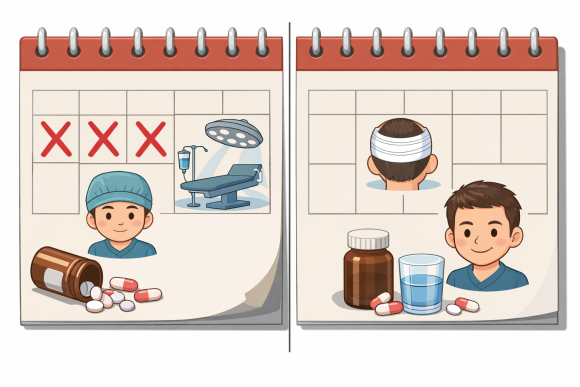
Minoxidil Before and After Hair Transplant: Summary
| Using minoxidil before and after hair transplant is a key variable that affects surgical outcomes. |
|---|
| Topical minoxidil is recommended to be stopped 7 days before surgery and resumed 7–14 days after surgery. |
| Low-dose oral minoxidil can be continued until just before surgery or stopped the day before, and it is beneficial to restart it quickly within 1–3 days after surgery. |
| This is the latest international expert consensus that takes into account both bleeding control and graft survival. |
| However, individualized adjustment is necessary depending on blood pressure, edema, and underlying medical conditions. |
Q1. Do I really need to stop minoxidil before a hair transplant?
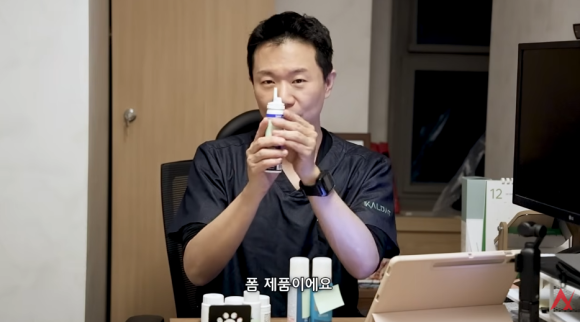
Topical minoxidil should, in principle, be stopped.
Because it dilates the blood vessels in the scalp, it can increase bleeding during surgery and make it harder to secure a clear surgical field, increasing the difficulty of the procedure.
In addition, because the alcohol content can irritate the scalp, stopping it at least 7 days before surgery is recommended.
By contrast, low-dose oral minoxidil causes only minimal systemic blood pressure changes, so it is not a medication that must necessarily be stopped.
Recent international consensus also mentioned that it may be continued³.
Q2. Is it okay to take oral minoxidil until the day of surgery?
At low doses (0.625–2.5 mg), it has been reported that it does not cause major problems¹².
However, in actual clinical practice, it is often recommended to stop it the day before, considering fasting on the day of surgery and anesthesia plans.
The key point is not an “absolute contraindication,” but “adjustment according to the situation.”
Q3. When should I restart after surgery?
This is the most important point.
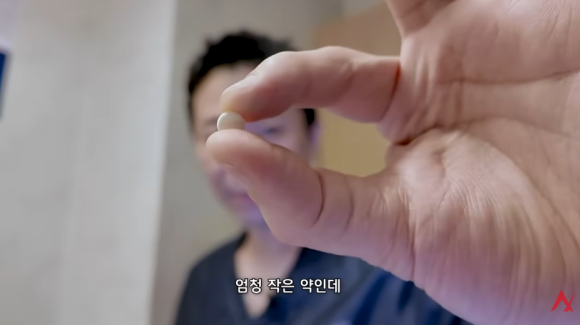
Oral minoxidil is recommended to be restarted early within 1–3 days after surgery.
There is expert consensus that this may help increase graft survival by improving microcirculation around the transplanted follicles³.
By contrast, topical minoxidil should wait until wound healing takes priority.
In general, it should be started after 7–14 days, once scabs have fallen off and the wound has stabilized.
Q4. If I stop the medication for a week before surgery, will my hair loss get worse?
A short period of discontinuation does not cause a rapid worsening of hair loss.
Because hair loss is a condition that progresses slowly due to hormones and the hair follicle cycle, stopping for about a week has little clinical impact.
In fact, optimizing the surgical environment is more important for long-term results.

Q5. Is shedding caused by minoxidil?
Shedding is not caused by the medication itself, but by changes in the hair growth cycle.
In particular, after surgery, the process in which existing weak hairs fall out while new, thicker hairs grow in happens at the same time.
Oral minoxidil can promote this process, but ultimately it contributes to improving hair density¹².
Q6. What should I do if I develop facial swelling (edema) or hypertrichosis?
The representative side effects of low-dose oral minoxidil are
and they have been reported in about 10–20% of cases¹.
In most cases, these can be managed with dose adjustment alone, but if there is weight gain or persistent edema, consultation is necessary.
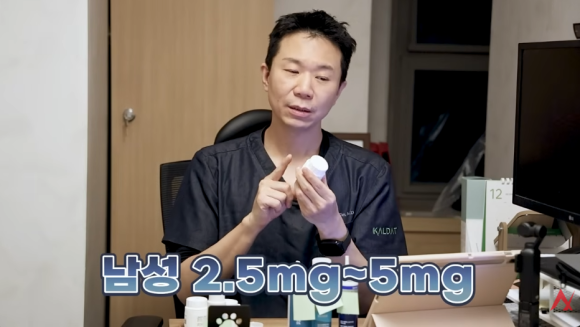
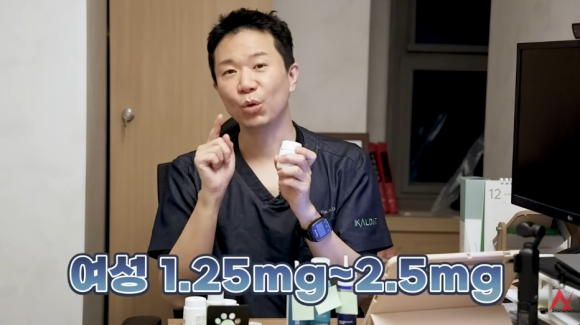
Q7. Can women also use oral minoxidil?
Yes, but the dose is important.
For women, it is generally adjusted according to the following 기준².
If pregnancy is planned, consultation with a specialist is essential.
Q8. Does minoxidil really affect graft survival?
Recent studies and expert consensus acknowledge a positive effect.
In particular, early postoperative use was agreed to potentially contribute to
³.
| Category | Before surgery | After surgery | Key point |
|---|
| Topical minoxidil | Stop 7 days before | Resume after 7–14 days | Prevent bleeding + minimize wound irritation |
| Oral minoxidil | Continue or stop 1 day before | Resume after 1–3 days | Increased blood flow → supports graft survival |
| Recommended dose for men | - | 1.25–2.5 mg | Focus on efficacy |
| Recommended dose for women | - | 0.625–1.25 mg | Minimize side effects |
| If side effects occur | - | Reduce dose or consult | Check for edema and hypertrichosis |
In hair transplant care, minoxidil is not just a simple adjunctive treatment,
but a strategic medication that affects both the preoperative environment and postoperative outcomes.
Based on these principles, individualized adjustment is the most important thing.
In particular, recent guidelines are focusing more on “when to restart” than on “whether to stop.”
It is no exaggeration to say that this timing can make a difference in the outcome.
Now it’s time for hairhair, this was Kim Jin-oh.
May new hair grow forever.

Written by: Kim Jin-oh of New Hair Plastic Surgery (Public Relations Director, Korean Association of Plastic Surgeons / Academic Director, Korean Society of Laser Dermatology and Hair)
[References]
-
Vañó-Galván, S. et al. (2021). Safety of low-dose oral minoxidil for hair loss: A multicenter study of 435 patients. Journal of the American Academy of Dermatology, 84(6), pp.1644-1651. cited: "Low-dose oral minoxidil has a good safety profile as a treatment for different types of alopecia."
-
Randolph, A.C. et al. (2021). Oral minoxidil treatment for hair loss: A review of efficacy and safety. Journal of the American Academy of Dermatology, 84(3), pp.737-746. cited: "Oral minoxidil is an effective and well-tolerated alternative for both male and female pattern hair loss."
-
International Delphi Consensus Group (2024). Standardized approach to minoxidil use in hair transplant patients. Dermatologic Surgery. cited: "Consensus was reached on using low-dose oral minoxidil starting 1-3 days post-operatively to optimize graft survival."

Related posts worth reading