Why do I see no change even after using it for 6 months?
This is one of the most common questions in hair loss treatment.
Even when the same medication is used, some people notice their hair becoming thicker and fuller, while others feel little to no change.
Minoxidil, in particular, is a medication where this difference appears very clearly.
This difference is not simply a matter of luck or perception; it is closely related to biochemical processes happening inside our bodies.
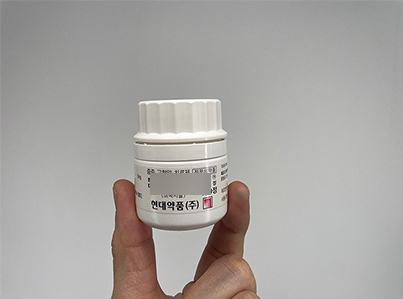
Why Does Minoxidil Work Differently for Everyone? (When It Starts Working, Itching) Summary
| Minoxidil is a prodrug that must be activated in the body to work¹ |
|---|
| Differences in effect vary greatly depending on the activity of the follicular enzyme (SULT1A1)⁴ |
| Compared with topical formulations, oral minoxidil has higher activation efficiency through liver metabolism² |
| Low-dose oral minoxidil has a relatively low rate of side effects³ |
| In treatment, a strategy that considers the individual’s response is more important than the drug itself |

Q1. Why does minoxidil work differently from person to person?
Minoxidil is not a medication that works immediately when applied.
It is a prodrug that only becomes effective after an activation process in the body.¹
The key role in this process is played by the sulfotransferase enzyme (SULT1A1).
This enzyme converts minoxidil into its active form, minoxidil sulfate, which stimulates the hair follicles.⁴
The problem is that the activity of this enzyme differs from person to person.
When enzyme activity is high, a relatively small amount may still be effective, but when activity is low, a response may not appear even with sufficient use.
In clinical practice, a significant number of patients who show no effect after a certain period of use are often explained by these differences in enzyme activity.
Q2. What is the difference between topical minoxidil and oral minoxidil?
Topical minoxidil depends on enzymes present in the hair follicles for activation.
In contrast, oral minoxidil undergoes metabolism in the liver and is activated more consistently.²
Because of this, topical formulations can vary greatly from person to person, while oral formulations can be expected to produce relatively consistent effects.
In fact, oral minoxidil shows high absorption, and its effectiveness has recently been confirmed even at low doses.
However, because oral medication affects the entire body, the decision must be made through consultation with a specialist.

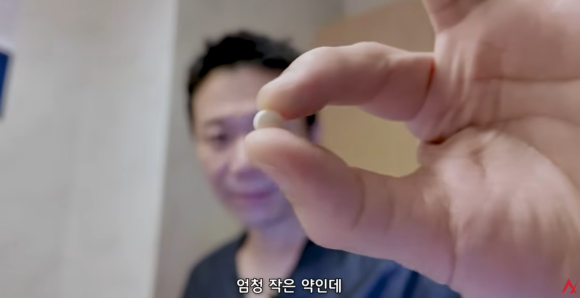
Q3. Is low-dose oral minoxidil safe?
Concerns about oral minoxidil are mainly related to cardiovascular side effects.
However, recent studies have reported that when taken at low doses of 5 mg per day or less, the incidence of side effects is relatively low.³
Typical side effects include edema and palpitations, with frequencies of about 2–3% and 1–5%, respectively.
Still, extra caution is necessary for those with pre-existing heart disease or related symptoms, and if unusual symptoms appear during use, the medication should be stopped immediately and evaluated.
Q4. How does minoxidil induce hair growth?
Minoxidil does more than simply increase blood flow.
First, it activates K_ATP channels to dilate blood vessels, thereby increasing blood flow to the hair follicles.
It also prolongs the hair growth phase, helping hair remain longer, and activates cellular signaling pathways to stimulate hair follicle cell activity.
Through these combined actions, the key is creating an environment in which thinning hair can become thicker again.

Q5. Why does scalp irritation occur when using topical minoxidil?
In many cases, the problem is not minoxidil itself but the solvent ingredients in the formulation.
Ethanol and propylene glycol are used to dissolve the drug, and in some patients they can cause scalp irritation or itching.
In such cases, switching to a foam type or choosing a low-irritation formulation may help, and if symptoms persist, switching to oral treatment can also be considered.
Q6. What should I do if there is no effect after using it for more than 6 months?
If there is no change even after a certain period of use, simply extending the treatment duration may not solve the problem.
In that case,
-
evaluating enzyme activity
-
changing the treatment method
-
re-diagnosing the type of hair loss
it is important to check the cause again through steps such as these.
In actual clinical practice, there are more cases of improvement when the strategy is adjusted than when the same treatment is repeated and time is lost.
| Situation | Response strategy | Expected effect |
|---|
| No response after 6 months | Evaluate enzyme activity and change treatment | Identify the cause of non-response |
| Scalp irritation | Change formulation or switch to oral treatment | Improve adherence |
| Inconvenience of taking medication | Consider low-dose oral treatment | Improve convenience |
| Hypertrichosis occurs | Adjust dosage | Reduce side effects |
| Cardiovascular symptoms | Stop immediately and evaluate | Ensure safety |
What matters in minoxidil treatment is not the drug itself, but how that drug acts in each individual.
Differences in effect come not from simply having a certain body type, but from differences in enzyme activity and metabolic processes.
Therefore, before deciding that it is ineffective, a process of checking whether the current treatment matches your condition is necessary.
Hair loss treatment is not about one single right answer, but about adjusting it according to each person’s response.
Now it’s time for hairhair, Kim Jino.
May new hair be born (必生新毛).

Written by: Kim Jino, New Hair Plastic Surgery (Public Information Director, Korean Association of Plastic Surgeons / Academic Director, Korean Association of Laser Dermatology and Hair)
References
-
Oliveira, G.T. et al. (2025) 'Minoxidil as a Prodrug: Review of Chemical, Pharmacological, and Technological Aspects in Alopecia Therapeutics', Mini-Reviews in Medicinal Chemistry, (VoR). cited: "Minoxidil (base) is the pharmacologically inactive prodrug... requires hepatic sulphation to generate its active metabolite, minoxidil sulphate."
-
Gupta, A.K. et al. (2022) 'Minoxidil: A comprehensive review', Journal of Dermatological Treatment, 33(4), pp. 1896-1906. cited: "90% of an oral dose undergoes hepatic metabolism, mainly through conjugation, hydroxylation, and sulphation reactions."
-
Jimenez-Cauhe, J. et al. (2025) 'Characterization and management of adverse events of low-dose oral minoxidil treatment for alopecia: A narrative review', Journal of Clinical Medicine, 14(6), 1805. cited: "Cardiovascular adverse events associated with low-dose oral minoxidil (LDOM; ≤ 5 mg/day) are uncommon."
-
Ramos, P.M. et al. (2020) 'Oral minoxidil bio-activation by hair follicle outer root sheath cell sulfotransferase enzymes predicts clinical efficacy', Journal of the European Academy of Dermatology and Venereology, 34(1), pp. e40-e41. cited: "Sulfotransferase activity in hair follicle... predicts clinical efficacy."
Related posts to read together