People who are considering hair loss treatment may have heard this term at least once.
It is “hair follicle cloning.”
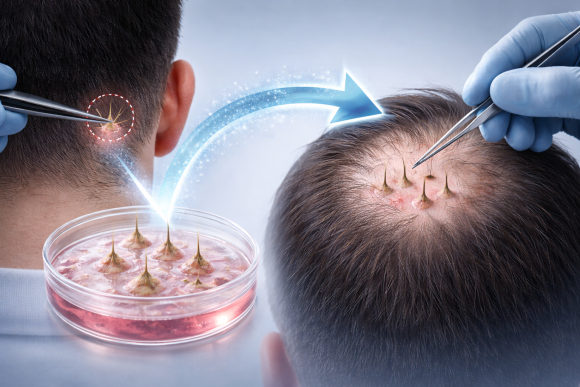
If conventional hair transplantation is a treatment that “moves existing hair,” hair follicle cloning is a completely different concept in that it is a treatment that “creates hair.”
In particular, for patients with insufficient donor hair at the back of the head, it has long been a technology that has attracted attention because it could be a solution that is almost a “cure.”
However, research so far has always run into limitations.
The problem was that “hair can be made, but it cannot be kept growing.”
When Will Hair Follicle Cloning Be Possible? Research on Artificial Hair Follicles, a Hair Loss Cure Technology Summary
| The key to hair follicle cloning is not ‘hair creation’ but ‘reproducing the hair cycle.’ |
|---|
| In the past, epithelial stem cells + dermal papilla cells alone made long-term maintenance difficult. |
| Recent research revealed that mesenchymal cells are essential for hair follicle growth and cycling. |
| In mouse experiments, normal hair cycling was successfully maintained for about 68 days. |
| However, for application in humans, mass culture technology and cost issues still need to be solved. |

The real reason hair follicle cloning was difficult
In previous studies, the key elements needed for hair formation were considered to be two things.
However, artificial hair follicles made with this combination only resulted in “abnormal hair” that grew a few times and then stopped.
In other words, they failed to reproduce the core of hair, the “cycle.”
The paradigm changed by recent research
Recently, a Japanese research team presented a completely different perspective from the existing one.¹
“There was a third cell missing.”
That cell was mesenchymal cells.
These cells were not just auxiliary; they were a key factor that allowed the hair follicle to 자리잡게 깊숙이 within the skin.
In particular, only when the hair follicle descends into the fat layer can the normal cycle of hair falling out and growing again be maintained.
If this structure is not formed, the hair will not continue to grow no matter how much it appears.
| Category | Conventional Hair Transplant | Hair Follicle Cloning |
|---|
| Principle | Follicle relocation | Follicle creation |
| Supply | Limited | Theoretically unlimited |
| Suitable for | Cases with sufficient donor hair at the back of the head | Frontal and extensive hair loss |
| Maintenance | Preserves the characteristics of existing hair | Can reproduce the cycle |
| Current availability | Available | Research stage |

Q1. How is hair follicle cloning different from previous research?
Previous research focused on “getting hair to grow.”
But this study’s key achievement was creating a structure that allows hair to grow repeatedly over and over again.¹
In other words, it was not just creation, but cloning vitality itself.
Q2. When might hair loss treatment using hair follicle cloning become available?
At present, it is still at the animal experiment stage.
It is expected to take at least 5 to 10 more years before clinical application.
However, unlike before, the fact that the core mechanism has now been identified has greatly increased the possibility of commercialization.
Q3. If hair follicle cloning becomes possible, will I no longer need to take hair loss medication?
Theoretically, that is possible.
In particular, if cells from the occipital area that are not affected by DHT are used, dependence on medication could be reduced.
However, in actual clinical use, the scalp environment (blood flow, inflammation, etc.) also has an effect, so whether medication can be completely stopped requires further research.
Q4. How much will hair follicle cloning cost?
It is highly likely to be very expensive at first.
The reason is
All of these are required.
However, over time, it may become stabilized at a level similar to current hair transplantation.
Q5. Will cloned hair follicles also grow and shed naturally?
This is the most important result of this study.
Over about 68 days, hair cycle repetition of more than three rounds was confirmed.¹
This means that it is not merely engraftment, but actual functioning like living biological tissue.
Q6. Is hair follicle cloning possible even at an older age?
There is definitely potential.
However, because stem cell activity may decline with age,
-
cell selection
-
culture technology
are likely to become even more important.
Hair follicle cloning is not just a hair loss treatment technology.
It is “a technology that changes the paradigm of hair loss treatment itself.”
This study is significant because it was the first to solve the key problem of “reproducing the hair cycle,” which had remained unresolved until now.
Although time is still needed before commercialization, it has now become less a matter of “if” and more a matter of “when.”
The technology closest to a cure for hair loss, hair follicle cloning, is much closer than you might think.
Now it is time for hairhair to grow, Kim Jino.
A single new hair must be born.
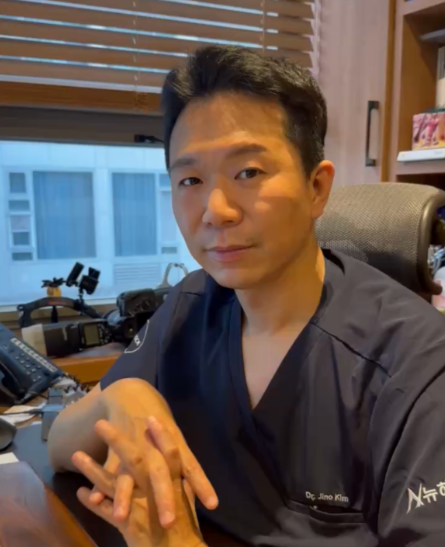
Written by: Kim Jino of New Hair Plastic Surgery (Public Relations Director, Korean Society of Plastic and Reconstructive Surgeons / Academic Director, Korean Society of Laser Dermatology and Hair)
References
-
Toyoshima, K.e., et al. (2026). Fully functional hair follicle organ regeneration using organ-inductive potential stem cells with an accessory mesenchymal cell population in an in vitro culture system. Biochemical and Biophysical Research Communications, 810, 153459. cited: "Here, we identified a cell population... with PDGFRa/Scal /CD34high+ mesenchymal cells... which plays essential roles in entering and promoting the downgrowth phase of the hair cycle."
-
Takeo, M., et al. (2021). Expansion and characterization of epithelial stem cells with potential for cyclical hair regeneration. Scientific Reports, 11, 1173. cited: "Identification of epithelial stem cells with potential for cyclical hair regeneration provides a basis for functional organ regeneration therapy."