「Reviewed and approved by the Korean Medical Association Medical Advertising Review Committee No. 251118-중-202094」
Hair transplantation can be divided into two methods: the strip method and follicular unit extraction.
One of the most common questions patients have when considering surgery is the practical differences, such as scars, pain, surgery time, and return to daily life.
Hair transplant scar comparison
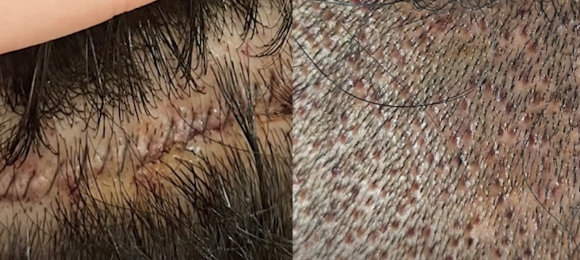
Strip method: A line-shaped scar may remain at the sutured area.
It is not easily visible with a typical hair length, but if the hair is cut very short, the line may become noticeable.
Follicular unit extraction: Because there is no incision, incision scars are minimized, and tiny dot-shaped wounds are distributed evenly.
Even if the hair is only a little bit long, they are covered and not visible, and because the scars are spread out, they often are not noticeable.
Pain comparison for hair transplantation
In hair transplantation, the strip method and follicular unit extraction differ in the nature of pain.
In the strip method, the back scalp is incised in a band shape and then sutured, so there may be discomfort such as pulling or tightness for the first day or two after surgery.
However, because the surgery is performed in a way that avoids nerve damage, severe pain is less common than many people expect.
Follicular unit extraction removes follicles one by one, minimizing incision scars, but since thousands of tiny puncture-like wounds are created, mild stinging or itching may appear right after surgery.
It may be easier to understand if you compare it to a cut wound and a wound from being pricked many times with a needle.
Overall, the strip method may be a little more uncomfortable, but with both methods, pain severe enough to prevent daily life is uncommon.
Postoperative pain control is generally said to be sufficiently managed with pain medication alone.
Surgery time comparison
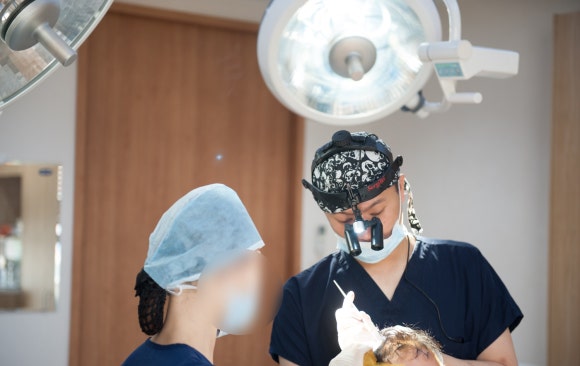
Based on 2,000 hairs, the strip method removes a section of scalp at once and then separates the follicles, so it is relatively short, generally taking about 2 to 3 hours.
Follicular unit extraction is often done over an average of 4 hours or more because the doctor harvests each follicle individually.
Adjusting to daily life after hair transplantation
With the strip method, there may be pulling or discomfort for several days, but most patients can return to normal daily life starting the day after surgery.
Follicular unit extraction causes less pain and has faster recovery, so returning to work immediately after surgery is relatively easier.
Hair transplantation at New Hair Plastic Surgery Clinic
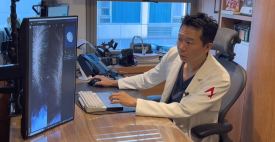
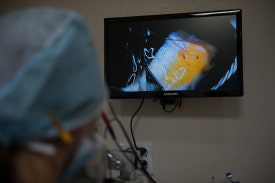
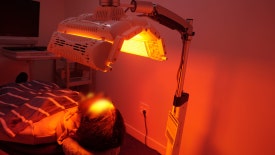
Hair transplantation is not simply a matter of the surgical method itself.
Optimal results can be expected when the entire system, from preoperative diagnosis to the surgical process and postoperative care, is organically connected.
- Hair loss diagnosis to check hair loss and scalp condition
- Three-day postoperative care to help improve graft survival
- Careful suturing and precise harvesting techniques by experienced Director Kim Jin-oh
Safety is prioritized at every stage before and after surgery.
Accordingly, we help patients choose a method suited to their individual scalp condition and lifestyle, and ultimately pursue natural-looking results and a high level of satisfaction.
The effect of this review approval is limited to this page