Dog Hair Allergy Symptoms, From Self-Check to Treatment
Life with a pet dog brings a lot of joy, but for some people, it can also cause unexpected discomfort.
This is dog hair allergy.
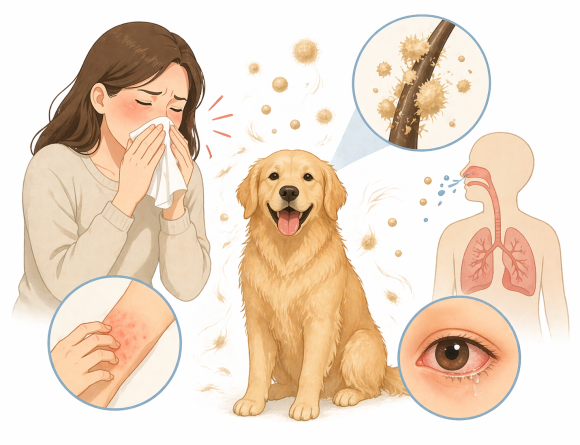
To be exact, symptoms often occur not because of the hair itself, but because of an immune reaction to dander (dead skin flakes), saliva, and urine proteins shed by the dog.
At first, it is often mistaken for a simple cold or skin problem, so it is commonly left untreated.
So today, I’ll organize the symptoms, self-check methods, and medicines and treatment options in an easy-to-understand way.
What are the main symptoms of dog hair allergy?
Dog allergy often appears in both the respiratory system and the skin at the same time.
Typical symptoms include:
-
Nasal congestion, sneezing, clear runny nose
-
Itchy eyes, redness, increased tearing
-
Itchy skin, hives, rash
-
Coughing, feeling short of breath (asthma symptoms in severe cases)
A particularly distinctive pattern is that symptoms worsen when you are in contact with a dog or in the same space, and improve when you are away.
Self-check method
Before visiting a hospital, there are simple ways to check for yourself.
✔ If 3 or more of the following apply, it may be worth suspecting an allergy
-
Your eyes or nose become itchy after touching a dog
-
Symptoms are worse only in certain places (home, a friend’s house)
-
Symptoms continue even after cleaning
-
They recur regardless of the season
-
Symptoms decrease when taking antihistamines
However, self-checking is only for reference. For an accurate diagnosis, it is important to confirm it through an allergy test (blood test or skin prick test).
What are the treatment options? Medication treatment
When symptoms appear, medicine is the fastest way to help. Common types of medicine include:
-
Antihistamines: Relieve sneezing, runny nose, and itching
-
Steroid nasal spray: Reduces nasal congestion and inflammation
-
Bronchodilators: Used when there is coughing or difficulty breathing
If symptoms are mild, they may be controlled with over-the-counter medicine, but if they continue or worsen, a doctor’s prescription is needed.
Fundamental solutions
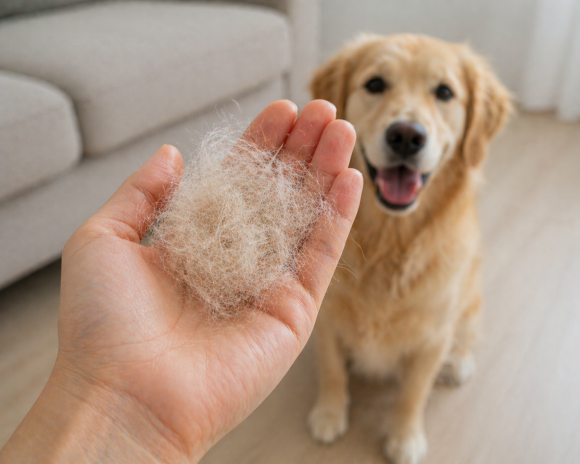
More important than simply suppressing symptoms with medicine is reducing the cause.
- Environmental management
- Immunotherapy (allergy shots)
If symptoms are severe, treatment that changes the body’s underlying sensitivity through immunotherapy is also possible.
This method works by exposing the body to small amounts of the allergen over a period of time so that it can adapt.
Dog hair allergy can reduce quality of life beyond simple discomfort, but fortunately it is a condition that can be managed and treated.
Many people worry about whether they should give up their pet dog, but in most cases, proper management is enough to live together.
If symptoms keep recurring, do not endure them—getting examined to check your condition accurately is the wisest choice.