What to Do When Hair Gets Stuck in the Skin: Should You See a Dermatologist?
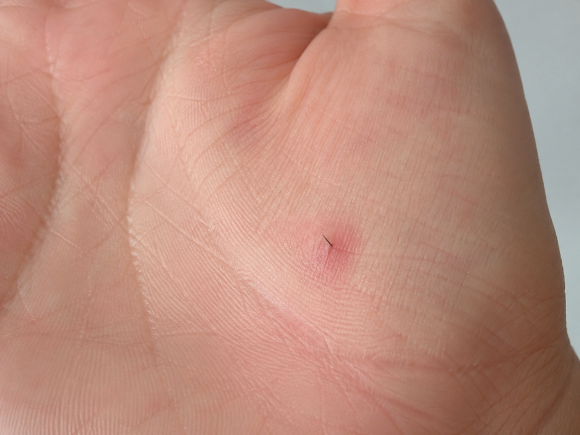
Sometimes, while showering, you may notice a black line on your skin and, on closer inspection, find that a hair has grown into the skin.
Some people find it on the chin or neck, while others notice it on the legs or underarms.
At first glance, it is easy to think, “Huh? Why is there a hair inside the skin?” and feel startled.
In fact, this happens more often than you might think.
It is especially common in people who shave or remove hair frequently, and it is often called an “ingrown hair.”
The problem is that many people try to dig it out with their fingernails or a needle as soon as they see it.
But doing that often makes the inflammation worse and can leave scars or pigmentation behind.
Today, let’s take a simple look at why hair gets stuck in the skin and how to care for it.
Why Does Hair Grow Into the Skin?
Normally, hair is supposed to grow outward from the skin.
However, for various reasons, the hair may not come out properly and instead curl back into the skin, which causes the problem.
These symptoms may appear
Symptoms vary slightly from person to person, but they usually look like a small pimple.
-
Raised red bump
-
Itching
-
Stinging
-
Hair that looks like a black line under the skin
-
A small lump-like feeling when touched
-
In severe cases, pus or inflammation
In the beard area, it often looks like shaving irritation, and on the legs, it can be mistaken for keratosis pilaris or a small pimple.
Why You Should Not Dig It Out Forcefully
The most important thing here is not to forcefully dig it out for no reason.
Just because you can see it does not mean you should pick at it with your fingernails or poke it with a needle. It may feel relieving for a moment, but for the skin, it is a fairly significant injury.
If bacteria get in through that opening, the inflammation can worsen, and brown marks or pigmentation may remain for a long time afterward.
In particular, areas with sensitive skin such as the face and neck are more likely to scar, so extra caution is needed.
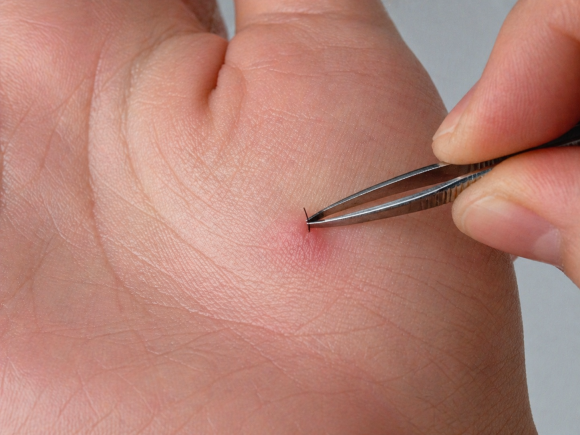
If the tip of the hair is only slightly visible near the skin’s surface, it may be possible to gently remove it with disinfected tweezers.
However, if it is deeply embedded or the area is swollen and painful, it is better not to try to handle it on your own.
How to Manage It at Home
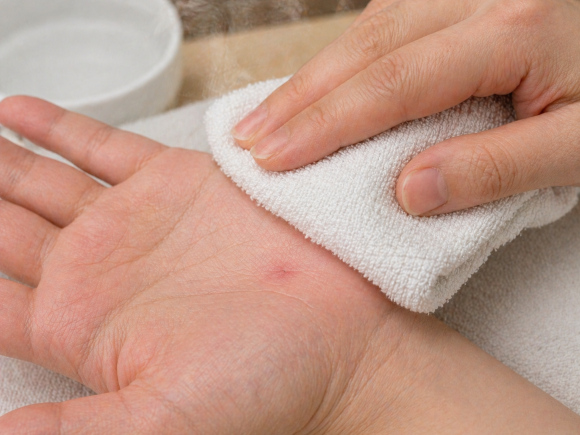
At home, a warm compress can unexpectedly help.
Softening the skin with a warm towel for a few minutes can make it easier for the hair to come out naturally.
And for a while, it is better to avoid shaving or scratching the affected area.
That is because repeated irritation can cause it to keep coming back in the same spot.
Exfoliation can help too, but scrubbing too hard can have the opposite effect. Gentle care is best.
Moisturizing is also important. If the skin becomes too dry, dead skin cells build up more easily, so keeping the skin hydrated may help.
When Should You Visit a Dermatology Clinic?
It is a good idea to see a dermatologist if any of the following apply.
-
Pus has formed
-
Swelling and pain are severe
-
It keeps recurring in the same spot
-
The skin begins to darken with pigmentation
-
It feels hard to the touch or the affected area is spreading
That is because if it has progressed beyond a simple ingrown hair into inflammatory folliculitis, medication may be needed.
At first, having a hair stuck in the skin may not seem like a big deal.
But repeated irritation can leave marks that last longer than expected.
In particular, trying to rush and forcefully remove it often makes the situation worse.
Surprisingly, the best approach may simply be to reduce skin irritation and manage it gently over time.