「Reviewed and approved by the Medical Advertising Review Committee of the Korean Medical Association No. 251104-중-201053」
Hair loss in women can appear in different ways depending on age.
In particular, during periods when hormonal changes occur, many people experience thinning hair or a reduction in hair volume.
This kind of female hair loss is not merely an external issue; it can also affect confidence and social life, so early recognition and consistent care are important.
It is important to keep observing changes in the hair and to look at your lifestyle patterns and environmental factors as well.
Reasons Female Hair Loss Occurs
When menopause begins, female hormones decline sharply.
Estrogen plays a role in blocking, to some extent, the hair-loss effects of male hormones, but as this protective barrier weakens, hair loss becomes more likely.
Although male hormones themselves also decrease, the effects of dihydrotestosterone become relatively stronger, causing hair follicles to shrink and hair to gradually thin.
- Changes in the scalp and blood flow
As people age, the scalp skin becomes thinner and blood vessels also narrow, making blood circulation less smooth.
As nutrient supply decreases, hair cannot grow sufficiently and falls out more easily.
- Reduced immunity and scalp problems
When immunity weakens after menopause, scalp inflammation and seborrheic dermatitis are more likely to develop,
and recovery becomes slower.
Chronic inflammation can damage hair follicles, increase the number of empty pores, and make hair regrowth more difficult.
Lack of sleep, lack of exercise, irregular meals, drinking, and smoking can further
disrupt hormonal balance and accelerate the progression of hair loss.
Symptoms That Appear
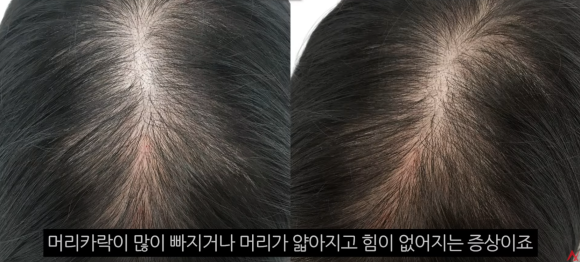
Widening part line: Hair at the crown part line decreases,
so the scalp becomes easily visible.
Thinning hair: The thickness of the hair becomes noticeably
slimmer than before.
Overall reduction in hair volume: When tying up or combing the hair, it feels like it is coming out in handfuls.
Loss of elasticity: Hair hangs limp without strength, and styling does not
last long.
Sudden increase in hair loss: Around menopause,
hair loss may increase rapidly.
Treatment Approaches for Female Hair Loss
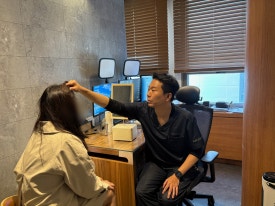
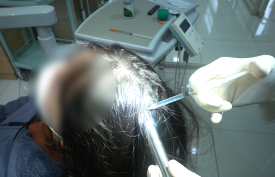
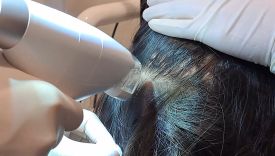
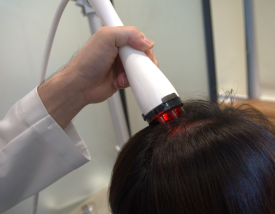
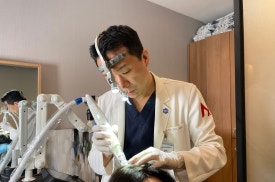
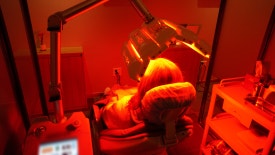
Female hair loss varies from person to person in cause and rate of progression, so customized treatment is necessary.
-
Medication treatment: Through sufficient consultation, topical agents such as minoxidil and medications such as spironolactone may be considered.
-
Injection treatment: Nutrients and growth factors are delivered directly to the scalp.
-
Combination treatment program: Better results can be expected when medication, injections, and device-based treatments are combined.
How Long Should Treatment Continue?
Many people ask, “How long do I need to keep treating hair loss?”
Treatment effects usually become noticeable after 3 to 6 months of consistent treatment.
In cases with strong genetic factors or rapid progression, stopping treatment may allow hair loss to progress again.
Therefore, the most realistic approach is to focus treatment intensively when symptoms are severe, and then continue with regular checkups and ongoing management afterward.
What New Hair Hair Transplant Clinic Tells You
Treatment Process and Management Direction
Female hair loss should not simply be dismissed as a sign of aging; it should be viewed as a complex issue combining hormonal changes and lifestyle habits.
If early diagnosis and consistent management are carried out, the progression of hair loss can be slowed and hair health can be maintained for longer.
At New Hair Hair Transplant Clinic, we diagnose the individual causes of hair loss and
suggest a variety of treatment options such as medication, injections, device-based treatment, hair transplantation, and scalp micropigmentation according to the situation.
In cases where long-term management is needed, such as hereditary hair loss, we operate customized programs that can be continued steadily in line with the patient’s lifestyle patterns.
The validity of this review approval applies only to this review approval.