Hair transplantation is often thought of as a simple procedure that just places hair into the scalp, but in reality, it is closer to a complex tissue recovery process in which thousands of microscopic wounds occur at the same time.
Patients also ask questions like, “What determines graft survival rate?” and “Why do some people have almost no scars while others are left with redness?” very often.
Recently, more people have come to value not just whether hair grows, but how naturally they recover and how little scarring remains.
In the end, the result of a hair transplant depends less on the number of grafts implanted and more on how healthily the scalp recovers.
How to Increase Hair Transplant Graft Survival: Key Points for Recovery Without Scars
| The key to graft survival and scar recovery after hair transplantation is controlling scalp tension and the initial inflammatory response.¹ |
|---|
| Precise slit techniques that minimize scalp damage during surgery have a major impact on natural recovery.² |
| Hyperbaric oxygen therapy and HOCl graft sprays may help with oxygen supply and inflammation suppression in the early recovery stage.⁴ |
| For scars that have already become hard and fixed, a combination of micro-punch techniques and cryotherapy is used.³ |
| Successful hair transplantation is not just the process of implanting hair; it is the process of restoring the scalp “soil” to a healthy state. |
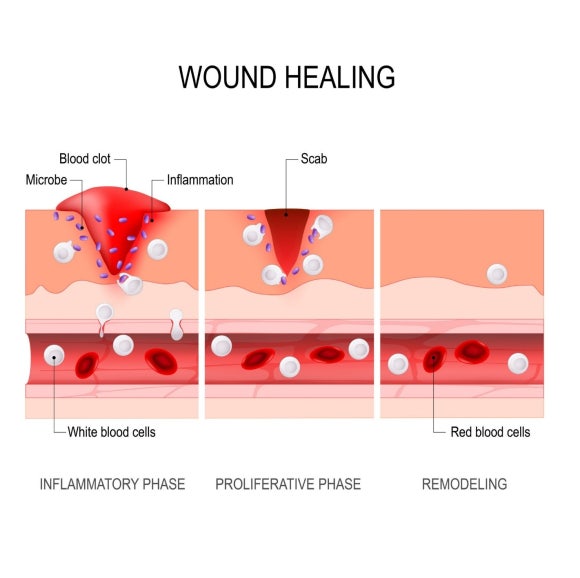
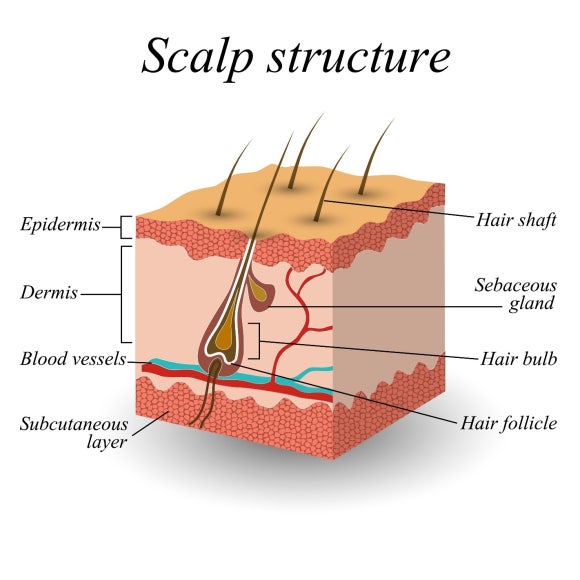
Q. Why do scars form after a hair transplant?
Scars do not simply remain because a wound occurred.
When our skin senses the force that pulls on a wound area, that is, “tension,” it recognizes it as a danger signal and begins producing excess collagen.
Medically, this is explained as the mechanotransduction pathway.¹
In simple terms, the more the skin is continuously pulled or irritated, the more the body decides it needs to “seal it off more firmly.”
That is why, in hair transplantation, it is very important not just to implant the grafts, but to minimize scalp damage with precision.
In actual clinical practice, we often see cases in which unnecessary fibrosis develops during recovery when slit size or depth is imbalanced.
Q. What is the most important factor for graft survival in the end?
Graft survival is not determined simply by whether the grafts were implanted well.
Because transplanted hair follicles do not have fully established blood vessel connections for the first few days, the recovery environment during this period is extremely important.
The main factors that affect it are as follows.
| Factors affecting graft survival | Effect |
|---|
| Scalp tension | Increased scarring and inflammation |
| Early oxygen supply | Prevention of cell necrosis |
| Inflammatory response | Increased possibility of graft failure |
| Tissue damage during surgery | Fibrosis and reduced blood flow |
| Lifestyle habits | Slower recovery |
In particular, rough handling of tissue during surgery can damage nearby microvessels, which may slow recovery.
In the end, good graft survival is closely linked not just to the number of grafts transplanted, but to how healthy of a recovery environment is created.
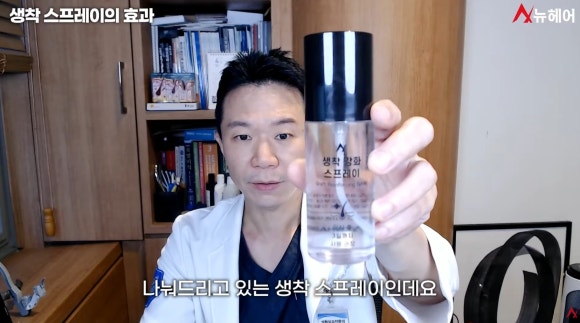
Q. Does hyperbaric oxygen therapy really help?
Recently, there have been more cases of hyperbaric oxygen therapy (HBOT) being used alongside treatment.⁴
Hyperbaric oxygen therapy supplies a high concentration of oxygen in a high-pressure environment, and it may help provide enough oxygen to cells around the follicles whose blood vessel connections are not yet fully established.
In particular, the first 72 hours after transplantation are a very important period in the graft survival process, and if oxygen deficiency becomes severe at this time, some follicles may have difficulty recovering.
Clinically, it is also sometimes used as an adjunct in patients with slow recovery or significant swelling and inflammatory reactions.
However, it is not necessarily required for every patient, and it is important to take a selective approach depending on scalp condition and recovery speed.
Q. Why are graft sprays (HOCl) said to be used continuously?
One part that patients surprisingly often find bothersome is the graft spray.
However, HOCl (hypochlorous acid)-based sprays are not simply “moisturizing mists.”
They may help keep the wound area moist, suppress bacterial growth, and reduce scab formation.
In particular, if the wound becomes too dry in the early stage of recovery, thick scabs can form and increase pressure on the surrounding tissue, which may work against the recovery process.
Initial moisture maintenance and inflammation control are considered very important management factors for maintaining graft survival and supporting recovery.

Q. Can a scar that has already become hard and fixed still be treated?
It is possible, but it is rarely resolved in a single treatment.
In cases where tissue has proliferated excessively, such as keloids or hypertrophic scars, simple ointments have their limits.
One method used at this point is a combination of micro-punch techniques and cryotherapy.³
The idea is to use a small punch to reduce pressure inside the tissue and then control the overly proliferated fibrous tissue through cryotherapy.
In particular, cryotherapy may help selectively suppress abnormal fibroblasts, and studies have reported that it may also affect vascular regulation.³
However, scar treatment is an area where consistent follow-up and repeated treatment are more important than short-term results.
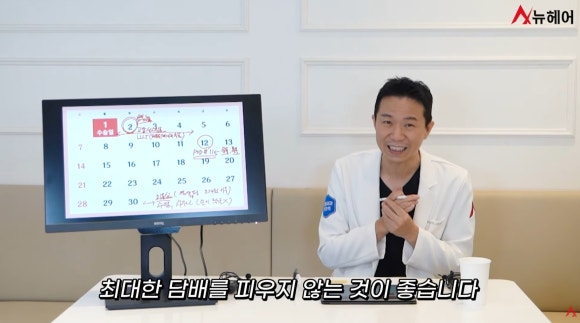
Q. Why is alcohol and smoking prohibited after surgery?
This is a question I get very often.
Many people think, “Isn’t it okay for a few days?” but in reality, it can have quite a large impact on the recovery process.
Nicotine constricts blood vessels and interferes with oxygen supply. Alcohol, on the other hand, can worsen inflammatory responses and swelling.
In other words, it can not only reduce graft survival but also slow the wound recovery process itself.
In particular, during the early recovery period, microvascular regeneration and oxygen supply are very important, so it is best to follow the smoking and drinking restrictions recommended by the medical team whenever possible.
| Management point | Key reason |
|---|
| Minimize scalp tension | Prevent scarring |
| Suppress early inflammation | Improve graft survival |
| Maintain oxygen supply | Help cellular recovery |
| Prevent excessive scab formation | Reduce tissue pressure |
| Avoid smoking and drinking | Stabilize blood flow |
The success of a hair transplant is not simply about how much hair was implanted.
In the end, what matters is how healthily the scalp environment recovers.
In particular, because tension and inflammatory responses that occur during wound healing can directly affect graft survival and scar formation, precise techniques that minimize tissue damage during surgery and systematic postoperative care must go hand in hand.
Recently, various adjunctive treatments such as hyperbaric oxygen therapy, HOCl graft sprays, and micro-punch techniques have also been used, and approaches to improve the completeness of recovery are continuing to develop.
Ultimately, for successful hair transplant results, it is not only the implantation technique that matters, but also how scientifically the recovery process is managed.
Now it is time for hairhair, this was Kim Jin-oh.
Becoming new hair (必生新毛).
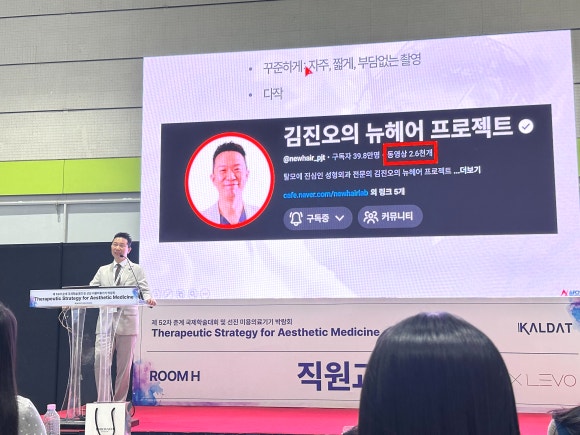
Written by: Kim Jin-oh, New Hair Plastic Surgery (Public Relations Director, Korean Association of Plastic Surgeons / Academic Director, Korean Society of Laser Dermatology and Hair)
[References]
-
Ogawa, R. (2021). The Most Current Algorithms for the Treatment and Prevention of Hypertrophic Scars and Keloids. Plastic and Reconstructive Surgery, 148(5), 1018-1033. cited: "Mechanotransduction is the key driver of fibroproliferative disorders in wound healing."
-
Limandjaja, G. C., et al. (2020). The Keloid Microenvironment: A Review. Archives of Dermatological Research, 312(1), 1-15. cited: "The balance between oxygen tension and mechanical stress determines scar outcomes."
-
Huang, C., & Ogawa, R. (2020). Fibroproliferative Disorders and Vascular Dysfunction. International Journal of Molecular Sciences, 21(11), 3840. cited: "Vascular dysfunction is a hallmark of pathological scarring and can be modulated by cryotherapy."
-
Godman, C. A., et al. (2010). Hyperbaric oxygen induces a cytoprotective and angiogenic response in human microvascular endothelial cells. Cell Stress and Chaperones. cited: "Hyperbaric oxygen enhances angiogenesis and wound healing efficiency."
Recommended related post