The Hair God is the nickname of the 뉴헤어모발성형외과의원 blog.
「Reviewed and approved by the Korean Medical Association Medical Advertising Review Committee, No. 250630-중-192500」
As more people become concerned about hair loss, various improvement methods are emerging.
Among them, SMP scalp micropigmentation is attracting attention as a method that can naturally
cover areas affected by hair loss.
This technique involves creating microscopic dots on the scalp to make it look as though hair has grown,
and it is receiving considerable interest from people concerned about hair loss.
What Is SMP Scalp Micropigmentation?

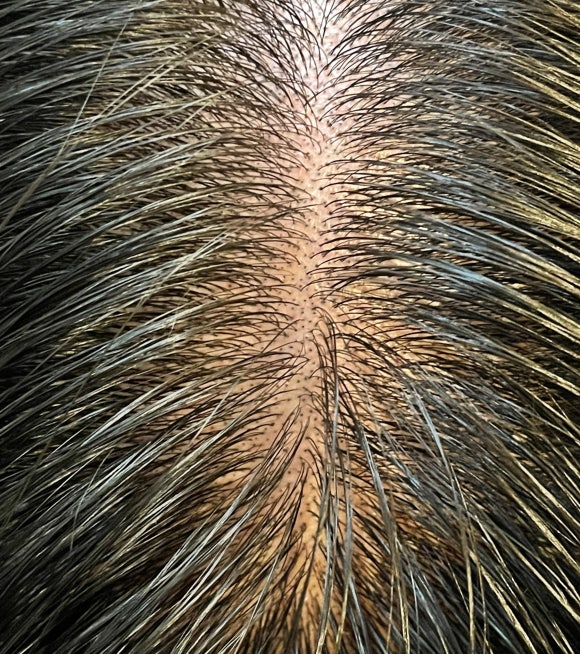
Unlike conventional tattooing, SMP requires an individualized procedure after analyzing the scalp and the condition of hair loss.
It is performed in a way tailored to the characteristics of the scalp, and it must provide a natural and even effect.
Unlike wigs or hair fibers, this procedure does not need to be repeated every day,
and it provides natural coverage that is not easily removed by external conditions,
making it a procedure with a high level of satisfaction.
It also uses a customized design that takes hair color and density into account,
allowing a style that blends naturally with the existing hair.
뉴헤어모발성형외과의원 conducts the procedure after thorough consultations
to reflect the patient’s desired style and direction,
with the goal of achieving a natural result that harmonizes with the hairstyle
rather than simply performing scalp micropigmentation.
Rather than injecting pigment as darkly as possible,
the procedure is adjusted precisely so that it looks as though hair has grown.
Situations in Which SMP Scalp Micropigmentation Is Needed
- When using hair fibers or a wig is inconvenient
If spraying hair fibers or wearing a wig to cover areas affected by hair loss every day is cumbersome,
SMP scalp micropigmentation may be an improvement option.
Because it lasts for an extended period,
it reduces the inconvenience of covering areas affected by hair loss every morning.
In particular, unlike hair fibers, there is no need to worry about them being removed by wind or rain,
and unlike a wig, there is no need to pay attention to wearing and maintaining it.
- When the crown or parting looks sparse
SMP can make it look as though hair has grown,
creating the visual effect of increased density.
When crown hair loss progresses or the parting gradually widens,
these areas can be covered naturally to create the appearance of fuller hair.
- A guaranteed scalp micropigmentation program for thorough aftercare
뉴헤어모발성형외과의원 works to support the treatment results by providing
six months of follow-up appointments and retouching.
Because SMP results may vary slightly depending on the characteristics of the scalp,
progress is monitored for six months after the procedure,
and retouching is provided to improve areas that may be insufficient.
- When thinning hair makes hair loss more noticeable
As hair loss progresses, not only does the number of hairs often decrease,
but the hair itself may also become thinner.
Applying SMP scalp micropigmentation between these thinned hairs
can create the visual effect of denser hair,
making the hair appear fuller overall.
Adjusting the Depth to Protect Hair Follicles
SMP scalp micropigmentation should be performed with the goal of minimizing damage to the hair follicles.
Pigment must be injected at a shallower depth than with a conventional tattoo,
because injecting it too deeply may damage the hair follicles
or cause side effects such as pigment spreading.
- When additional density enhancement is needed after a hair transplant
Even after a hair transplant, the transplanted hair may appear insufficiently dense,
or it may not connect naturally with the surrounding hair that was not transplanted.
In such cases, adding SMP scalp micropigmentation can fill in areas that appear insufficient
and produce a more natural result.
Paper Published by the International Society of Hair Restoration Surgery (ISHRS) in 2011
Director 김진오 of 뉴헤어모발성형외과의원 published a paper related to SMP
in the 2011 forum (FORUM) of the International Society of Hair Restoration Surgery (ISHRS).
The individual’s scalp condition is carefully checked from before the procedure through the treatment,
and the procedure is performed using natural colors and pigment densities suited to the hair’s density and thickness.
This is applied to minimize changes over time.
- When you want to cover scalp scars or surgical marks
If you are concerned because a wound or surgical mark on the scalp is noticeable,
it can be covered through SMP.
Even when scars from a previous hair transplant are bothersome,
they can be naturally concealed with scalp micropigmentation.
The results of SMP scalp micropigmentation can vary significantly depending on the practitioner’s skill,
the equipment used, and the quality of the pigment.
Therefore, before undergoing the procedure, it is advisable to choose a trustworthy medical institution
and verify its experience with the procedure.
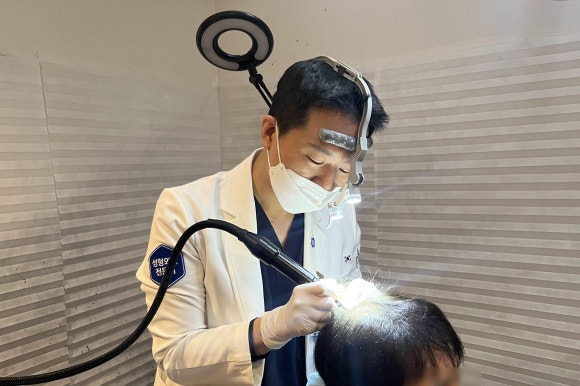
SMP scalp micropigmentation is a method intended to naturally cover areas affected by hair loss
while also aiming for a quick procedure and rapid recovery.
Because the practitioner’s experience and technical skill are important,
it may also be helpful to check whether the clinic has many cases of scalp micropigmentation for hair loss.
SMP scalp micropigmentation can be used as one way to reduce concerns caused by hair loss
and create a natural-looking style.
The validity of this approval is limited to this page.