One of the questions most frequently asked by patients who are about to begin hair loss treatment is:
Is oral minoxidil more effective than topical minoxidil?
Interest in oral minoxidil has increased rapidly over the past few years.
On social media and online communities, people often say that “oral minoxidil is much stronger.”
In actual clinics, inquiries about oral minoxidil prescriptions have also increased significantly.
Medically, however, this is not as simple as it may seem.
Looking at recently published randomized controlled studies and expert recommendations, it is difficult to conclude that “oral treatment is always better.”
Today, I will summarize the differences between oral and topical minoxidil based on the latest research findings.
Oral Minoxidil vs. Topical Minoxidil: Which Is Better? Summary
| Oral minoxidil is not always superior to topical minoxidil.¹ |
|---|
| Recent studies found that the two treatments had similar effects, while some studies reported better results with oral minoxidil.²³ |
| Oral minoxidil is convenient to take, but it has a higher possibility of causing hypertrichosis.¹ |
| Topical minoxidil places less burden on the whole body in terms of side effects, but it may cause scalp irritation. |
| Rather than focusing on which treatment is better, it is important to determine which treatment is more suitable for the patient.⁴⁵ |
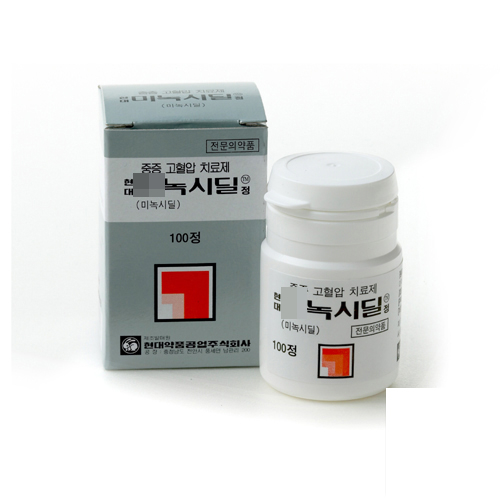
Source: 현대약품
Q1. Is oral minoxidil more effective than topical minoxidil?
Based on the research findings available to date, it is difficult to say that oral minoxidil is “always better.”
A randomized clinical trial published in JAMA Dermatology in 2024 compared 5 mg of oral minoxidil with topical 5% minoxidil over 24 weeks in patients with male pattern hair loss.¹
The results showed that oral minoxidil did not demonstrate superiority over topical minoxidil on the primary outcome measures.¹
However, in photographic evaluations of the crown area, the oral treatment group showed better results.¹
In other words, oral minoxidil may be more effective for some patients, but this result does not apply to all patients.
In clinical practice, some patients respond well to oral minoxidil, while many others achieve sufficient results with topical minoxidil alone.
Q2. Is low-dose oral minoxidil also effective?
Recent studies have focused on low-dose oral minoxidil.
One study compared 1 mg of oral minoxidil with topical 5% minoxidil, and both treatments showed significant improvements in hair growth.²
Interestingly, there was no statistically significant difference between the two treatments.²
The researchers concluded that 1 mg of oral minoxidil may be as effective as standard topical minoxidil.²
This means that hair loss improvement may be achievable even at a relatively low dose.


Q3. Some recent studies reported that oral minoxidil is better. Is that true?
Yes.
A study published in Archives of Dermatological Research in 2025 produced somewhat different results.³
The researchers compared 2.5 mg of oral minoxidil with topical 5% minoxidil. Oral minoxidil produced better results for most measures, including hair shaft thickness, hair count, hair density, and the proportion of hairs in the anagen phase.³
However, this was a small study with a limited number of participants.
Therefore, at this point, it is more appropriate to say that further research is needed rather than conclude that oral minoxidil is unequivocally superior.
Q4. What are the side effects of oral minoxidil?
This is the aspect patients are most concerned about.
Because minoxidil was originally developed as a blood pressure medication, there are concerns about cardiovascular side effects.
Fortunately, recent studies of low-dose oral minoxidil have reported that severe drops in blood pressure or heart-rate abnormalities are rare.¹
However, the most common side effect is hypertrichosis.¹
Studies have reported hypertrichosis in approximately half of the patients taking oral minoxidil.¹
In clinical practice, some patients report increased facial vellus hair or increased hair growth on their arms and legs.
This is particularly important for female patients to consider.

Q5. For whom might oral minoxidil be more suitable?
Oral minoxidil may be a good option in the following cases:
-
When using a topical medication consistently is inconvenient
-
When scalp itching or contact dermatitis occurs
-
When the effects of topical minoxidil are insufficient
-
When a convenient once-daily treatment is preferred
Conversely, it is advisable to proceed cautiously if increased facial hair would be bothersome or if the patient tends to have low blood pressure.⁴
An international expert consensus statement also recommends caution for patients with a history of tachycardia, arrhythmia, or low blood pressure.⁴
Q6. What is currently the most effective combination for treating hair loss?
Recent expert guidelines place greater emphasis on combination therapy than on monotherapy for the treatment of male pattern hair loss.⁵
Common combinations include:
A particular advantage is that these treatments can target different mechanisms—DHT inhibition and stimulation of hair growth—at the same time.⁵
In clinical practice, patients receiving combination therapy are often more satisfied than those receiving monotherapy.
| Category | Oral minoxidil | Topical minoxidil |
|---|
| Ease of use | Once-daily administration | Application once or twice daily |
| Treatment adherence | High | Relatively low |
| Scalp effects | Almost none | May occur |
| Hypertrichosis | Relatively common | Less common |
| Cardiovascular effects | Must be considered | Almost none |
| Clinical effects | Equivalent or superior in some studies | Standard treatment |
No treatment has yet been established as absolutely superior between oral and topical minoxidil.
Recent studies have found similar effects with the two treatments, while some studies have reported better results with oral minoxidil.¹²³
However, treatment selection cannot be based on effectiveness alone.
Ease of administration, the possibility of side effects, the patient’s lifestyle, and existing medical conditions must all be considered together.⁴
Ultimately, the important question is not “Which is stronger?” but “Which is more suitable for me?”
Because hair loss treatment is a long-term process, finding a treatment strategy that suits you is most important.
This was Kim Jin-oh from New Hair—your time for hair has come.
May new hair grow.
Written by: Kim Jin-oh, New Hair Plastic Surgery (Public Relations Director of the Korean Association of Plastic Surgeons / Academic Director of the Korean Society of Laser, Dermatology and Hair)
[References]
-
Penha MA, Miot HA, Kasprzak M, Müller Ramos P. Oral Minoxidil vs Topical Minoxidil for Male Androgenetic Alopecia: A Randomized Clinical Trial. JAMA Dermatology. 2024;160(6):600-605. doi:10.1001/jamadermatol.2024.0284.
-
Asilian A, Farmani A, Saber M. Clinical efficacy and safety of low-dose oral minoxidil versus topical solution in the improvement of androgenetic alopecia: A Randomized Controlled Trial. Journal of Cosmetic Dermatology. 2024;23(3):949-957. doi:10.1111/jocd.16086.
-
Yousefi E, Ansari MS, Shakoeinejad S, et al. Efficacy and safety of oral minoxidil in comparison to topical form in male pattern hair loss. Archives of Dermatological Research. 2025;317:849. doi:10.1007/s00403-025-04355-z.
-
Akiska YM, Mirmirani P, Roseborough I, et al. Low-Dose Oral Minoxidil Initiation for Patients With Hair Loss: An International Modified Delphi Consensus Statement. JAMA Dermatology. 2025;161(1):87-95. doi:10.1001/jamadermatol.2024.4593.
-
Vañó-Galván S, Fernandez-Crehuet P, Garnacho G, et al; Spanish Hair Disorders Research Group. Recommendations on the Clinical Management of Androgenetic Alopecia: A Consensus Statement. Actas Dermo-Sifiliográficas. 2024;115(4):T347-T355. doi:10.1016/j.ad.2023.10.043.
Recommended reading