Should you take hair loss medication?
Which is better, Propecia or Avodart?
Will applying only minoxidil be effective?
These are among the questions I receive most often in the clinic.
There are countless hair loss medication reviews and ranking guides online, but actual treatment is not decided simply by popularity rankings.
This is because even with the same type of male pattern hair loss, the medication selected may differ depending on whether an M-shaped hairline or crown hair loss is predominant, and how quickly the condition is progressing.
Today, I will organize the information patients are most curious about—including the types and characteristics of men’s hair loss medications, selection criteria, side effects, and prices—in an FAQ format.
Complete Guide to Men’s Hair Loss Medications (Differences and Costs of Finasteride · Dutasteride · Minoxidil) — Summary
| Men’s hair loss medications are broadly divided into finasteride, dutasteride, minoxidil, and topical finasteride. |
|---|
| Dutasteride is often considered when hair loss is progressing rapidly. |
| Finasteride is the most commonly used option for early-stage hair loss or maintenance treatment. |
| Minoxidil promotes hair growth and is used either alone or in combination with other treatments. |
| Consistent use of hair loss medication is more important than choosing based solely on effectiveness, and long-term management is key. |
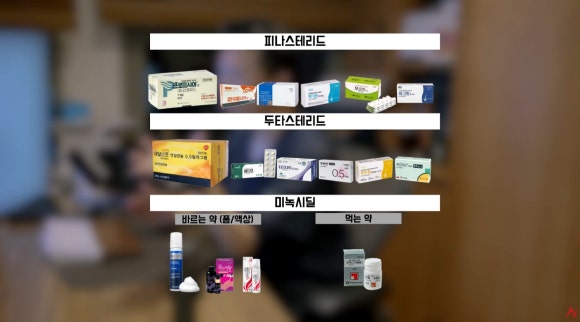
Q1. What types of men’s hair loss medications are available?
There are four main medications most commonly used to treat male pattern hair loss.
| Ingredient | Mechanism of action | Characteristics |
|---|
| Finasteride | Inhibits DHT production | A widely used oral hair loss medication |
| Dutasteride | Strongly inhibits DHT production | Used for rapidly progressing hair loss |
| Minoxidil | Extends the growth phase | Available as a topical or oral medication |
| Finjuve | Topical finasteride | Reduces the burden of systemic exposure |
Among these, finasteride and dutasteride are the medications that directly suppress the cause of male pattern hair loss.
Rather than eliminating the cause of hair loss, minoxidil helps improve the environment for hair growth.
Q2. What kind of hair loss medication is finasteride?
Finasteride is a representative treatment for male pattern hair loss that has been used for the longest period of time.
It works by reducing DHT (dihydrotestosterone), a key cause of male pattern hair loss, thereby slowing the progression of hair loss.
It is also the medication considered first in many cases when hair loss is at an early stage or is not progressing rapidly.
In clinical practice, many patients with early M-shaped hair loss or crown hair loss take it for long-term maintenance.
Another major advantage is the wealth of data on long-term use.
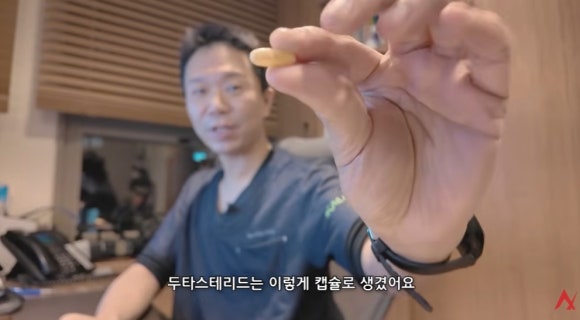
Q3. Is dutasteride more effective than finasteride?
This is one of the points patients are most curious about.
To put it simply, dutasteride can generally be expected to have a stronger hair loss-suppressing effect.
Finasteride blocks only type 2 5-alpha-reductase.
Dutasteride, on the other hand, inhibits both types 1 and 2, so it has a broader range of DHT reduction.
In clinical practice, dutasteride is often selected when crown density has decreased significantly or M-shaped hair loss is progressing rapidly.
However, a stronger effect does not mean it is automatically suitable for everyone.
The degree of hair loss and sensitivity to side effects must be considered together.
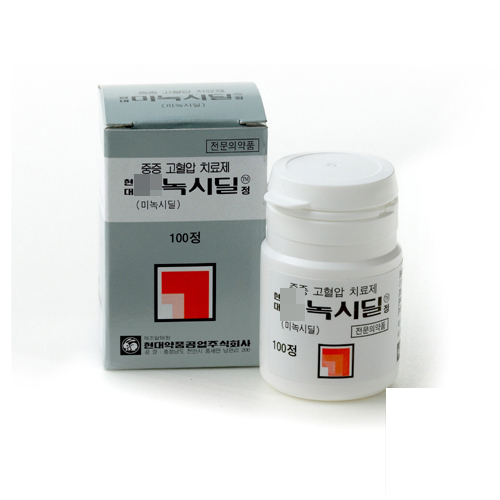
Source: Hyundai Pharm
Q4. How is minoxidil different from oral hair loss medications?
Unlike finasteride and dutasteride, minoxidil does not suppress hormones.
It works by increasing blood flow to the scalp and extending the hair growth phase.
Simply put, rather than eliminating the cause of hair loss, it is closer to a medication that creates an environment favorable for hair growth.
Therefore, in actual treatment, it is often used in combination with finasteride or dutasteride rather than alone.
In recent years, the use of low-dose oral minoxidil has also gradually expanded.
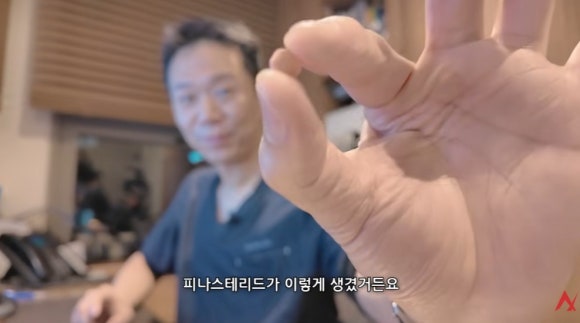
Q5. I’m worried about oral hair loss medications. What about topical finasteride?
A treatment that has recently attracted significant interest is the Finjuve spray.
Topical finasteride is applied by delivering the medication directly to the scalp.
Compared with oral hair loss medication, it generally produces a relatively smaller reduction in blood DHT levels.
For this reason, it often attracts interest from patients who hesitate to take oral medication because of psychological concerns about sexual-function-related side effects.
However, in terms of long-term data and real-world clinical experience, oral medication is still regarded as the standard treatment.
Q6. How should hair loss medication rankings be interpreted?
The hair loss medication rankings commonly discussed online are mostly organized according to effectiveness.
In general, they are often considered in the following order.
| Ranking | Ingredient | Characteristics |
|---|
| 1st | Dutasteride | Strongest DHT inhibition |
| 2nd | Finasteride | Balance of effectiveness and tolerability |
| 3rd | Minoxidil | Role as an adjunctive treatment |
However, in actual treatment, the patient’s condition is more important than the ranking.
The medication with the strongest effect is not necessarily the best medication for everyone.
Rather, choosing a medication that can be taken consistently for many years is more important for long-term results.
Q7. Are side effects from hair loss medications really common?
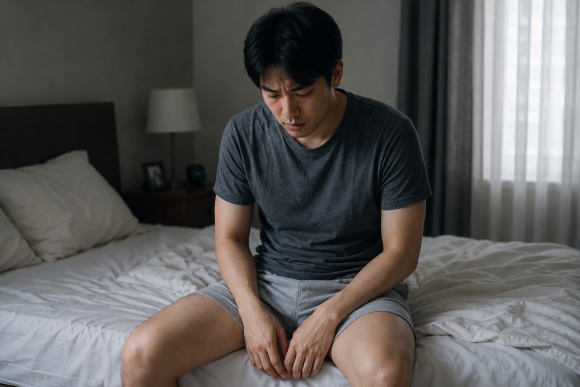
Concern about side effects is the biggest reason many people hesitate to start hair loss medication.
The commonly recognized side effects include:
However, the actual incidence is not as high as many people think.
In addition, most cases resolve after discontinuing the medication.
In the clinic, I often see patients who become excessively anxious after reading online reviews alone.
There are also a significant number of cases in which excessive concern about side effects leads to actual symptoms through the nocebo effect.
Q8. How long do I need to take hair loss medication?
This is the most important question.
Hair loss medication is not a treatment that ends after being taken for a set period, like cold medicine.
This is because male pattern hair loss is a progressive condition.
If you stop taking the medication, DHT levels often rise again over time, and hair loss may resume progressing.
Therefore, it is more appropriate to approach hair loss medication as a form of management rather than a one-time treatment.
In practice, most patients who maintain good results take the medication consistently for many years or longer.
Q9. How much should I expect to pay for hair loss medication?
Hair loss treatment is a long-term process.
Therefore, cost is important in addition to effectiveness.
| Medication | Average monthly cost |
|---|
| Propecia | KRW 45,000–55,000 |
| Generic finasteride | KRW 9,000–15,000 |
| Avodart | KRW 22,000–25,000 |
| Generic dutasteride | KRW 12,000–18,000 |
| Rogaine Foam | Approximately KRW 28,000 |
| Finjuve | Approximately KRW 50,000–60,000 |
Patients taking medication long term often choose generic products because of the cost burden.
There are many types of men’s hair loss medications, but the key is ultimately to choose a medication suited to your current condition.
For early-stage hair loss, finasteride may be a good starting point.
If hair loss is progressing rapidly or affects a wide area, dutasteride may be considered.
If you are concerned about oral medication, minoxidil or topical finasteride may also be alternatives.
Above all, consistent use is more important than hair loss medication rankings.
Hair loss is a condition that is easier to maintain when treatment is started early.
If you suspect hair loss, rather than relying only on online reviews, seek an accurate diagnosis and establish a treatment plan suited to you.
This has been Jin-oh Kim, reminding you that now is the time to “hair” your way forward.
May you surely grow new hair.
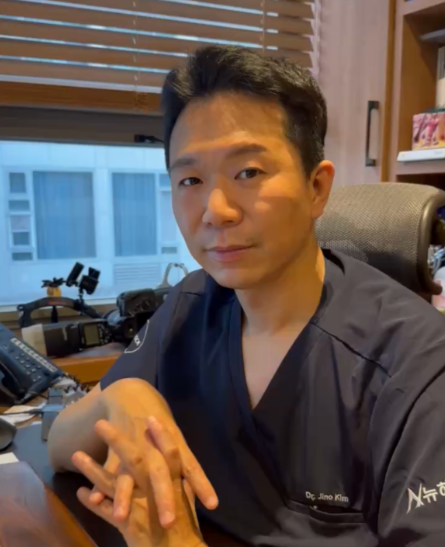
Written by: Jin-oh Kim of New Hair Plastic Surgery (Public Relations Director, Korean Association of Plastic Surgeons / Academic Director, Korean Society of Laser, Dermatology and Hair Research)
Recommended related articles