One of the questions most frequently searched by people considering a crown or part-line hair transplant is this:
Does a crown hair transplant have no effect?
Is it true that satisfaction with part-line hair transplants is low?
These are also questions we often hear in the clinic.
When looking at online reviews or community forums, you may come across people saying that crown hair transplants should be avoided.
However, when patients are followed over a long period in actual clinical practice, the situation is somewhat different.
Rather than being areas where hair transplantation is ineffective, the crown and part line are more accurately understood as areas where results become visible slowly.
Today, I will explain the effects of crown hair transplantation and satisfaction with part-line hair transplantation, focusing on frequently asked questions.
Summary: Do Crown and Part-Line Hair Transplants Have No Effect? Clarifying the Actual Results and Common Misconceptions
| Crown and part-line hair transplants are not ineffective procedures; they are procedures whose changes appear gradually. |
|---|
| Because grafts must be transplanted between existing hair, the procedure is technically challenging and requires time before the results can be assessed. |
| The changes patients notice most are reduced scalp visibility and improved visual density. |
| Changes generally become more noticeable after six months, with the final result assessed around one year. |
| When combined with medication, existing hair can be protected, which may improve satisfaction. |
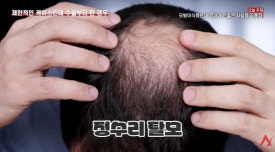



Q1. Why do people say that crown hair transplants have no effect?
Many people see the results of hairline transplants and expect similar results from a crown transplant.
However, the two areas are structurally different.
With a hairline transplant, hair is placed in an empty area.
As a result, the growth of new hair is easily visible to the naked eye.
By contrast, the crown and part line already contain hair, and the procedure is intended to increase density in those areas.
Even when new hair grows, it blends in with the existing hair, so the change may not be immediately noticeable.
In fact, it has been reported that subjective satisfaction with the crown tends to appear later than satisfaction with the hairline¹.
In other words, the effect is not absent; it simply takes longer to be noticed.
Q2. Why is a part-line hair transplant considered technically difficult?
The part line and crown are considerably challenging areas from a hair-transplant surgeon’s perspective.
Because the hairline is placed in a relatively empty area, the main focus is on design and determining the direction of growth.
The situation is different for the part line and crown.
New follicles must be inserted between existing hairs.
During this process, the existing follicles must not be damaged, and the direction and angle of growth must also be matched.
In particular, a female part-line hair transplant requires an especially delicate technique because the direction of the hair must look very natural.
For this reason, some clinics may not actively recommend the procedure or may approach it cautiously.
This is not because it is ineffective, but because the procedure is technically difficult.
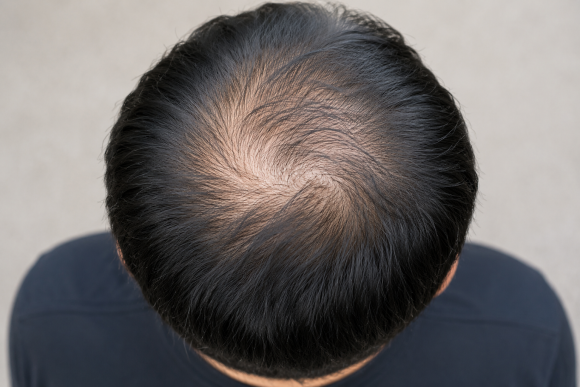
Q3. What is the biggest change after a crown hair transplant?
Surprisingly, the aspect patients are most satisfied with is not necessarily “having more hair.”
The expressions we hear most often include:
My scalp is less visible.
I worry less when taking pictures.
It seems like less of my crown shows through.
For the crown and part-line areas, improved visual density is more important than an increase in the absolute number of hairs.
Research has also reported that increasing density between existing hairs has a significant impact on the cosmetic improvement of the part line².
Ultimately, the key benefit of a crown hair transplant can be viewed as reducing scalp exposure rather than simply increasing the number of hairs.
Q4. When do the effects of a crown hair transplant begin to appear?
Many people expect to see results within three to four months after surgery.
However, the crown and part line require a little more patience.
The process generally proceeds as follows.
| Period | Changes |
|---|
| 1–3 months | Shedding of transplanted hair |
| 4–6 months | Initial hair growth begins |
| 6–9 months | Increased density becomes noticeable |
| 10–12 months | Final results can be assessed |
Many patients experience a significant increase in satisfaction after six months.
The change is particularly easier to appreciate when compared with photographs taken previously.
Therefore, with crown hair transplants, it is important to assess the final result rather than focusing on the interim progress.



Q5. Is medication needed as well?
Crown hair loss is, in most cases, progressive hair loss.
Therefore, managing only the transplanted hair may not be sufficient.
This is because the existing hair that remains may continue to thin or fall out.
For this reason, in clinical practice, treatments such as finasteride, dutasteride, and minoxidil are often used alongside hair transplantation.
When existing hair is maintained while the transplanted hair grows, the overall improvement in density can be significantly better.
It is better to understand a crown hair transplant not simply as a procedure that places hair, but as part of managing the overall hair environment.
| Category | Hairline hair transplant | Crown/part-line hair transplant |
|---|
| Procedure difficulty | Relatively easy | High |
| Effects | Noticed relatively quickly | Gradual |
| Characteristics of the result | Significant change in appearance | Primarily increased density |
| Main point of patient satisfaction | Change in overall image | Reduced scalp visibility |
| Time of final assessment | 6–9 months | 10–12 months |
The claim that crown hair transplants have no effect is somewhat different from the facts.
More precisely, they are not ineffective procedures; they are procedures whose results become visible gradually.
In particular, part-line and crown hair transplants are meaningful because they increase density between existing hairs and reduce scalp visibility.
The goal is to create a natural and stable change rather than a dramatic transformation like that of a hairline transplant.
If you allow sufficient time to observe the progress and use medication when necessary, you may expect a satisfactory result.
This has been Jin-oh Kim from New Hair, at the time to “hair” away.
New hair must grow (必生新毛).
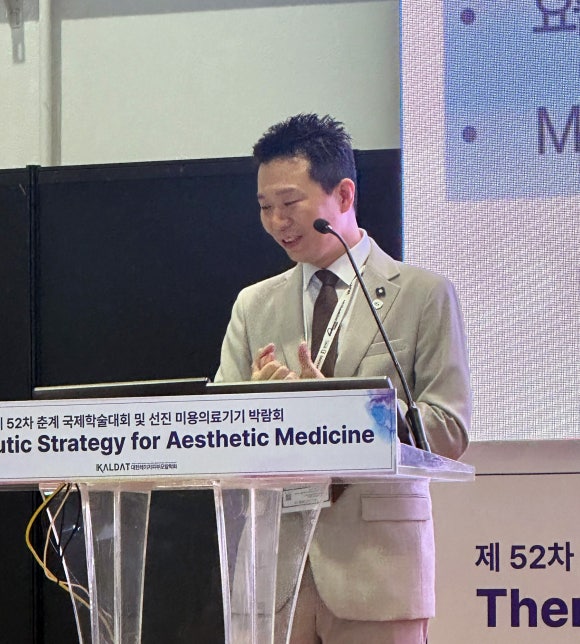
Written by: Jin-oh Kim, New Hair Plastic Surgery (Public Relations Director of the Korean Association of Plastic Surgeons / Academic Director of the Korean Association of Laser, Dermatology and Hair Sciences)
[References]
-
Unger, W. P., & Shapiro, R. (2010). Hair Transplantation. Informa Healthcare.
-
Bernstein, R. M., & Rassman, W. R. (2012). “Hair Transplantation for the Part Line and Crown: A Review of Techniques and Outcomes.” Dermatologic Surgery, 38(7), 1152–1160.

Recommended reading