When you visit a hospital because you suspect hair loss, the first thing you will usually undergo is a hair loss examination.
However, many people receive their test results but still have difficulty understanding exactly what they mean.
What density is considered normal?
My hair has become thinner—is it severe?
Am I at the stage where I need to take medication?
In reality, a hair loss examination is not simply a process for determining whether hair loss is present.
It provides important data for objectively assessing the current condition of the hair follicles and predicting the possibility of future progression.
Today, I will explain how to interpret hair loss test results and what kind of management may be needed depending on the results, focusing on questions frequently asked in the consultation room.
A Complete Guide to Self-Diagnosing Hair Loss and Interpreting Test Results (Hair Density · Thickness Measurements): Summary
| The most important indicator in a hair loss examination is changes in hair thickness rather than hair density. |
|---|
| Miniaturization (hair becoming thinner) is confirmed, the possibility of early-stage hair loss is high. |
| If the difference in thickness between the occipital region and the crown or hairline is 20% or more, progressive hair loss may be suspected. |
| M-shaped hair loss, crown hair loss, and early-stage miniaturization require different management methods and treatment strategies. |
| Hair loss examinations are more important for subsequent monitoring and comparative analysis than for diagnosis alone. |

| Test item | What is checked | Meaning |
|---|
| Hair density | Number of hairs per 1㎠ | Determines the overall amount of hair |
| Hair thickness | Measures the average diameter | Assesses whether hair loss is progressing |
| Miniaturization ratio | Proportion of fine hairs | Detects early-stage hair loss |
| Comparison by region | Comparison between the occipital region and crown | Helps diagnose hereditary hair loss |
| Scalp condition | Sebum, inflammation, and visible blood vessels | Assesses the scalp environment |
| Stress test | Autonomic nervous system balance | Checks the risk of telogen effluvium |
Q1. Which measurement should I consider most important in my hair loss test results?
Many people only check their hair density measurement.
However, in actual clinical practice, hair thickness is evaluated more importantly.
This is because hair loss is not a condition in which hair suddenly disappears; it goes through a process of gradual miniaturization, in which the hair becomes thinner.
For example, even if the number of hairs is within the normal range, a decrease in thickness may indicate that hair loss has already begun.
In fact, there are quite a few cases in which the hair looks full to the naked eye, but progressive hair loss is detected through testing.
Therefore, when reviewing hair loss test results, it is important to check not simply “how many hairs are present,” but “how well a healthy thickness is being maintained.”
Q2. Does the discovery of miniaturization mean that hair loss is progressing?
Miniaturization is one of the strongest warning signs in diagnosing hair loss.
Normal hair remains thick and dark.
As hair loss progresses, however, the follicles shrink, causing the hair to become gradually thinner and lighter in color.
If this process is repeated, eventually only hair at the level of fine vellus hair may remain.
In the consultation room, when the proportion of thin, light-colored hair increases around the crown or hairline, the possibility of early-stage hair loss is considered high.
From the patient’s perspective, it may seem natural to ask, “Why do you call it hair loss when I still have hair?” In fact, this is the most important time for treatment.
That is because the follicles are still functioning.






Q3. Why compare the thickness of the occipital region and the crown?
Hereditary hair loss selectively affects certain areas.
Typically, the crown and hairline are affected by hair loss, while the occipital region is relatively less affected.
Therefore, the hair in the occipital region is used as a reference point for comparison with the crown.
If the average thickness at the crown is reduced by 20% or more compared with the occipital region, the possibility of progressive hair loss is considered high.
Many patients describe this by saying, “The hair at the back is still thick, but the hair on top feels weak.” This is exactly the kind of difference that is reflected in the test results.
Q4. Can I still have hair loss even if my test results are normal?
Yes, that is entirely possible.
Especially in the early stages, density measurements are often within the normal range.
However, a detailed analysis may reveal an increased miniaturization ratio or reduced thickness.
In addition, telogen effluvium caused by recent stress, lack of sleep, dieting, childbirth, or other factors may show a different pattern from that of a typical hereditary hair loss examination.
Therefore, rather than relying simply on the statement that the results are normal, it is important to check which items are normal and which items are changing.
Q5. Are the test results different for M-shaped hair loss and crown hair loss?
Yes, there are differences.
M-shaped hair loss is characterized by concentrated reductions in density and miniaturization around the hairline.
By contrast, crown hair loss often first appears as generalized thinning across a wider area.
In particular, once the follicles have been completely lost in M-shaped hair loss, the effects of medication may be limited.
Conversely, crown hair loss often responds relatively well to medication.
For this reason, accurately distinguishing the type of hair loss through test results is very important when determining the treatment approach.
Q6. How often should I have a follow-up examination after a hair loss test?
A follow-up examination is generally recommended at intervals of six months to one year.
This is because hair loss is not a condition that changes overnight.
Especially after starting medication, comparing the results with those of the previous examination is very important.
Recently, 3D scanning systems have made it possible to repeatedly photograph the same locations, allowing changes to be objectively assessed.
Even when patients do not notice a significant difference themselves, meaningful improvement may be identified in the test measurements.

Q7. If my hair loss test results are unfavorable, do I necessarily need to take medication?
Not necessarily.
What matters is the current stage and the rate of progression.
If miniaturization is mild and at an early stage, lifestyle adjustments and monitoring may be sufficient.
On the other hand, if the decrease in hair thickness continues or there is a strong family history, medication is generally considered.
In clinical practice, even with the same test results, the treatment plan varies depending on age, family history, and type of hair loss.
Therefore, rather than interpreting the report simply as good or bad, it is important to establish a strategy suited to the current condition.
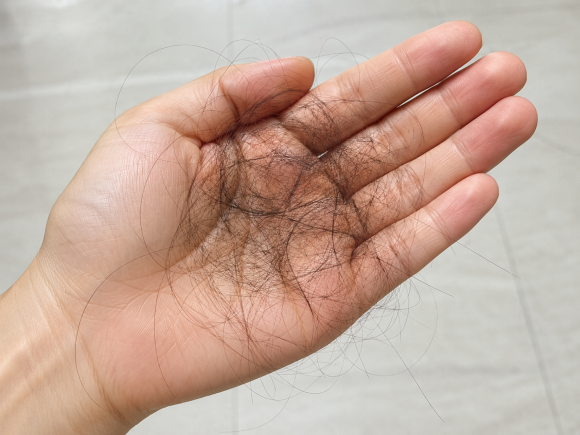
A hair loss examination is not simply a test to determine whether hair loss is present.
It is a process for objectively analyzing the current condition of the hair follicles and predicting the possibility of future progression.
In particular, it is important to check hair thickness and the miniaturization ratio rather than hair density, and a more accurate diagnosis can be made by comparing the occipital region with the areas affected by hair loss.
Early detection is the most important aspect of hair loss.
By properly understanding the test results and creating a management plan suited to the current condition, it is possible to reduce unnecessary treatment and respond effectively.
If your hair has become thinner than before or you feel that more of your scalp is showing through, consider checking your current condition through objective testing rather than relying only on your impressions.
[FAQ About Hair Loss Test Results]
What is the most important item in hair loss test results?
Hair thickness and the miniaturization ratio are considered more important indicators than hair density.
Can I still have hair loss even if my hair loss test results are normal?
Yes. In early-stage hair loss, changes in thickness often appear before changes in density.
When should I have a follow-up examination after a hair loss test?
In general, follow-up examinations are conducted at intervals of six months to one year. During treatment, periodic comparative analysis is important.
Is it concerning if miniaturization is found in a hair loss examination?
Miniaturization can be considered an early sign of progressing hair loss and indicates that early management is needed.
At what age should I begin having hair loss examinations?
If you have a family history, notice changes in hair thickness, or feel that the amount of hair loss has increased, you may consider an examination regardless of age.
This has been Kim Jin-oh, and now it is time to hair.
New Hair for Life (必生新毛).
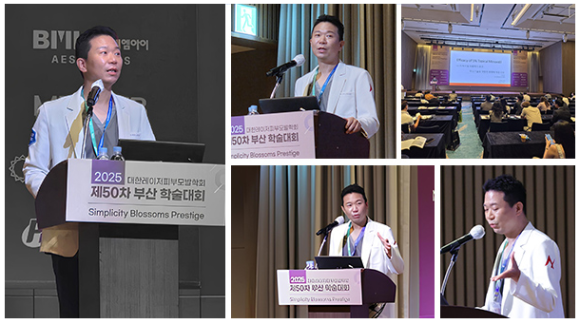
Written by: Kim Jin-oh of New Hair Plastic Surgery (Public Relations Director of the Korean Association of Plastic Surgeons / Academic Director of the Korean Society of Laser, Dermatology and Trichology)
Related articles