What to Do When You Develop Scalp Bumps (Ointments, Medical Care, and Drainage)
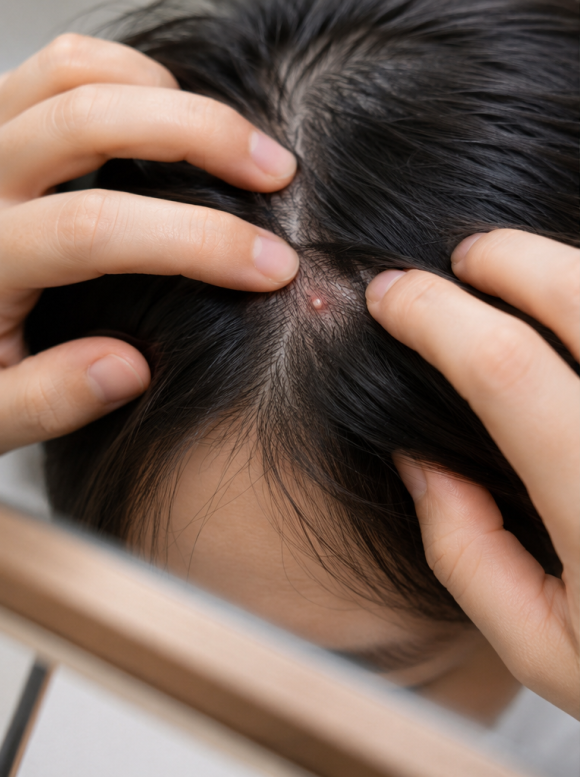
Have you ever felt a small bump when touching your scalp or experienced pain while washing your hair?
At first, many people think it is simply acne and either squeeze it with their hands or leave it alone.
However, scalp bumps can have somewhat different causes and require different care than acne that appears on the face.
In particular, if they occur repeatedly, fill with pus, or cause severe pain, appropriate treatment may be necessary.
Today, we will take a simple look at what to do when scalp bumps develop, when it is appropriate to use ointment, when to visit a hospital, and whether drainage is advisable.
Why Do Scalp Bumps Develop?
Like the face, the scalp contains many sebaceous glands.
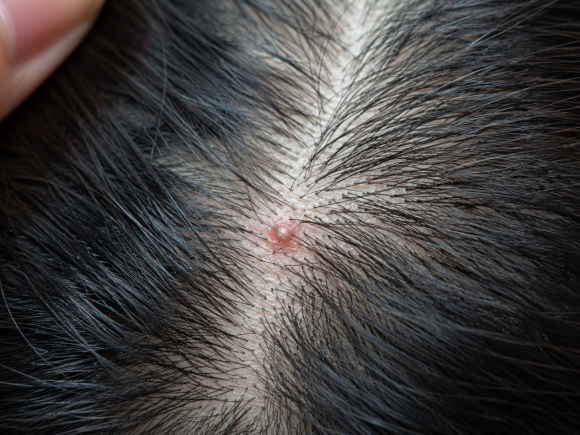
When sebum and dead skin cells clog the pores, inflammation can develop and bumps may appear.
In addition, if bacteria multiply or the hair follicles become inflamed, red, painful bumps or pus may develop.
The following lifestyle habits may also have an effect.
-
Not properly drying the hair
-
Leaving sweat on the scalp for a long time
-
Wearing a hat for extended periods
-
Leaving hair products such as wax or spray on the scalp
-
Stress or lack of sleep
If the bumps keep recurring, it is important to identify the cause, as folliculitis or seborrheic dermatitis may also be present rather than this being a simple bump.
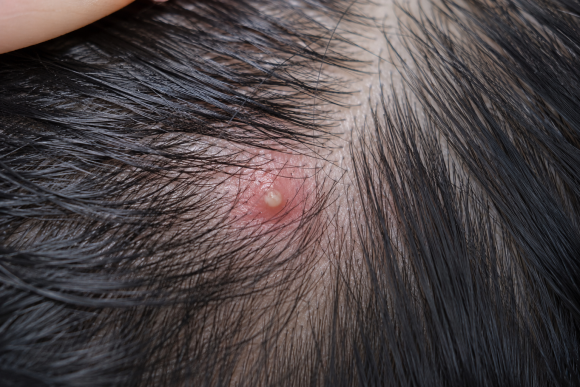
Is It Okay to Squeeze a Scalp Bump by Hand?
To put it simply, squeezing it yourself is not recommended.
The scalp has thicker skin than the face, and the hair follicles are located deeper.
Forcing it out with your hands or fingernails can cause the inflammation to spread deeper, and bacteria may enter, potentially making the condition worse.
In severe cases, the amount of pus may increase or a scar may remain.
In particular, wounds in areas covered by hair are difficult to see and manage, which also increases the risk of infection.
If a large amount of pus has collected or the bump has grown larger, it is safer to have it drained at a hospital using sterile instruments.
When Is It Appropriate to Use Ointment?
For a mild scalp bump, an ointment containing an antibiotic may be used.
However, the same ointment is not appropriate for every bump.
If fungi are the cause, using only an antibiotic ointment may not improve the condition.
You should also be careful about using steroid ointments arbitrarily for a long time.
Although the symptoms may appear to improve temporarily, the condition can actually worsen depending on the cause.
Even if you use an ointment, if the condition does not improve after about one week or continues to recur, it is advisable to see a dermatologist to determine the exact cause.
When Should You Visit a Hospital?
You should consider visiting a hospital in the following cases.
First, when the pain is severe or a large amount of pus develops.
Second, when bumps repeatedly appear in the same spot.
Third, when they spread across the scalp or several develop at the same time.
Fourth, when the warmth or swelling is severe.
Fifth, when hair loss occurs along with the bumps.
In these cases, the condition may be something other than a simple bump, such as folliculitis, seborrheic dermatitis, or scalp ringworm, so an accurate diagnosis is necessary.
Depending on the situation, treatment with oral antibiotics or antifungal medication may also be provided.
Lifestyle Habits to Prevent Scalp Bumps
Regular care is also important for scalp health.
After washing your hair, it is advisable to dry the scalp thoroughly to reduce moisture.
After exercising, do not leave sweat on the scalp for a long time; shampooing as soon as possible can help.
If you have used hair wax or spray, it is advisable to wash it off thoroughly in the evening.
Washing too vigorously or scratching with your fingernails can also irritate the scalp, so it is better to cleanse it gently with a massage-like motion using your fingertips.
Stress and lack of sleep can also affect sebum production and inflammation, so maintaining a regular lifestyle can be helpful as well.
Scalp bumps are often temporary inflammation that improves over time, but squeezing them forcefully or leaving them untreated can instead make the symptoms worse.
In particular, if they occur repeatedly or are accompanied by severe pain and pus, they may be caused by another scalp condition rather than a simple bump. Therefore, it is important to seek medical care and identify the exact cause.
Simply keeping the scalp clean and maintaining lifestyle habits that reduce irritation can help prevent many scalp problems.
If scalp bumps continue to recur, the safest approach is to receive an accurate diagnosis and treatment from a dermatologist rather than trying to resolve the problem yourself.