What Happens When You Pluck Your Nose Hair: A Thoughtless Habit Can Cause Inflammation
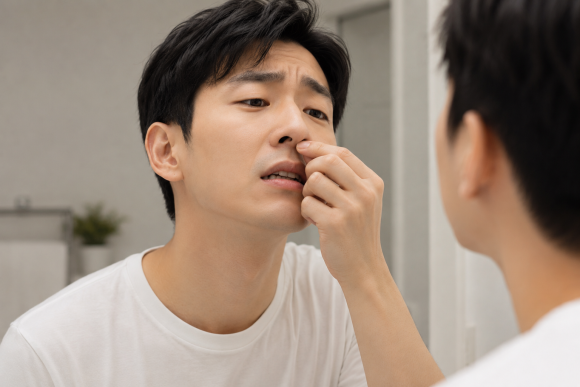
Many people pull out long nose hairs with their fingers or tweezers when they notice them sticking out while looking in the mirror.
Once plucked, the area may look neat and seem to stay that way for a long time, so some people repeat the habit without thinking.
However, nose hair is not simply unsightly hair. It is a structure that plays an important role in protecting our bodies.
In particular, forcibly plucking it can cause small wounds and lead to bacterial infection or inflammation, so caution is necessary.
In this article, we will take an easy look at what happens when you pluck your nose hair, whether it is truly dangerous, and how to manage it safely.
Why Is Nose Hair Necessary?
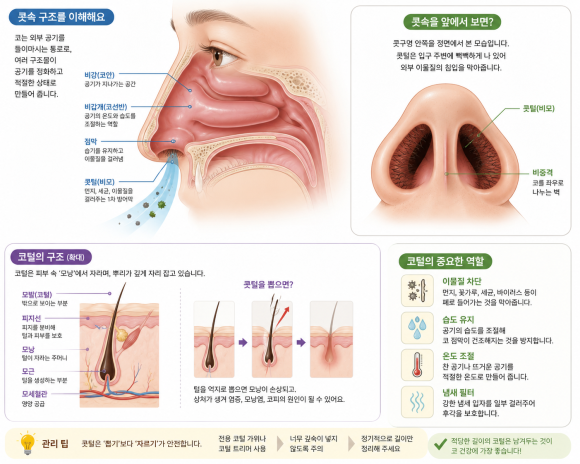
Nose hair is the first line of defense that filters out dust, pollen, fine particles, bacteria, and other substances.
It acts as a filter, preventing foreign substances from entering the lungs directly when we breathe in.
It also helps maintain appropriate moisture inside the nose and protect the mucous membranes.
Therefore, if there is too little nose hair, the nose can become dry and irritated more easily.
What Problems Can Occur When You Pluck Nose Hair?
The most common problem is injury to the hair follicles.
Nose hair is firmly anchored in hair follicles beneath the skin.
If you pull it out forcibly, the follicle may also be damaged, creating a very small wound.
Even a wound that is difficult to see may be large enough for bacteria to enter.
The inside of the nose, in particular, is an environment where various bacteria are always present.
If bacteria enter through a wound, inflammation is more likely to occur.
Folliculitis May Develop
The most common complication in people who repeatedly pluck their nose hair is folliculitis.
Folliculitis is an inflammatory condition caused by a bacterial infection in an area where hair grows.
It may begin as a small pimple, but the swelling and pain can gradually worsen.
In severe cases, pus may form, or the area may become painful even to the touch.
It may improve on its own, but severe cases may require antibiotic treatment.
Nosebleeds May Occur More Frequently
The mucous membranes inside the nose are much thinner than they may seem and contain many blood vessels.
If the mucous membranes are damaged while plucking nose hair, bleeding can occur easily.
At first, it may cause only brief bleeding, but repeated irritation can lead to frequent nosebleeds.
In particular, during the dry winter months, even small wounds may not heal easily, and the discomfort can last for a long time.
In Rare Cases, It May Lead to a Serious Infection
You can often find claims online that “plucking nose hair can cause an infection to reach the brain.”
Although this situation is extremely rare, the claim is not entirely without basis.
The area around the nose is located in the central part of the face and is sometimes called the “Danger Triangle.”
This is because some of the blood vessels in this area connect with veins that lead to the brain.
In very rare cases, if a severe bacterial infection develops, inflammation may spread to the surrounding tissues.
However, this does not happen simply because a healthy person plucks a nose hair once.
There is no need for excessive worry, but it is best to avoid repeatedly creating wounds in this area.
Trimming Nose Hair Is Safer
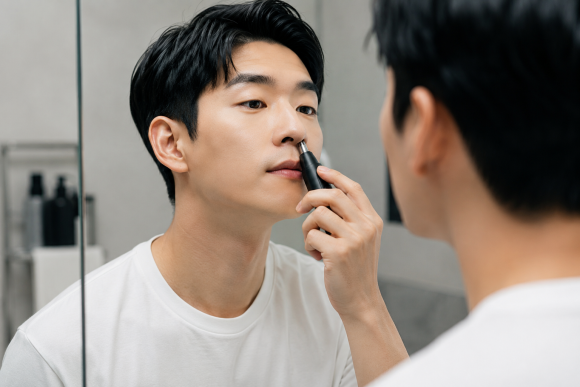
If you find nose hair unsightly, trimming only the ends rather than plucking it is recommended.
Using a dedicated nose-hair trimmer or small scissors with rounded tips allows you to maintain its necessary function while keeping the visible area neat.
Removing all the nose hair or cutting it too short is also not recommended.
Leaving an appropriate length can help maintain the nose’s protective function.
See a Doctor If You Develop These Symptoms
If you experience any of the following symptoms after plucking your nose hair, it is advisable to seek medical attention.
This includes severe swelling inside the nose or persistent throbbing pain.
It also includes the formation of pus or redness that gradually spreads.
If you develop a fever or swelling that extends to the face, you should seek medical attention promptly.
When treated early, most cases can recover without major problems.
Nose hair may be bothersome in appearance, but it is a natural structure that plays an important role in protecting our bodies.
Habitually plucking nose hair may increase the risk of follicle damage, folliculitis, nosebleeds, and bacterial infection.
Because it can rarely lead to a serious infection, it is best to avoid repeatedly plucking it.
If your nose hair bothers you, the safest way to manage it is to use a dedicated nose-hair trimmer or small scissors to trim only the parts that extend outside the nose, rather than plucking it.
Remember that even a seemingly minor habit can make a significant difference in protecting your nasal health.