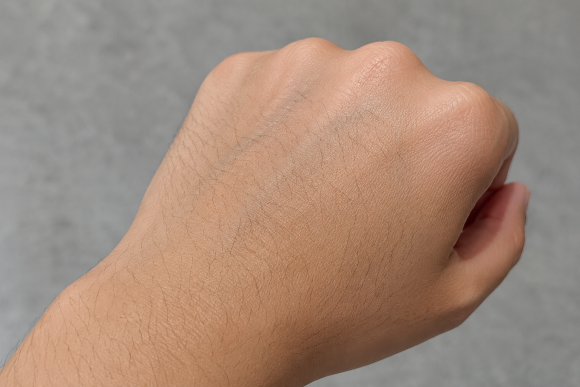
Why Is Vellus Hair Black? Is It a Sign That It Will Become Thicker?
When looking in the mirror, you may be surprised to see that the fine hairs or vellus hair around your face or hairline look darker than expected.
People receiving hair-loss treatment, in particular, often ask questions such as, “Why is my newly grown hair black but still thin?” and “If my vellus hair is black, will it turn into thicker hair?”
Many people think that vellus hair is naturally transparent or white, but in reality, most vellus hair also contains pigment.
So why do fine, short hairs look black?
In this article, we will look at why fine and vellus hair appears black, the principles that determine its color, and what this may mean during hair-loss treatment in an easy-to-understand way.
Fine and vellus hair is also black because of melanin
The color of both scalp hair and body hair is determined by the pigment melanin.
Melanocytes, which produce melanin, are present inside the hair follicle and supply pigment as the hair grows.
Different colors, such as black, brown, and blonde, are produced depending on the amount and type of this pigment.
Most Korean people have a large amount of eumelanin, a type of black melanin, so their vellus hair often appears black as well.
In other words, thin hair does not necessarily lack pigment.
Why can thin hair look even darker?
Many people think that only thick hair is black, but even very fine vellus hair contains melanin.
However, if the hair is extremely thin or short, it may look lighter because a great deal of light passes through it.
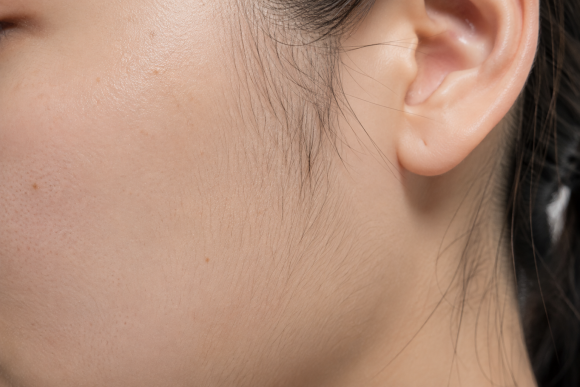
Conversely, when the skin is light or the lighting is strong, the contrast with the skin increases, making the vellus hair appear darker.
In other words, it may feel darker because of the surrounding conditions rather than because its actual color has become deeper.
Not all black vellus hair becomes thick scalp hair
The fact that fine hair looks black does not necessarily mean that it has become thick hair.
This is because hair color and thickness are determined by different factors.
Color is determined by the activity of melanocytes,
while thickness is determined by the size of the hair follicle and its ability to grow.
Therefore, even very thin vellus hair can be sufficiently dark,
while even thick hair can turn gray or white if its pigment decreases.
What does black vellus hair mean during hair-loss treatment?
When hair-loss treatment begins, very fine vellus hair may appear first.
Even if the newly grown hair is black, the visible change may still be limited if it has not yet gained sufficient thickness.
As follicle function recovers over time, the hair increases in both length and thickness, eventually coming to look more like fuller hair.
In other words, seeing black vellus hair may be a positive sign that the follicles have begun to become active again, but it is difficult to conclude that treatment has been completed based on this alone.
Does having more fine hair necessarily mean hair loss?
Conversely, a sudden increase in fine hair does not always indicate hair loss.
The face and hairline naturally have a lot of vellus hair, and it may appear darker depending on seasonal changes, hormonal changes, skin condition, and lighting.
However, if hair that was previously thick gradually becomes thinner and only black fine hairs continue to increase instead of thicker hair, it may indicate that hair loss is progressing, so a professional evaluation can be helpful.
In addition, when using hair-loss treatments such as minoxidil, the vellus hair around the face or forehead may become more noticeable.
This is a relatively well-known change that can occur as the medication extends the growth phase of the hair follicles, and in many cases, the hair gradually returns to its original state after use is discontinued.
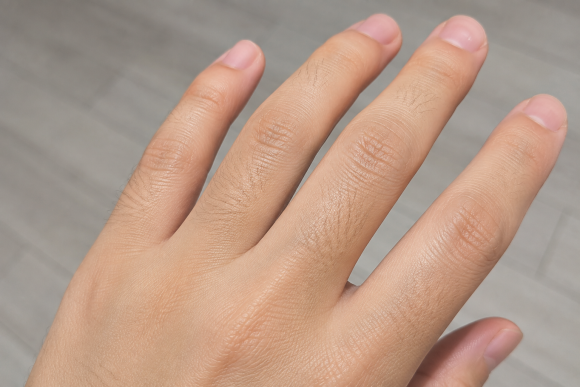
Fine and vellus hair appears black because even thin hair contains melanin pigment.
The thickness and color of hair are determined by different principles, so black vellus hair does not necessarily become thick hair.
However, during hair-loss treatment, black vellus hair may be an early sign that the follicles have begun to become active again.
The important thing is not to look at color alone, but to check whether the hair is increasing in both length and thickness over time.
If changes in fine or vellus hair continue to concern you, or if you feel that your thick hair is gradually becoming thinner, it is more accurate to assess the condition of the scalp and hair follicles together rather than judging based on color alone.