Hello.
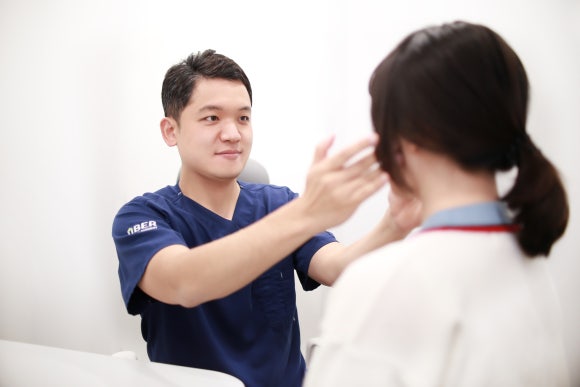
I’m Dr. Lim Seong-yun of Just Plastic Surgery. 😊
Today, I’d like to talk about two questions I’m often asked:
“Doctor, why did you choose plastic surgery?”
And, “I heard you specialized in microsurgery—how does that help in aesthetic surgery?”
I’d like to talk about these two questions.
👨⚕️ Why did I choose plastic surgery?
In fact, ever since I was a medical student, I had only dreamed of becoming a plastic surgeon.
That was because I truly felt how much a person’s appearance can affect their life.
So I always applied for plastic surgery during elective rotations,
and even followed along to the department’s ski resort outings to get a feel for the atmosphere.
Even during my internship, I had no interest in anything other than plastic surgery,
and because I prepared with such determination,
when I was accepted into the residency program, I was so happy that I thought, “My life is finally starting.”
🧬 Why did I do microsurgery, and how does it help me now?
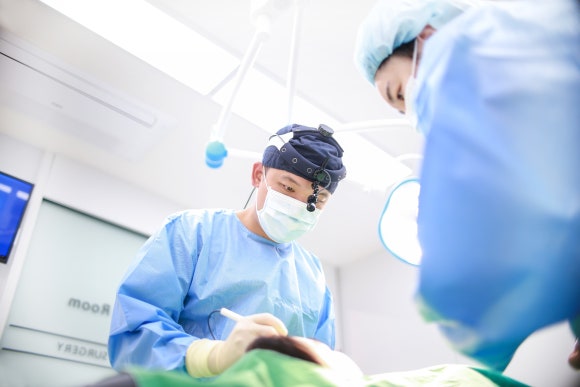
The field I studied in depth during my training was microsurgery.
As the name suggests, it is surgery in which tiny blood vessels and nerves are directly seen and connected using a microscope.
It is mainly used for reconstruction after cancer surgery and for restoring areas damaged by accidents.
For example, when transferring skin and bone from the arm, leg, or face to another area,
I performed surgeries to locate blood vessels and nerves smaller than 0.5 mm inside them and connect them directly.
It is truly delicate surgery, where one mistake can bring down the entire operation.
Through this experience,
I came to deeply realize that “the human body is made up of small structures that are organically connected.”
That is why even now, when I operate,
I have the habit of preserving nerves and blood vessels as much as possible.
👁 Why this is especially helpful in revision eye surgery and facelifts
In particular, when performing revision eye surgery,
existing tissue is often already damaged,
or the anatomical landmarks have become unclear due to scarring.
At times like that, microsurgical experience
leads to a three-dimensional anatomical sense of things like, “Which nerve passes through this area?” and “If we preserve this vessel, recovery will be faster.”
Also, during facelift surgery,
it allows me to judge tissue preservation and the extent of dissection with great precision.
Closing thoughts
Although it may not be visible on the surface,
I believe the reason I can feel confident when performing aesthetic plastic surgery
is precisely because of this foundation in microsurgery.
In the end, I believe plastic surgery should not simply be a “technique for looking better,”
but a technique built on a deep understanding of the human body.
I will continue to study and improve for safe and precise surgery.
Thank you for reading.