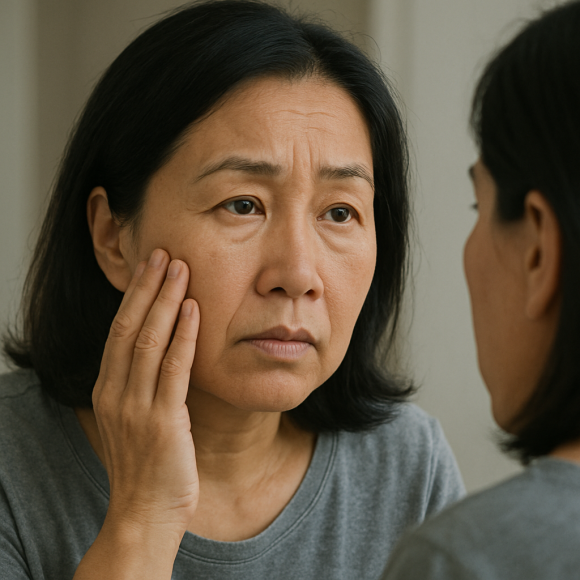
“Doctor, my eyes suddenly look so tired and older.”
Hello, I’m Dr. Lim Seong-yoon of Just Plastic Surgery Clinic.
There are really many people who come in with this concern.
Especially from the late 20s through middle age,
the eye area is the first part of the face to show signs of aging, and it shows them most noticeably.
Today, I’ll explain in detail why eyes suddenly start to look older by age group,
the signs to look for,
and how to address them.
- Why Eyes 'Suddenly' Start to Look Older by Age Group
Eye-area aging does not begin all at once one day,
but rather becomes noticeable in an instant as changes in the skin and internal structure accumulate.
- Late 20s to Early 30s: The Start of 'Structural Changes,' Not Just 'Fatigue'
During this period, lifestyle habits and early structural changes have a greater impact than aging itself.
-
Main causes: Frequent smartphone use, lack of sleep, and the start of decreased skin elasticity.
-
Main signs:
-
Puffiness from under-eye fat: The membrane supporting the under-eye fat weakens, causing dark circles and puffiness that make the area look shadowed.
-
Fine lines: As the elasticity of the skin around the eyes decreases, fine creases increase when smiling.
- Mid-30s to 40s: Full-Scale Decline in Elasticity and Loss of Volume
As the rate of collagen loss accelerates, sagging becomes more noticeable along with changes in facial volume.
-
Main causes: Rapid decrease in collagen and elastin, changes in eyelid fat volume, and loss of facial fat.
-
Main signs:
-
Changes in the double-eyelid crease: The eyelid becomes hollow or droops, so the existing double-eyelid line becomes blurred or covered, making the eyes look smaller.
-
Hollowing under the eyes/upper cheeks: As facial fat decreases, the under-eye area, upper cheeks, and lateral cheeks sink in, making the face look uneven and tired.
-
More pronounced hollowness under the eyes: A deep groove forms below the puffed fat, making the expression look tired and gloomy.
- After the 50s: Progression of 'Complex Aging'
Skin laxity and muscle weakness appear together.
-
Main causes: Skin laxity, drooping eyebrows, and weakened function of the muscles around the eyes.
-
Main signs:
-
Upper eyelid drooping: The eyelid descends to the pupil, blocking vision and making the eye area feel heavy.
-
Wrinkles and fine lines under the eyes: The skin under the eyes becomes thinner and looser, and wrinkles settle in deeply.
🚨 2. Tired-Looking Eyes: What Are the Solutions? (Customized Solutions by Sign)
Even if the signs around the eyes are complex, you need to identify the biggest cause and apply the right solution.
| Main Sign | Cause | Just Plastic Surgery Clinic Solution |
|---|
| Puffiness/dark circles under the eyes | Protrusion of under-eye fat and weakened supporting ligaments | Under-eye fat repositioning |
| Hollowing under the eyes/upper cheeks/lateral cheeks | Loss of facial fat and insufficient volume | Fat grafting or fillers |
| Deepened wrinkles/loose skin | Decreased collagen and skin laxity | Thermage/Ultherapy lifting or lower blepharoplasty |
| Covered double-eyelid crease/drooping eyelids | Upper eyelid skin laxity and muscle weakness | Upper blepharoplasty or brow lift |
- Under-Eye Fat Repositioning (Puffiness & Shadow)
For people in their 20s to 40s, this is one of the biggest reasons the under-eye area looks tired.
-
Effect: Repositions bulging fat into a flatter contour and fills hollow areas to remove shadows under the eyes.
-
Result: The expression becomes brighter, the under-eye area looks cleaner, and the overall effect is excellent for making you look younger.
- Fat Grafting & Fillers (Hollow Under-Eye/Upper Cheek Area)
This is a solution needed when facial volume has been lost and hollows appear due to weight loss, among other reasons.
-
Upper cheek/lateral cheek hollowing: Fillers or fat grafting are used to restore natural volume and soften the facial line.
-
Under-eye hollowing: Because the under-eye area moves a lot and the skin is thin, micro fat grafting is preferred over fillers, as it connects naturally with the surrounding tissue and can provide a more stable, longer-lasting result.
- Lower Blepharoplasty & Upper Blepharoplasty (Sagging Below/Above the Eyes)
-
Lower blepharoplasty: Improves wrinkles and sagging by removing and tightening loose skin and muscle under the eyes.
-
Upper blepharoplasty: Removes and tightens drooping eyelid skin to secure vision and make the blurred double-eyelid line clear again.
💡 Prevention and Maintenance Are Most Important for the Eyes
The skin around the eyes is the thinnest and moves the most, so once it is damaged, it is difficult to reverse.
When you feel that your eyes suddenly make you look older,
structural changes under the eyes, decreased elasticity, or reduced volume have already progressed significantly.
Therefore, from the late 20s onward,
preventive care (such as Eye Shrink / Eye Thermage, etc.) is needed,
and if signs have already appeared, the most effective approach is to make an accurate diagnosis and proceed with customized surgery or procedures tailored to the cause.