Today’s blog will start with a quiz before I explain the content.
"Do you think this eye can undergo natural adhesion eyelid correction?"
I’m going to show you a total of 8 eyes, so please test how many answers you can get right and leave a comment too!
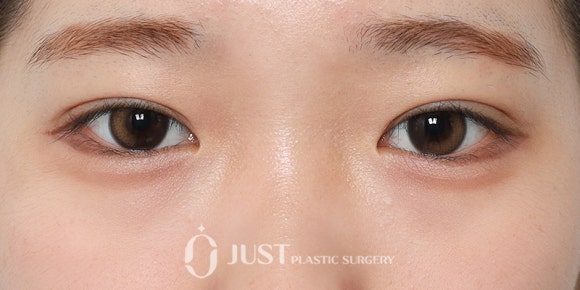
Can Eye No. 1 undergo natural adhesion double eyelid surgery?
The right eye has a high double eyelid crease, and the left eye has an asymmetric low inline double eyelid. (The answer comes later!)
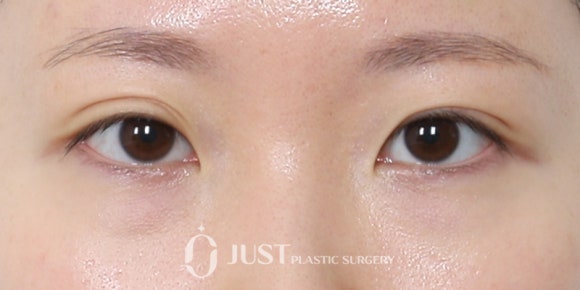
How about Eye No. 2?
The skin looks thick, the eyes are drooping, and the black pupils are partly covered. Is it possible?
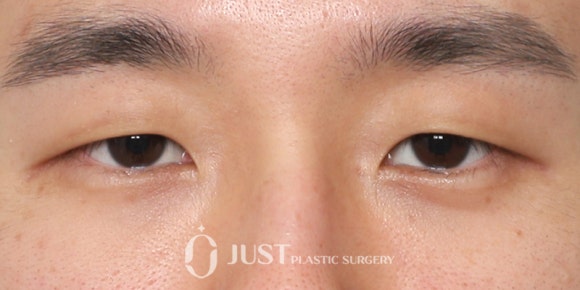
Eye No. 3 looks difficult.
There is asymmetrical scarring from a previous incision double eyelid surgery, the back line is drooping, and it does not extend sideways but drops off short and early. Ah, this seems difficult, doesn’t it?!
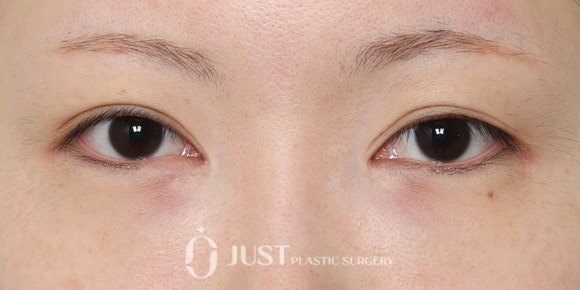
Eye No. 4
The eye-opening strength looks good, but the skin looks thick. Is natural adhesion eyelid correction possible?
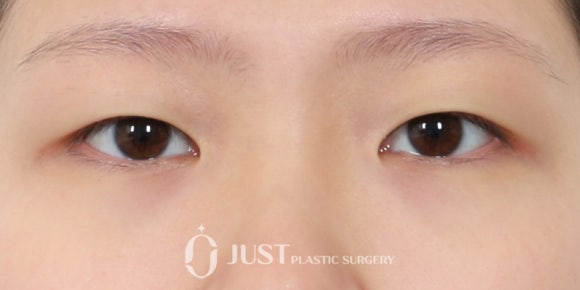
Eye No. 5 looks difficult.
Even though the eyebrows are being raised a lot, the eyes do not open well. Is it possible?
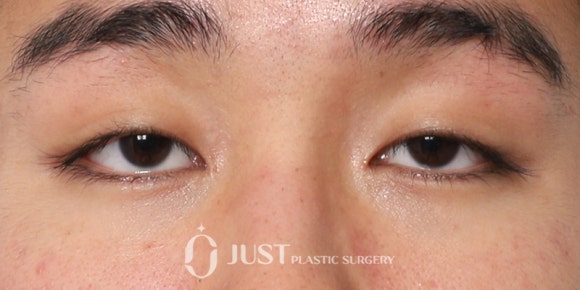
Eye No. 6 has many overlapping folds, severe hollowing above the eyes, and asymmetry as well. Can this eye be operated on with natural adhesion double eyelid surgery?
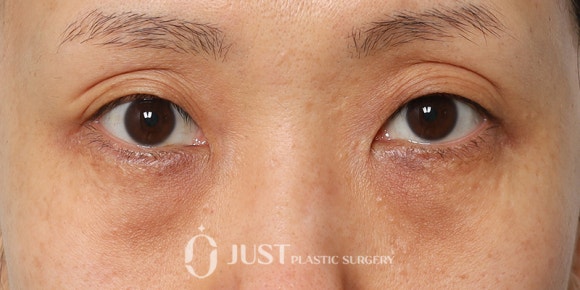
Eye No. 7 is the eye of a man with thick eyelids and slightly asymmetric eye-opening strength. In this case, is natural adhesion eyelid correction possible?
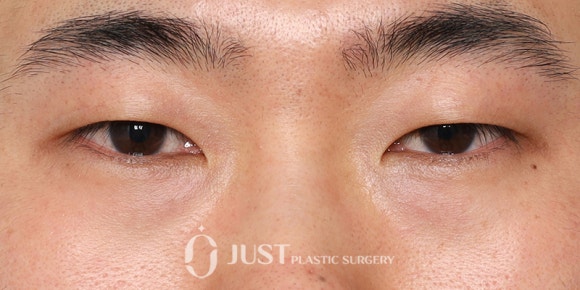
Eye No. 8
This is a woman who is using her inner eyebrows a lot. Is it possible?
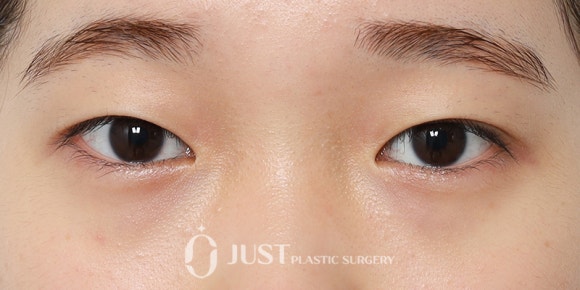
The answer? All are possible except No. 5.
No. 5 needs ptosis correction with incision double eyelid surgery.
I’ll show you the after photos later.
People who are considering natural adhesion eyelid correction usually think like this.
“Since it’s non-incisional, can I also do it?”
“They say there is less scarring, so isn’t this always better?”
“If possible, I’d like to do natural adhesion instead of an incision...”
As a plastic surgeon with 21 years of experience, and as a doctor who performs many revision eyelid surgeries, I can confidently recommend natural adhesion as a surgical method with many advantages.
Natural adhesion eyelid correction definitely has many strengths. It has less scarring burden, recovery is faster, and the results are good for suitable patients. I also personally prefer this procedure very much.
However, there are certainly cases where I think, “This eye would be a little disappointing if we go with natural adhesion,” or “In this case, incision double eyelid surgery would be better.”
Therefore, for the person receiving surgery, an extremely important point is to judge in advance whether natural adhesion is the right procedure for their eyes and whether it is possible.
So today, I will explain five types of eyes for which natural adhesion eyelid correction may not be a good match, along with ways you can check for yourself to some extent.
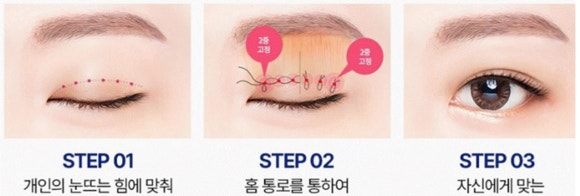
Non-incisional eyelid correction is a method that reinforces the structure that opens the eyes through small holes or points using thread. Because it does not involve a large external incision, it has the advantages of faster recovery and less scarring. However, the important point is that this method also shows its strengths only when performed on the right eyes.
Then let’s look at which eyes may be somewhat disadvantageous for natural adhesion eyelid correction.
● First, cases where the eyelid skin is too thick.
For these people, even if a crease is made, the skin may press down over the crease.
In simple terms, it feels like you folded something nicely, but the blanket is too thick so the folded line is hard to see.
To see whether this applies to you, you can check whether, when you apply double eyelid tape or create a line, the line does not appear clearly and instead feels like it is pressed down from above and quickly gets buried. (If the skin is too thin, double eyelid tape or glue may not work either, so in those cases consultation is needed.)
If you press on the eyelid skin with a toothpick and open your eyes, and the line appears briefly then disappears, or if your eyes generally look heavy and stuffy, incision surgery may be necessary.
● Second, cases where there is a lot of fat or flesh in the upper eyelid.
This is a little different from having thick skin. It means there is more volume inside than in the outer skin.
A simple way to check is to close your eyes and see whether the area above the eyes or the eyelid feels plump and bulging rather than smooth, or whether even if you have a hidden crease or a thin line, it gets almost completely covered once you open your eyes.
Some people especially look more swollen in the morning, and even at ordinary times the area above the eyes feels strongly bulging.
In such cases, even if a crease is made with a non-incisional method, the sharpness may be less than expected or the durability may be weak.
● Third, cases where the eyelid skin is sagging.
In this case, even if a crease is created, you may react with, “Huh? Why does it not look as defined as I expected?”
That’s because even if the crease exists, the sagging skin remains and the heavy feeling remains as well.
If, when looking in the mirror, the skin above the lashes hangs down like it is covering the eye, or if one eye in particular feels much more covered, you can suspect this case.
If lifting the sagging skin slightly upward by hand makes the eyes look more refreshed than simply creating a crease, another method may be more suitable than a simple non-incisional one.
In this case, natural adhesion surgery, which is a non-incisional double eyelid procedure, alone is difficult, and improvement can be achieved by combining it with brow lift under the brow, forehead lift, or eyebrow thread lifting. In such cases, incision double eyelid surgery is not absolutely necessary. Please keep this in mind.
● Fourth, cases where the eye-opening strength is significantly weak.
Many people are not aware of this themselves.
A simple way to check is to see whether, when looking straight ahead comfortably, the black part of the eye is largely covered from above.
It is also important to see whether, when trying to open the eyes wide, not only the eyelids move but the forehead also tenses and the eyebrows rise along with them.
If people often say you look sleepy in photos, or if you unconsciously use your forehead and eyebrows when opening your eyes, you may fall into this category.
In such cases, it is not enough to simply create a crease; you also need to consider how much support is needed to improve eye-opening strength.
However, what is important is that slightly weak eye-opening strength and very weak eye-opening strength are different. If it is only mildly insufficient, non-incisional surgery can still be a good choice, but if it is significantly insufficient, an incisional method may be more advantageous.
● Fifth, eyes that are originally likely to loosen or cases where a previous non-incisional surgery loosened quickly.
This is really important. If you previously had buried sutures or natural adhesion surgery and one side loosened quickly, the line faded quickly, or the durability was shorter than expected, you need to consider the possibility that the same thing could happen again if you use the same method.
In such cases, instead of thinking, “I can just do natural adhesion again,” it is important to first look at why it loosened.
You need to first determine the cause—whether it was skin, fat, or insufficient support for eye-opening strength—so that the next choice can be accurate.
Also, how much time passed after the natural adhesion double eyelid surgery before it loosened is a very important clue. If it loosened after more than 5 years, I tend to explain that revision surgery for natural adhesion double eyelids is also possible.
These five types can be considered cases that are not suitable for natural adhesion eyelid correction.
Complications such as infection in eye surgery are very rare. I have not personally experienced a single case. Incision double eyelid surgery is, of course, a good procedure when done well and is sometimes necessary, but it can cause issues such as eyes opening too widely, inability to close the eyes well, or scarring. That is one reason many people prefer natural adhesion double eyelid surgery, meaning non-incisional double eyelid surgery, first.
Now I’ll show you the after photos of the preoperative eyes I showed earlier.
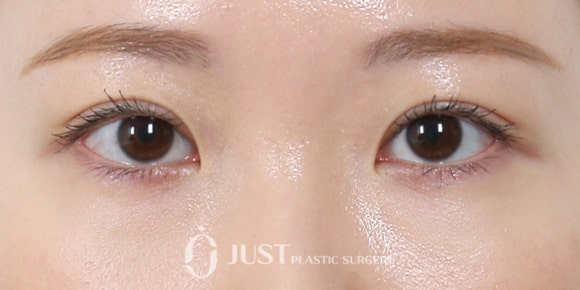
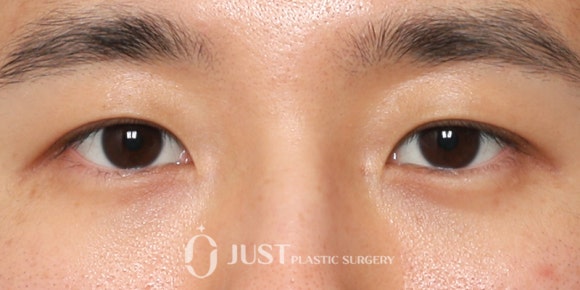
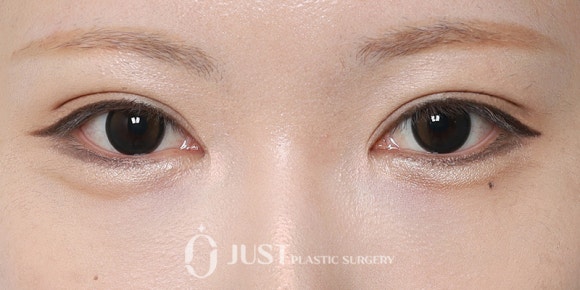
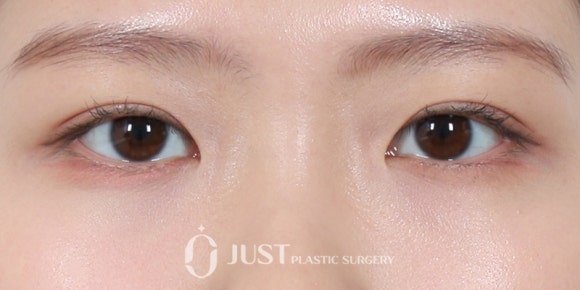
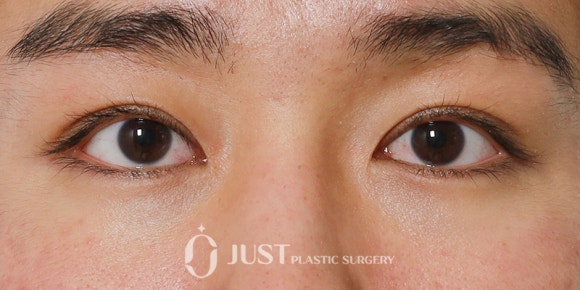
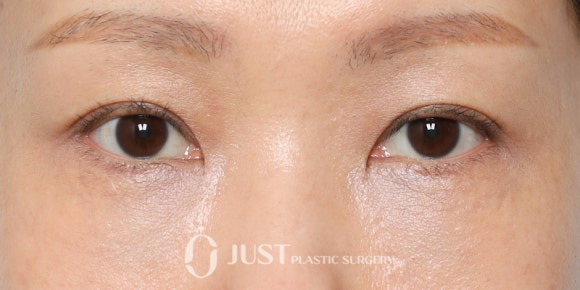
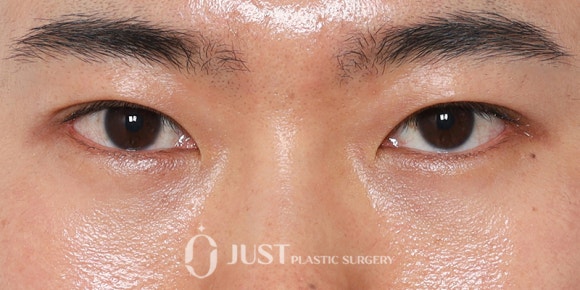
Even with natural adhesion double eyelids, it is possible to create a sufficiently large and beautiful line. Through non-incisional eyelid correction, the eye-opening strength can also be improved, and side effects such as inability to close the eyes well or eyes opening too widely are almost nonexistent.
Today we looked at natural adhesion eyelid correction. Natural adhesion is a good procedure. But it is not a good procedure for every eye. If it suits your eyes, it is truly a great procedure; if it does not suit your eyes, it can be less satisfying than expected. So if you are considering natural adhesion eyelid correction, I recommend first checking whether your eyes are suitable for a non-incisional procedure.
You may be able to get natural adhesion double eyelids for more eye types than you might expect.
How many did you get right?