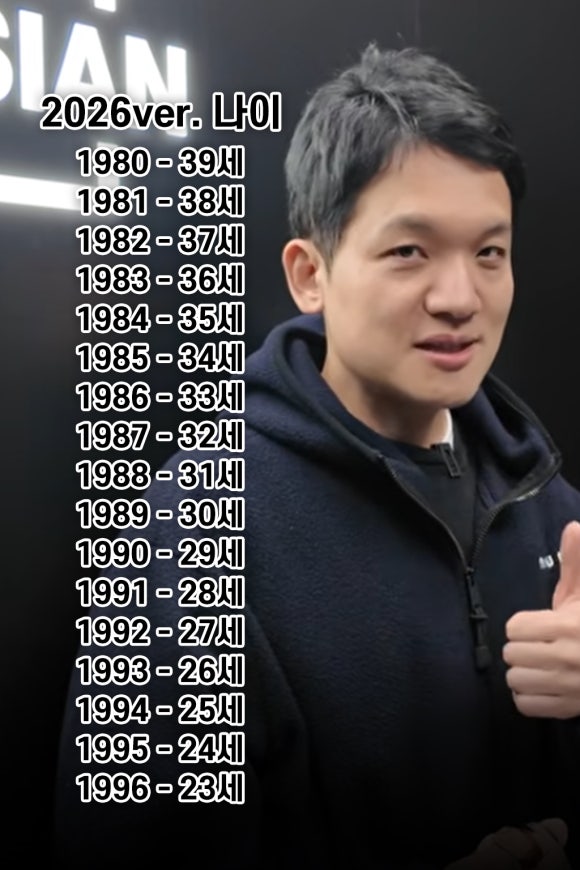
2026 ver. Age
You may have heard this kind of story a lot lately.
“Nowadays, if you multiply your age by 0.7 or 0.8, that’s your age in the past.”
For example,
if you are 50, that means you would have been about 40 by earlier standards.
If you look around, many people do seem much younger than they used to, so it can feel like this is at least somewhat true.
So is this really correct?
Today, let’s sort this out from a medical perspective.
Table of Contents
- Why did this idea come up?
- Have people actually gotten younger?
- Why this formula is wrong
- Aging progresses rapidly at certain points
- Facial aging progresses differently
- Conclusion: what matters is not the number
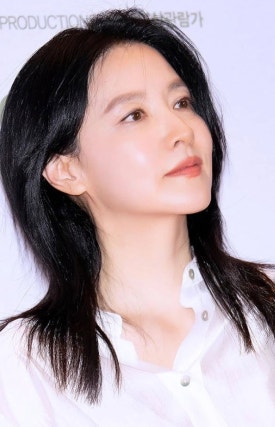
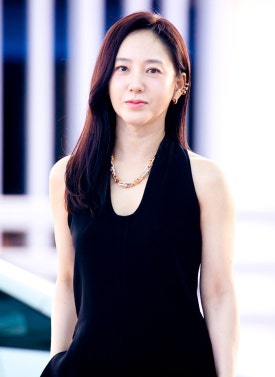
50s celebrities _ Lee Young-ae, Joo Mi
1️⃣ Why did this idea come up?
These days, when you look at people in their 40s and 50s, they clearly look much younger than before.
Many people exercise regularly, manage their body shape well, and actively take care of their skin or get procedures.
In the past, aging according to one’s age was natural, but now it is common to manage oneself and stay youthful. That is the era we live in.
So in practical terms,
people came to think, “People in their 50s today are like people in their 40s used to be,”
and the age × 0.7~0.8 formula is simply a way of simplifying that idea.

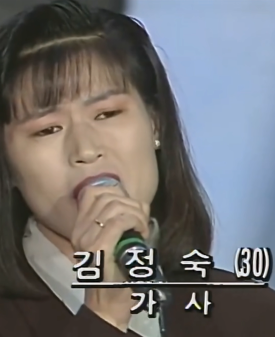
1993 National Singing Contest
2️⃣ Have people actually gotten younger?
This is, to some extent, true.
In particular, when it comes to visible age, there is definitely a change.
As factors such as skin condition, body shape, hairstyle, and lifestyle have improved, people overall have changed in a direction that makes them look younger.
In actual consultations, there are often cases where people who would have looked to be in their 50s in the past now look like they are in their early 40s.
So it would be hard to say that this statement is completely wrong.
3️⃣ Why this formula is wrong
Then can age × 0.8 explain a person’s actual age?
To say it first: medically, it is not a valid concept.
The reason is simple.
Aging is not a simple proportional equation.
4️⃣ Aging progresses rapidly at certain points
Recent studies show that aging does not progress at a constant pace as we might think.
In particular, a study published in 2024 analyzed various molecular and physiological changes in the human body and confirmed that aging changes abruptly at certain points.
According to a 2024 Stanford Medicine study (Nature Aging)
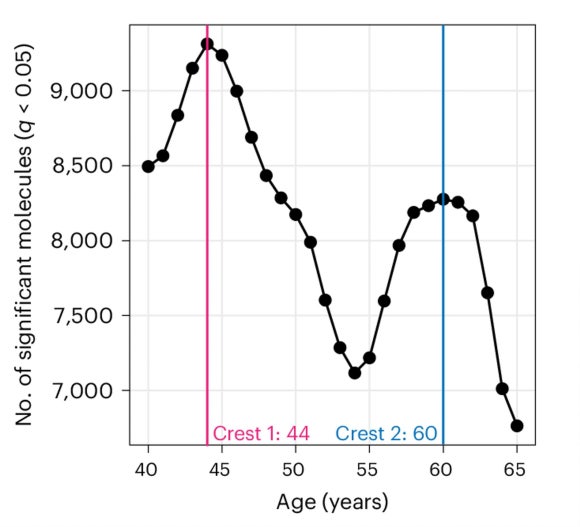
Aging research graph
Key points
● Humans do not simply age gradually
● At certain points, they change rapidly “like a wave”
In particular, there are two peaks: the representative transition points are as follows.
● Mid-40s
● Around 60 years old
At these times, it is not just a matter of aging little by little; multiple systems in the body change at once, and aging becomes noticeably more apparent.
In other words, aging should be understood not as a straight line that progresses slowly, but as a nonlinear structure in which mild periods and rapid change periods repeat.
The reason this matters is that patients’ comments like “I suddenly feel like I’ve gotten old at some point” are something science can actually explain.
So simply converting 50 into 40 does not reflect reality.
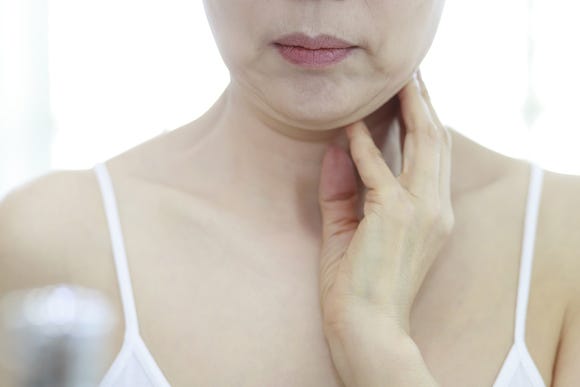
Facial aging
5️⃣ Facial aging progresses differently
In particular, the face is not just a matter of skin.
Aging progresses across multiple layers at the same time.
In the skin, elasticity decreases and wrinkles form, and fat decreases and moves downward.
On top of that, as the supporting structures such as ligaments loosen, sagging becomes more severe, and the skeletal structure also changes.
A representative result of these overlapping changes is the formation of jowls and the collapse of the jaw line.
In the end, the important change in the face is not that the lines disappear, but that structural changes cover up and break down those lines.
Because this cannot be solved with simple skin care alone, an accurate structural analysis is necessary.


40s celebrities _ Ha Ji-won, early debut period and recent
6️⃣ Conclusion: what matters is not the number
To summarize,
people today have not become younger; they just look younger because they are well managed.
And aging does not progress at a constant speed; it changes abruptly at certain points.
So what matters is not converting age into a number, but accurately understanding what state your face is currently in and what changes are taking place.
When I consult with patients, I look more at how and where the face has changed than at the age itself.
That is because only by analyzing that part accurately can we create natural and effective results without unnecessary procedures.
📌 Closing
Rather than turning age into a simple formula, it is more important to accurately understand the current condition of your face.
If you have recently felt a sudden change, that point may be the turning point in aging.
At times like this, rather than worrying vaguely, I think it is a good idea to get an accurate diagnosis of your current condition.