Hello.
Lower blepharoplasty is a surgical procedure that directly incises the skin beneath the eyes to improve the tear trough, bulging fat, and under-eye wrinkles together.
Many people worry about scars under the eyes, but in reality, scars often become considerably less noticeable over time. Therefore, the key to lower blepharoplasty is not the scar itself, but how naturally the tear trough and bulging areas are improved, along with the under-eye skin wrinkles.
Another important advantage of lower blepharoplasty is that it can correct drooping lower-eyelid fullness.
📌 Table of Contents
-
What Is Lower Blepharoplasty?
-
When There Are Many Under-Eye Skin Wrinkles
-
When the Lower-Eyelid Fullness Is Drooping
-
When the Under-Eye Fat Is Significantly Protruding
-
Summary: When Lower Blepharoplasty Is Needed
📌 First: When There Are Many Under-Eye Skin Wrinkles
Lower blepharoplasty can improve under-eye skin wrinkles relatively effectively.
During surgery, the muscle and skin beneath the skin are separated, then newly stretched and repositioned. Through this process, deeply formed wrinkles caused by the muscle and skin adhering to each other may be eased to a greater extent.
Eye Thermage is also a good treatment, but for deep under-eye wrinkles that have already become established, lower blepharoplasty may offer a more fundamental approach to improvement.
What kind of wrinkles does this refer to?
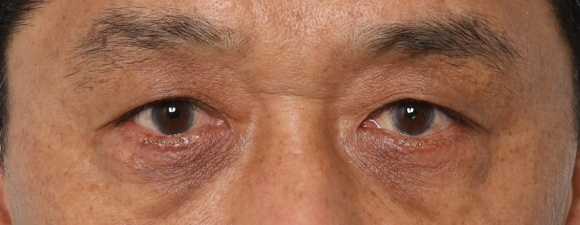 Before lower blepharoplasty
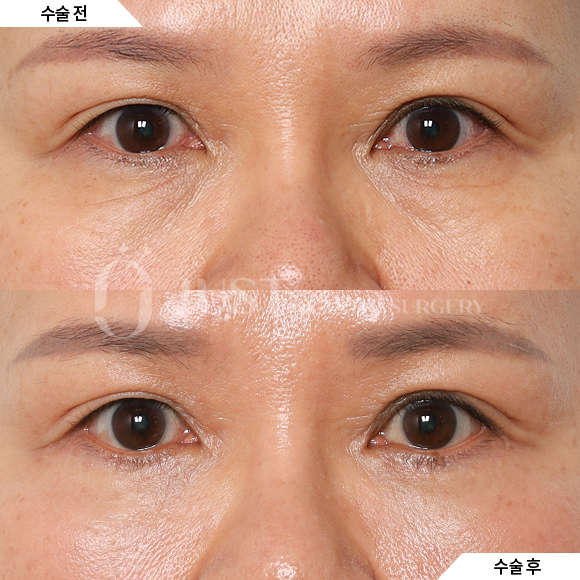 Before and after lower blepharoplasty
This primarily refers to wrinkles that have formed deeply in the area where dark circles are located.
Even if the wrinkles are not very deep, improvement through lower blepharoplasty may be considered if they are bothersome.
📌 Second: When the Lower-Eyelid Fullness Is Drooping
Lower-eyelid fullness refers to the area that naturally becomes more prominent as the orbicularis oculi muscle contracts when the eyes are closed.
However, as the skin becomes lax and loses elasticity, this fullness can droop downward.
If only lower-eyelid fat repositioning is performed in this condition, the tear trough may improve, but the drooping lower-eyelid fullness may instead become more noticeable.
Therefore, if drooping lower-eyelid fullness is confirmed through a thorough evaluation before surgery, it is advisable to consider lower blepharoplasty as well.
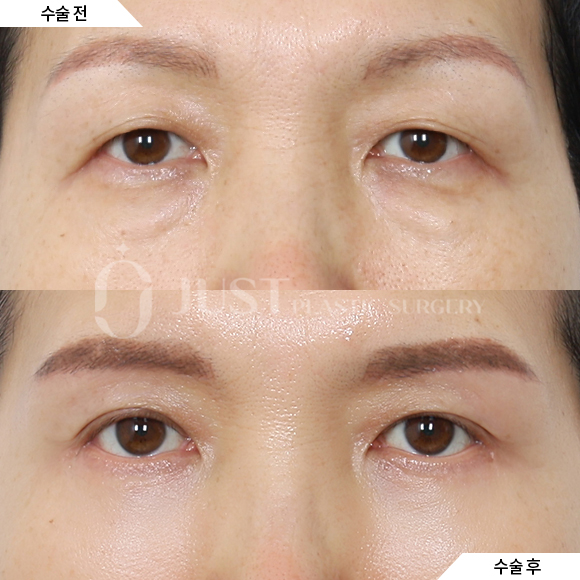 Before and after lower blepharoplasty—case of drooping lower-eyelid fullness
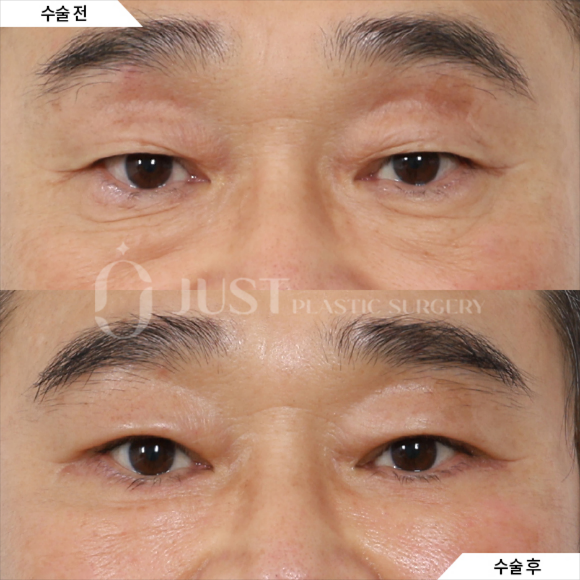 Before and after lower blepharoplasty—case of drooping lower-eyelid fullness and under-eye wrinkles
📌 Third: When the Under-Eye Fat Is Significantly Protruding
When the under-eye fat is significantly protruding, the skin is often stretched as well.
In such cases, simply repositioning the fat may leave excess skin that sags, like a deflated balloon.
Therefore, performing appropriate skin excision along with fat repositioning through lower blepharoplasty can help achieve a more natural and long-lasting result.
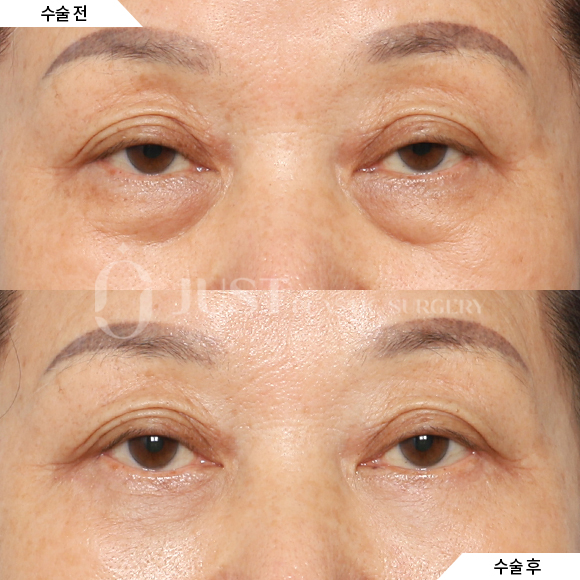 Before and after lower blepharoplasty—case of protruding under-eye fat
For those with a considerable amount of excess skin, appropriately reducing the skin through lower blepharoplasty may also help prevent future under-eye wrinkles.
📌 Summary: When Lower Blepharoplasty Is Needed
Lower blepharoplasty may be considered as a priority in the following cases.
✔️ When the under-eye skin wrinkles are deep
✔️ When the lower-eyelid fullness is drooping downward
✔️ When the under-eye fat is significantly protruding
✔️ When the skin is considerably stretched
✔️ When skin laxity is expected even with lower-eyelid fat repositioning alone
We have now looked at the characteristics of eyes for which lower blepharoplasty may be particularly needed.
Do I need lower blepharoplasty, or would lower-eyelid fat repositioning alone be sufficient?
The best way to make an accurate determination is through an in-person examination.
If you have questions, we recommend visiting the clinic for a consultation.
Thank you.