Hello, this is Relieve Clinic.
There is a dermatology procedure often mentioned as one of the secrets behind celebrities who maintain youthful-looking skin.
It is Ultherapy and Thermage.
These two procedures have already been covered in various media, so you may already be familiar with their effects.
However, there is one factor that draws as much attention as their powerful anti-aging effects.
That is the concern about pain during the procedure.
Because of this, many people find it difficult to easily decide on treatment, even though these are highly effective lifting procedures.
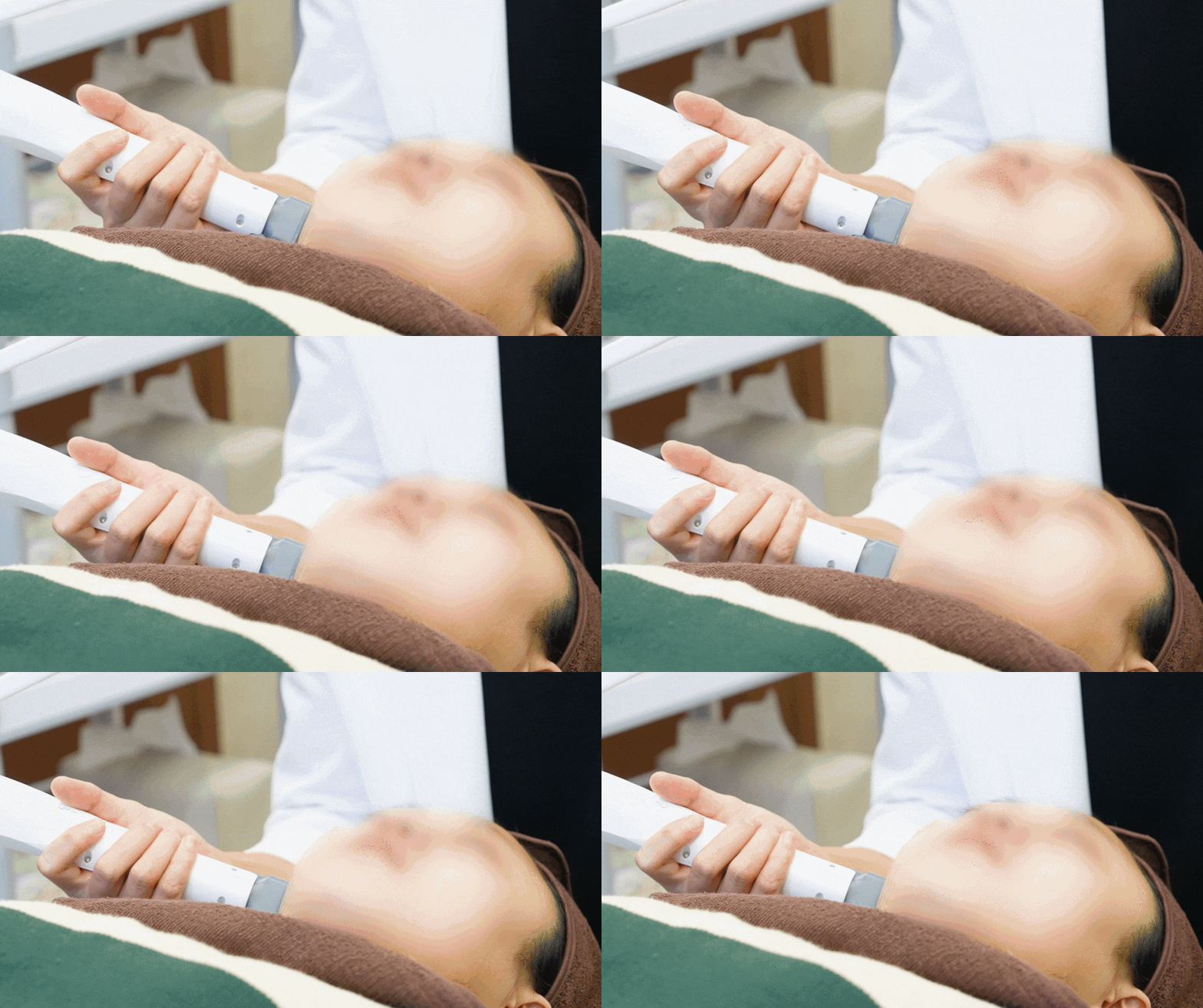
Lifting procedures generally work by using thermal energy to stimulate skin tissue and induce changes. In this process, the tissue inside the skin is stimulated, which naturally comes with pain.
In particular, the higher the energy intensity, the greater the pain tends to be.
The reason Ultherapy and Thermage are known as painful procedures is that they are among the more effective options in ultrasound (HIFU) lifting and radiofrequency lifting, respectively.
But what if there were a way to minimize pain when receiving Ultherapy or Thermage?
So, without further ado, I will now explain in detail how to minimize pain from Ultherapy and Thermage.
Ultherapy and Thermage pain?
It depends on the level.
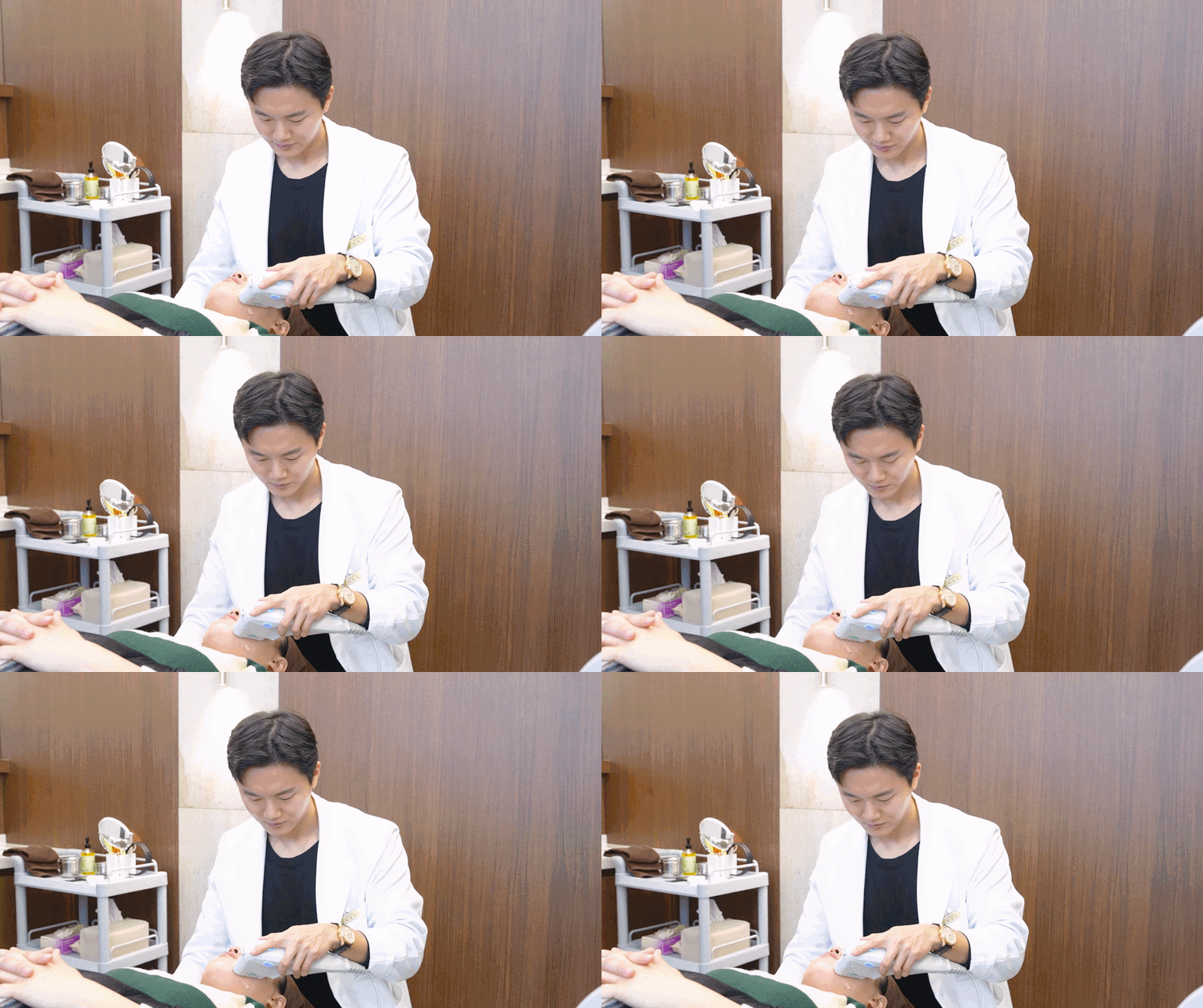
Ultherapy and Thermage can be performed by adjusting the appropriate energy according to an individual's skin thickness, sensitivity, amount of fat, and other factors.
In general, the higher the energy, the stronger the skin stimulation and the greater the pain.
In the past, there was a strong belief that higher energy meant better results, so procedures were often performed at the maximum intensity.
However, recently, the prevailing view is that setting the energy appropriate for the individual reduces side effects such as burns and is more effective for long-term skin care.
In other words, receiving treatment at the right intensity for you can reduce the burden of pain while still allowing you to fully benefit from the results.
Ultherapy
Many people ask, "Which hurts more, Ultherapy or Thermage?"
Although it varies from person to person, many people feel that Ultherapy is relatively more painful.
This may be because Ultherapy delivers ultrasound energy deeper into the skin (the SMAS layer) compared to Thermage.
Ultherapy allows the energy intensity to be adjusted from level 1 to 4, but caution is needed because excessively high intensity can cause hollowing of the cheeks due to fat atrophy.
Thermage
Thermage is sometimes called a "wrinkle iron" because it gives the skin a warm sensation and smooths out wrinkles as if ironing them.
With Thermage, the energy value can be adjusted more finely than Ultherapy, from 0.5 to 8.0 levels, and procedures are generally performed at 4 levels or below.
The intensity usually recommended by the manufacturer is 2 to 2.5 levels, but this is adjusted depending on skin sensitivity and pain tolerance.
While immediate results are important in radiofrequency lifting, the greater value lies in maintaining skin elasticity over the long term and for preventive care, so it is better to perform the procedure at an appropriate intensity.
Procedures carried out at excessive intensity without considering pain management not only cause discomfort but can also place too much stress on the skin, which may in fact lead to side effects, so caution is needed.
Ultherapy and Thermage pain,
Pain reduction methods using anesthesia
Of course, as mentioned earlier, even when an appropriate energy level is used, pain is still inevitably part of these procedures.
That is why clinics use additional methods such as anesthesia to manage pain.
Among them, the most commonly used method is topical anesthetic cream.
- Topical anesthetic cream
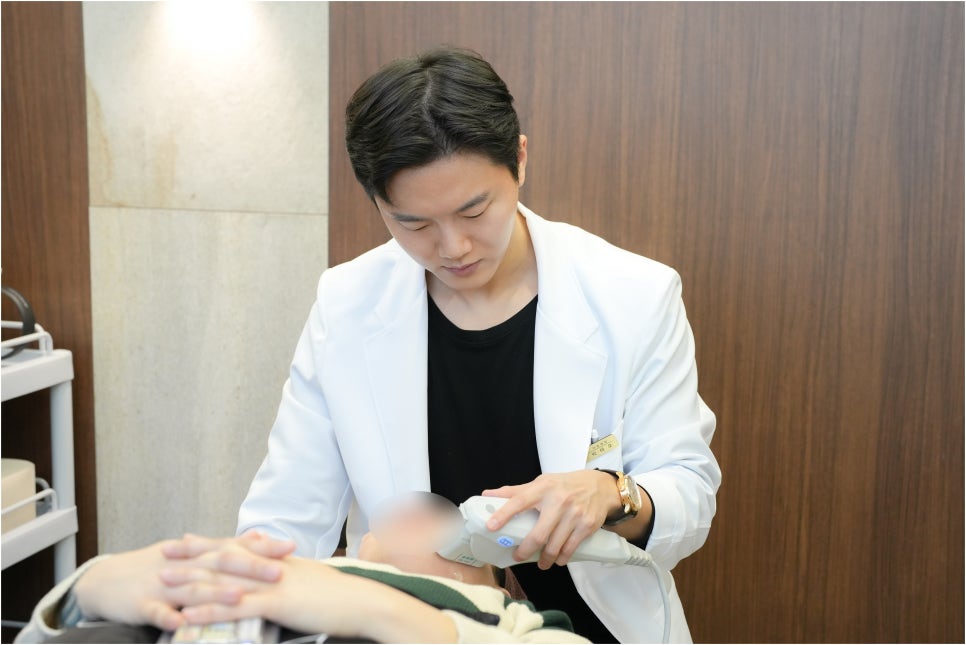
Topical anesthesia is the most basic method for relieving pain by blocking nerve transmission.
However, for the anesthetic ingredient in the cream to be sufficiently absorbed into the skin, at least 20 to 30 minutes are needed.
If the anesthesia time is not long enough, or if the skin barrier is thick, the anesthetic effect may not appear as expected.
That is why it is important to visit a dermatology clinic that secures enough procedure time and properly manages the anesthesia process.
- Anesthetic injection
If pain still feels strong even after using anesthetic cream sufficiently, combining it with an anesthetic injection can be a good solution.
In particular, procedures like Ultherapy that deliver energy to the deeper layers of the skin (the SMAS layer) clearly have limitations with topical anesthesia alone.
In such cases, using a local anesthetic injection together can make the effect more certain and minimize discomfort during the procedure.
It is important to choose the anesthesia method that is suitable for you through 충분한 consultation with medical staff.
People with thin skin or those who react sensitively to stimulation may still feel strong pain even when using both topical anesthesia and anesthetic injections.
In such cases, considering another procedure with less pain burden instead of Ultherapy or Thermage is one option.
Recently, a new lifting device nicknamed "painless Thermage" has also appeared.
It is XERF.
If Ultherapy and Thermage pain feels burdensome,
consider XERF
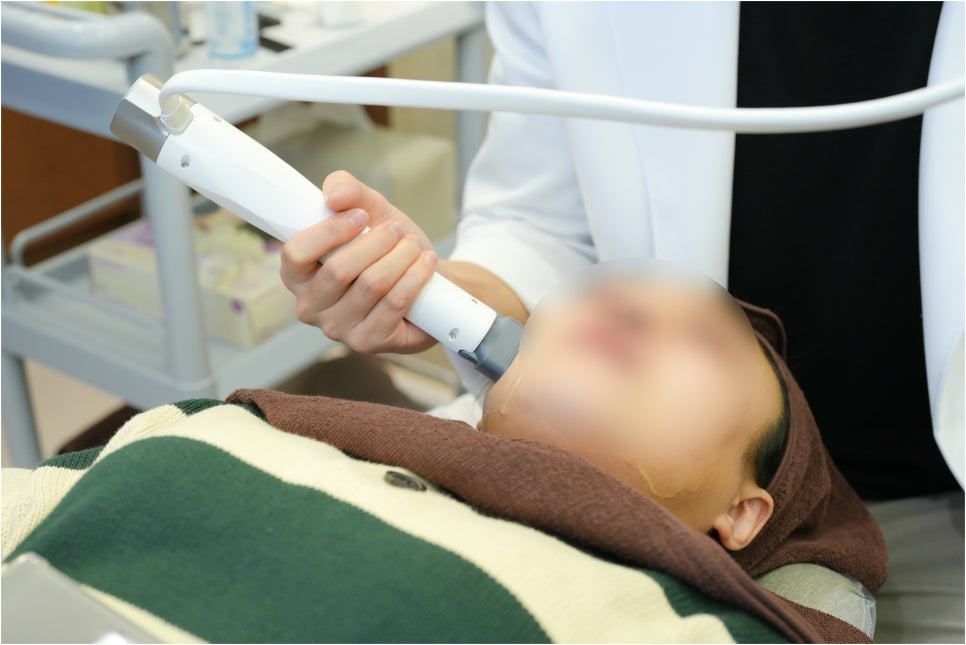
XERF is a device that uses the same radiofrequency energy as Thermage, and it can promote collagen production to improve skin elasticity and create a lifting effect.
Its biggest advantage compared with Thermage is that it causes significantly less pain.
In fact, it is comfortable enough to be performed without topical anesthesia.
It also stands out from existing lifting devices in that it can precisely control the target depth and energy.
For example, areas with reduced elasticity can be stimulated more intensively in the dermis, while thinner areas such as around the eyes can be treated with lower energy to reduce the risk of burns.
In addition, it can be expected to help not only improve elasticity but also reduce fat and contour the face.
In other words, XERF can deliver multiple effects with a single device, making it suitable for addressing complex skin concerns.
More details about XERF are covered further in the following article, so it may be helpful to take a look.
The existing Ultherapy and Thermage are proven devices with excellent lifting effects.
However, for those who are concerned about pain, considering a new alternative is also a good approach.
Recently, a variety of devices have appeared that can minimize pain while maximizing results.
Therefore, it is important not simply to choose the "most famous device," but to select the one most suitable for your skin condition.
If you are wondering which lifting procedure would be most effective for you, it is best to decide after thorough, in-person consultation with medical staff.
I hope that readers of this article will achieve satisfying results through a procedure that is right for them, and I will end here.
This has been Relieve Clinic. Thank you.