Hello, I’m Dr. Park, who aims to provide pain-free procedures.
The thing people fear most after Juvelook treatment is a “nodule.”
However, swelling and nodules can be clearly distinguished, so just by reading today’s post, you should be able to tell whether the swelling you’re seeing is simple swelling or a nodule.
To address these concerns,
why this happens,
how to manage it,
and how to set the management period,
I’ll explain why Juvelook Volume swelling occurs, how to respond to it, and what interval should be observed for treatment.

Why do you swell after Juvelook treatment?
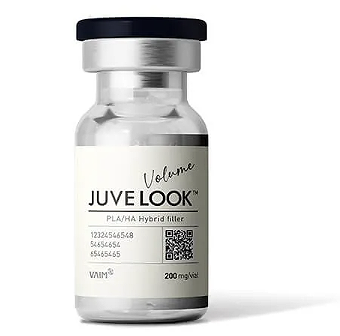
Juvelook is a product that combines PDLLA (Poly-D,L-Lactic Acid) particles with hyaluronic acid (HA).
Juvelook and Juvelook Volume have the same ingredients, but the particle size is different. Juvelook Volume has larger particles.
It makes sense that a product with relatively larger particles can penetrate deeper into the dermis and produce more collagen, right?
Also, because PDLLA and hyaluronic acid have a physical “volume” immediately after treatment,
you may feel temporary fullness or swelling.
Three main causes of Juvelook swelling
- The volume of the injected material itself
: Juvelook is diluted with normal saline and injected in amounts of 1–2 cc or more, and the treated area temporarily swells right after the procedure.
- Hyaluronic acid’s water-binding ability
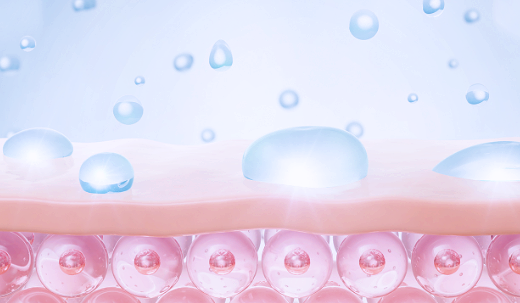
: Hyaluronic acid has a very strong ability to attract moisture, so for several days after injection, the volume may increase further due to water absorption.
That is why it may look as if there is excessive fullness.
- The initial inflammatory response to PDLLA particles
: During the process of inducing collagen regeneration, a mild tissue reaction occurs, and as a result, slight swelling may accompany it.
→ The swelling caused by these factors is not a real increase in “fat or volume,”
but a temporary change due to the action of the Juvelook Volume medication, water binding, and the initial immune response.
The fullness right after the procedure is mostly a normal reaction,
and it gradually subsides over time and transitions into a collagen remodeling effect.
▶ Typical course (average figures; individual differences may occur)
-
1–3 days: Temporary swelling due to the volume of the medication and water binding
-
3–7 days: Swelling eases, and initial absorption progresses
-
2–4 weeks: Collagen production begins according to PDLLA activity
-
Around 3 months: Collagen volume forms, resulting in a natural and stable outcome
Swelling and nodules are clearly different
After Juvelook treatment, some people often say, “I can feel a lump.”
At this point, there is something we must distinguish.
That is the difference between swelling and a nodule.
In the Juvelook procedure, which is performed by spreading the product widely within the dermal layer of the skin using a cannula rather than a regular syringe,
the cannula may pass through the soft tissue of the skin and cause temporary tissue damage.
Because of this process, the skin may swell or feel slightly bumpy.
However, this is not a nodule.
● How to distinguish Juvelook Volume swelling from a nodule
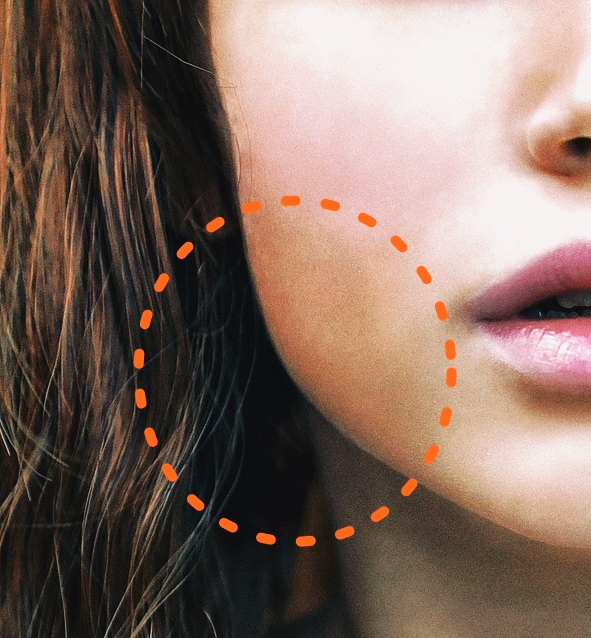
- Swelling occurs within 1–2 weeks right after the procedure and usually resolves naturally within about 2 weeks.
The lump feels soft or slightly compressible.
- Nodules tend to appear after some time has passed following the procedure, with the possibility of occurring 1–3 months later.
They are firm, clearly palpable in a localized area, and may be accompanied by mild pain when pressed.
※ If a nodule is suspected, it is most important to visit the clinic where you received the Juvelook treatment and get professional medical evaluation.
Do not become anxious and immediately think, “Is this a side effect?” just because you feel something after the Juvelook procedure.
Instead, I recommend calmly observing and considering when it appeared and what it feels like. Nodules are extremely rare.
And even if a nodule does occur, treatment is possible unless it is a granuloma, so there is no need to worry too much.
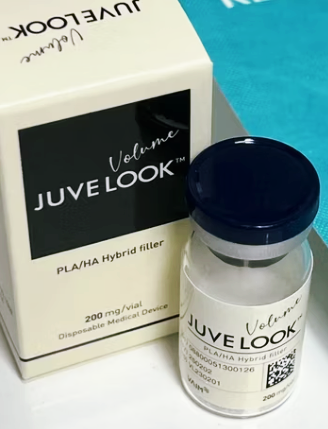
What is the Juvelook Volume treatment interval?
The treatment interval for Juvelook Volume suggested by the manufacturer is
three sessions at one-month intervals, followed by one cycle of maintenance every 1 to 2 years.
However, in general, the ideal plan is considered to be about three sessions at one-month intervals for the initial treatment.
Juvelook Volume continues collagen production for 3 months, and its effects can last up to 12 months.
To obtain this cumulative effect, periodic management and a planned treatment schedule are much more helpful than a single one-time procedure.
I tend to explain rather strongly that you should not start Juvelook Volume unless you plan to do it three times... because one session alone does not produce enough collagen.
Unlike filler, which immediately restores volume right after treatment,
the key feature of Juvelook is that long-term collagen production develops gradually rather than instant volume.
Rather than expecting a complete effect from just one session, maintaining the proper interval while considering the collagen regeneration cycle is what matters.
If you think of the result about 3 months after the procedure as the real effect, it will be easier to understand.
Thank you, this was Dr. Park.