Hello.
I’m Dr. Tae-oh Park of Relieve Clinic, where pain relief is treated as a priority.
When consulting about Ulthera, there is almost always one question that comes up.
"I heard it hurts a lot...?"
And right after that comes, "Isn’t it hard if you don’t use sedation?"
Ulthera is known as a painful procedure, so quite a few people assume that sedation is a given.
It is not easy to simply say, "It’s bearable~" because many people do feel the pain strongly.
However, I do not recommend sedation for Ulthera procedures.

Why does Ulthera hurt?
Ulthera is a procedure that uses high-intensity focused ultrasound (HIFU).
It concentrates energy not on the outer skin, but deep within the skin, into the fat layer and fascial layer.
In simple terms,
it briefly heats the inside of the skin very intensely and then quickly moves on.
Because this is different from procedures like lasers or radiofrequency that warm the skin gradually, the pain signals are relatively strong.
During the procedure, you may feel a sharp, stabbing pain deep in the skin,
and after the procedure, a sore, heavy feeling may remain for several days to a few weeks.
This is not so much an abnormal side effect as a reaction that appears during the process of skin tissue being stimulated and recovering.
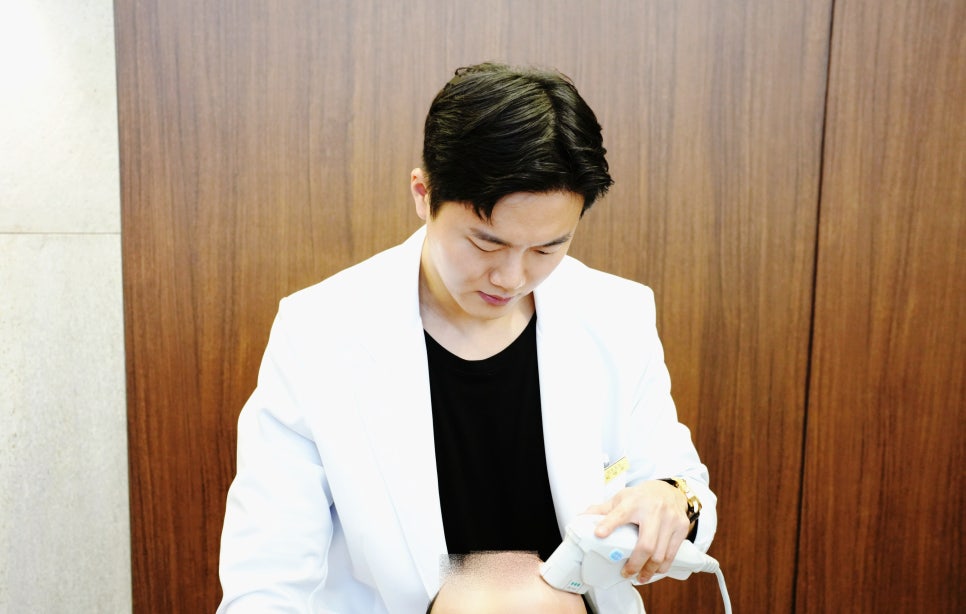
Why pain differs from person to person
Even with the same Ulthera treatment, some people say, "It was better than I expected,"
while others say, "It hurt too much."
The biggest difference is the thickness of the skin and fat. For people with a certain amount of fat layer, the energy is buffered once in the fat, so the procedure may feel relatively less painful.
On the other hand, for people with thin skin and fat, the stimulation is more likely to be 전달 through layers with many nerves or close to the bone, making the pain feel stronger.
It can also vary depending on your condition on the day of the procedure.
If you did not sleep well, had a lot of caffeine, or are tense, you may feel the pain more sensitively when your condition is not good.

Why people still choose Ulthera even though it hurts
These days, there are many lifting procedures with much less pain. Procedures like Onda and Titanium are far more comfortable.
Even so, the reason people choose Ulthera, which is known to hurt, is because "the effect is strong and lasts a long time."
It creates a high temperature momentarily and forms "coagulation points" within the skin, and as these coagulation points contract, they create a force that actually tightens the inside of the skin. Because of this unique treatment structure, Ulthera is not easily replaced entirely by other lifting procedures.
Many people also come to Relieve after learning about the recently launched Ulthera Prime.
Almost 99% of patients say, "Why do people use sedation for this? It’s bearable."
And every time, I feel quite proud.

Why I do not recommend sedation for Ulthera
The first reason is safety.
The medications used for sedation can unnaturally suppress breathing. Unless the environment is fully equipped with anesthesia staff and equipment like a large hospital, it can be risky and burdensome.
The second reason is the result.
This is even more important. Even with sedation, pain responses remain.
When a hot shot is delivered during the procedure, the patient may unconsciously turn their head or move their body. This is our body’s normal, instinctive response to pain.
Ulthera is a procedure that must be delivered while adjusting the position very precisely, so even a small movement can allow energy to go to an unintended area.
I would say that it is actually safer to receive the procedure while normally awake, talking a little with the doctor and staying comfortable,
and the results are also more stable.
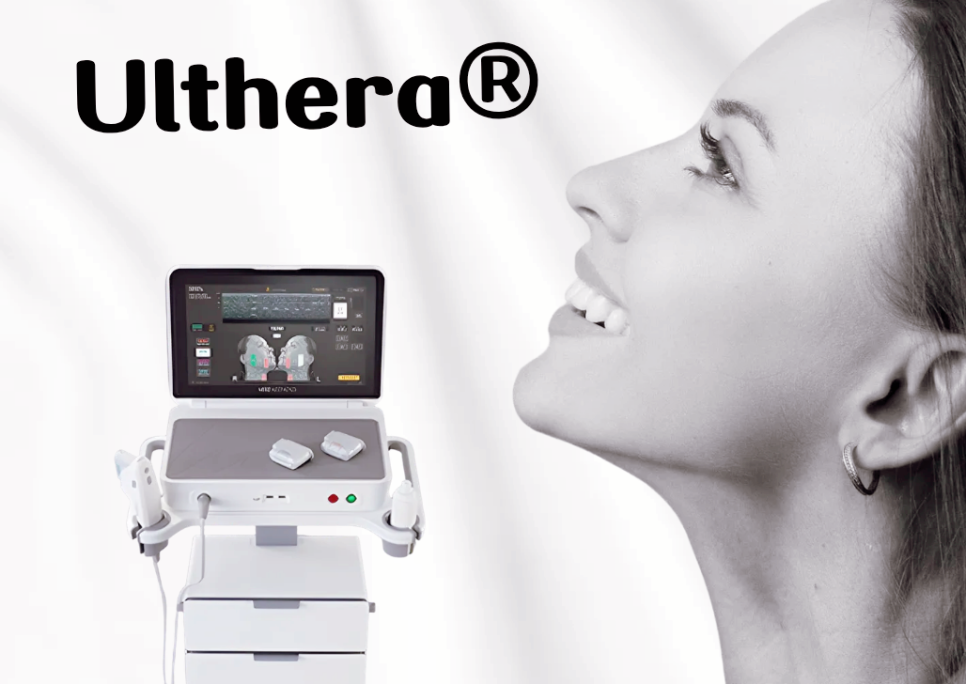
How to reduce pain without sedation
Pain is not something to just endure; it is something to manage.
Taking pain medication before the procedure, applying numbing cream thoroughly and carefully, and adjusting the tip and energy according to the area can all help
control pain sufficiently.
If needed, another option is to divide the shots or combine the treatment with a lifting procedure that causes less pain.

To summarize, Ulthera is indeed a painful procedure.
But it is not a procedure that you "cannot do without sedation."
If your facial condition is accurately assessed,
if you know how to reduce pain,
and if you receive treatment at a place that performs it precisely, it can be controlled to a level that is sufficiently manageable.
Rather than the patient personally bearing the risks of sedation, I recommend receiving Ulthera and Ulthera Prime safely and in a way that leaves satisfying results.
I wrote at length because I wanted to explain the risks of sedation even a little more.
This was Dr. Park of Relieve Clinic. Thank you.