Hello.
I’m Dr. Taeo Park, Director of Lillib Clinic.
"Rejuran—honestly, doesn’t it hurt a lot?"
This is the first question that comes up during consultations. (It’s truly one of the most common questions about Rejuran.)
People often hear that it’s good for skin regeneration,
but since words like "embossing," "pain," and "salmon injection" come to mind first, it can be hard to decide easily.

Especially if your skin is already sensitive,
it’s only natural to worry, "Won’t this just irritate it even more?"
So today, I’d like to organize Rejuran from a realistic perspective,
and from the essential viewpoint of skin regeneration.
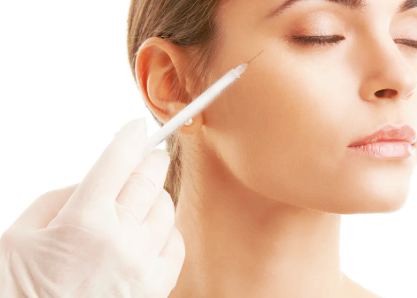
When skin suddenly becomes rough and dry
Skin condition often doesn’t worsen gradually; many people feel that it suddenly changed one day.
Suddenly, makeup doesn’t apply smoothly, the surface looks oily but the inside feels tight all the time, and fine lines and pores start standing out more than usual.
At this stage, the skin is often not simply lacking moisture—it may be in a state where the skin barrier has weakened and its own ability to recover has declined.
That’s why even layering on moisturizing products can still leave you feeling frustrated.
At times like this, many people look not for a treatment that simply "fills," but for one that helps the skin itself "recover."
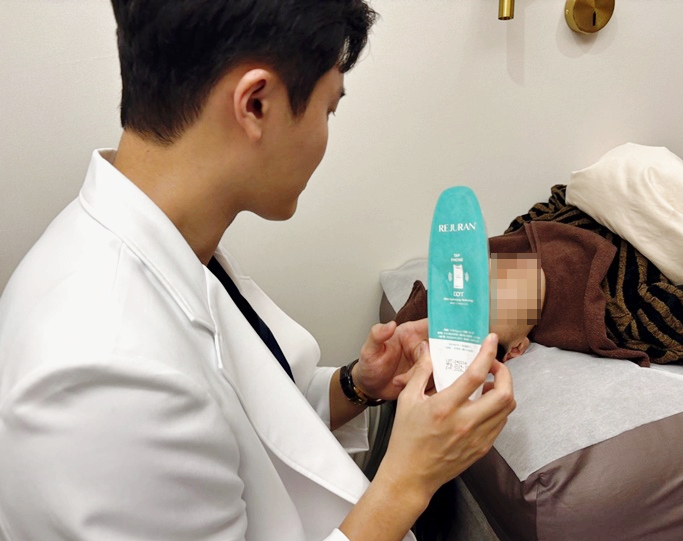
Why Rejuran is classified as a skin regeneration treatment
The key ingredient in Rejuran is PN (Polynucleotide) extracted from salmon DNA.
This PN induces cellular regeneration responses in the dermis and creates an environment in which damaged tissue can recover.
The important point is that Rejuran Healer is not a treatment that simply makes the surface more hydrated.
It is a treatment that changes the skin’s internal environment itself.
As the environment for collagen production gradually improves and the skin barrier strengthens, the skin changes in a direction of greater stability over time.
That is why Rejuran’s effects are closer to gradual recovery than to immediate change.
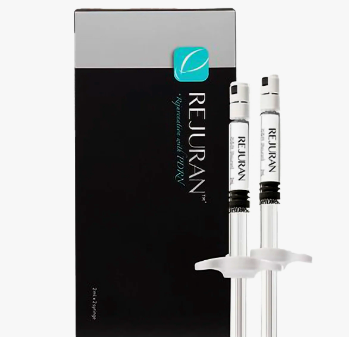
Salmon injection (PDRN) and Rejuran (PN): similar, yet different
"If it’s extracted from salmon, isn’t it all the same?"
The answer is no.
According to research in the literature, the two ingredients are distinguished based on a molecular weight threshold of 1500 kDa.
PDRN is a relatively short DNA chain, so it has better penetration and is used in topical products or injections,
while PN has a long DNA chain structure with stronger moisturizing ability and tissue support, so it is used only as an injection.
PN has excellent water retention and can stably induce skin regeneration responses,
which is why Rejuran is classified as a "skin regeneration injection."
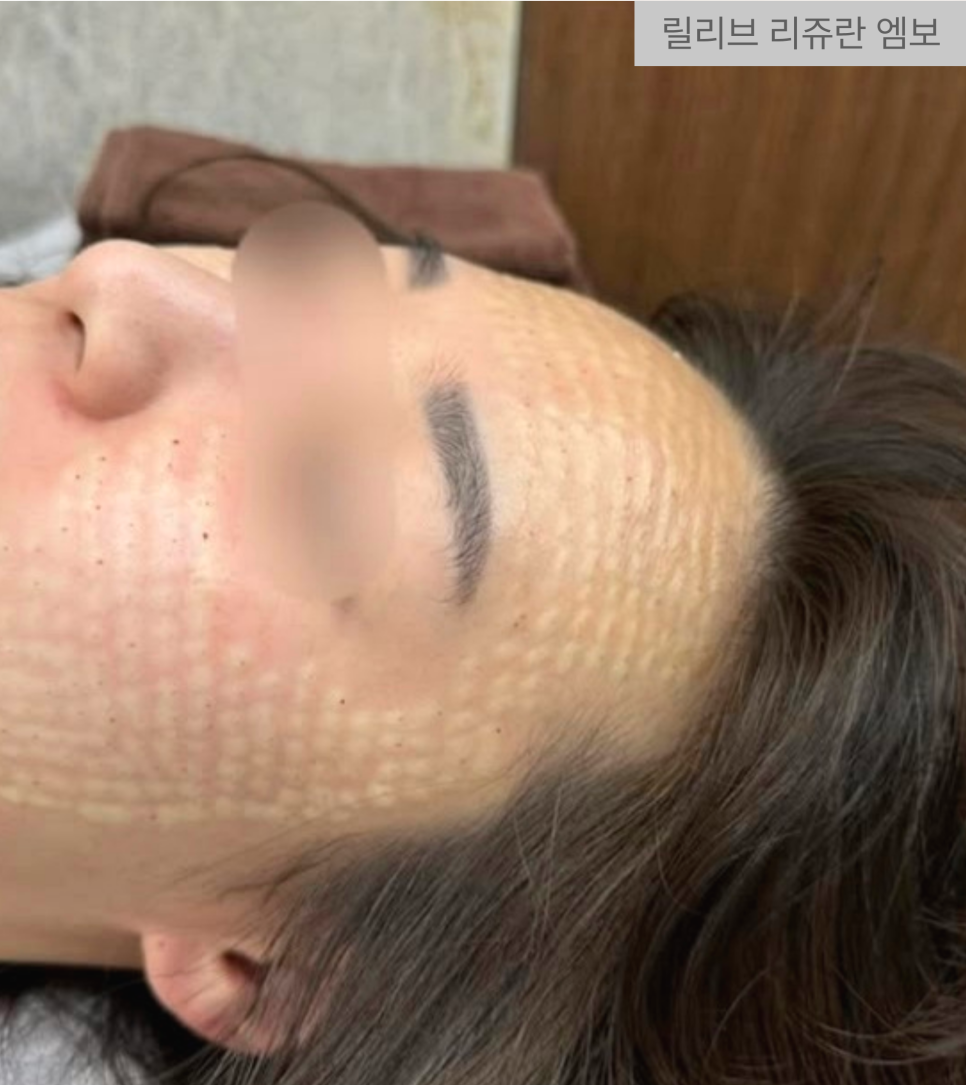
A realistic explanation of Rejuran pain and embossing
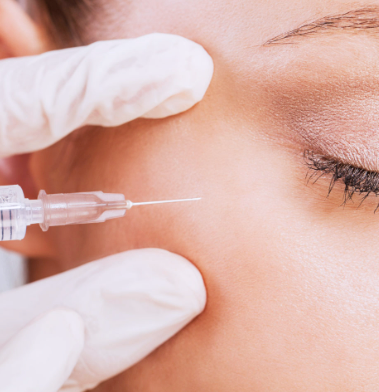
Because Rejuran is an injection treatment, it cannot be completely painless.
However, when numbing cream is applied sufficiently, most people describe the sensation as "slightly sharp" or "dull and sore."
At our Lillib Clinic, we apply enough numbing cream,
then perform the procedure after waiting long enough for the pain-reducing effect to set in, so it feels less painful.
(Also, because I have my own know-how built through pain research, patient satisfaction with Rejuran is high.)
The embossing marks that appear after the procedure are not a side effect; they are a sign that the medication has been injected into the correct dermal layer.
In most cases, they naturally subside within a day or two and do not significantly affect daily life.
What matters more than pain itself is the accuracy of the injection depth and amount,
and this is what determines the outcome.
When Rejuran takes effect and how long it lasts
Rejuran is not a treatment that you expect to show obvious changes immediately after receiving it.
Usually, around two weeks after the procedure, people begin to feel that their skin texture is becoming smoother,
and noticeable changes appear between 2 and 4 weeks.
In general, after three treatments at one-month intervals, the results last about 6 months to 1 year,
and then maintenance treatments every 3 to 4 months can help keep the skin condition stable.
Skin types that it suits well
Rejuran is not a treatment that adds volume or changes facial contours.
If your skin has become thinner and you are concerned about internal dryness and fine lines together,
or if repeated procedures have left your skin feeling worn out, it can be an option to restore the skin’s basic condition.
Rather than dramatic short-term change, it is about the skin gradually becoming more comfortable and stable over time.
That direction is the essence of Rejuran.
If you need recovery and want skin regeneration,
I hope you can experience Rejuran with minimal pain through Lillib’s own solution.
Thank you. This has been Dr. Taeo Park.