Hello.
I am Director Park Taeo of Relive, and I want to minimize pain for my patients.
While consulting on Skinvive, I often hear these questions.
"How does the pain compare to Rejuran?"
"Is Skinvive less painful than Rejuran Healer?"
"Even when I put on makeup, it looks patchy, and people say I look tired all day..."
Rejuran is one of the skin booster treatments known to cause relatively high levels of pain,
so the more experience someone has with it, the more they tend to worry about this part.
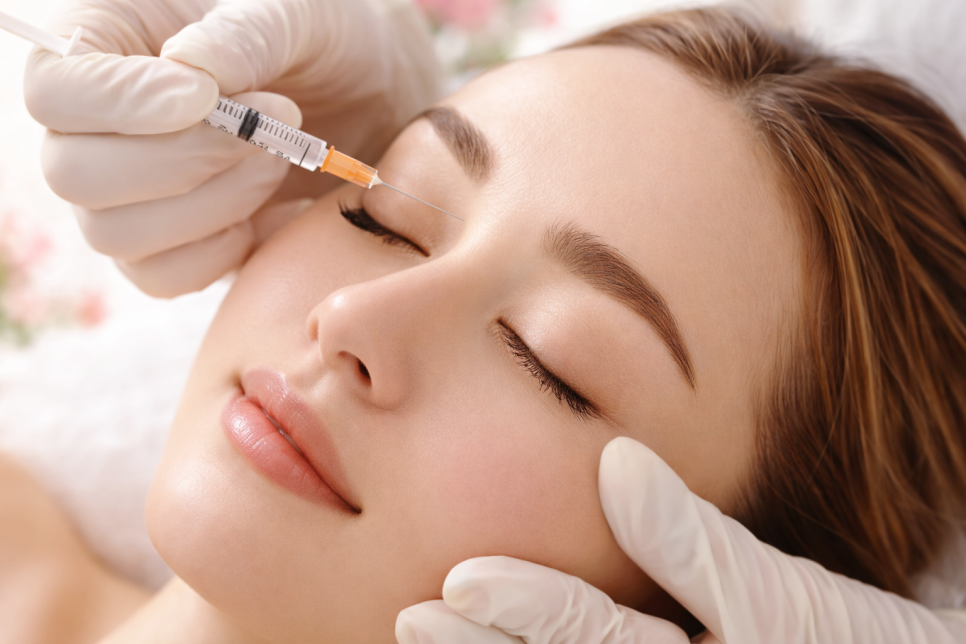
To put it simply, Skinvive is generally less painful than Rejuran Healer.
However, choosing a treatment based on pain alone is not enough.
It is important to understand why this difference occurs,
and what kind of skin condition Skinvive is intended to target.
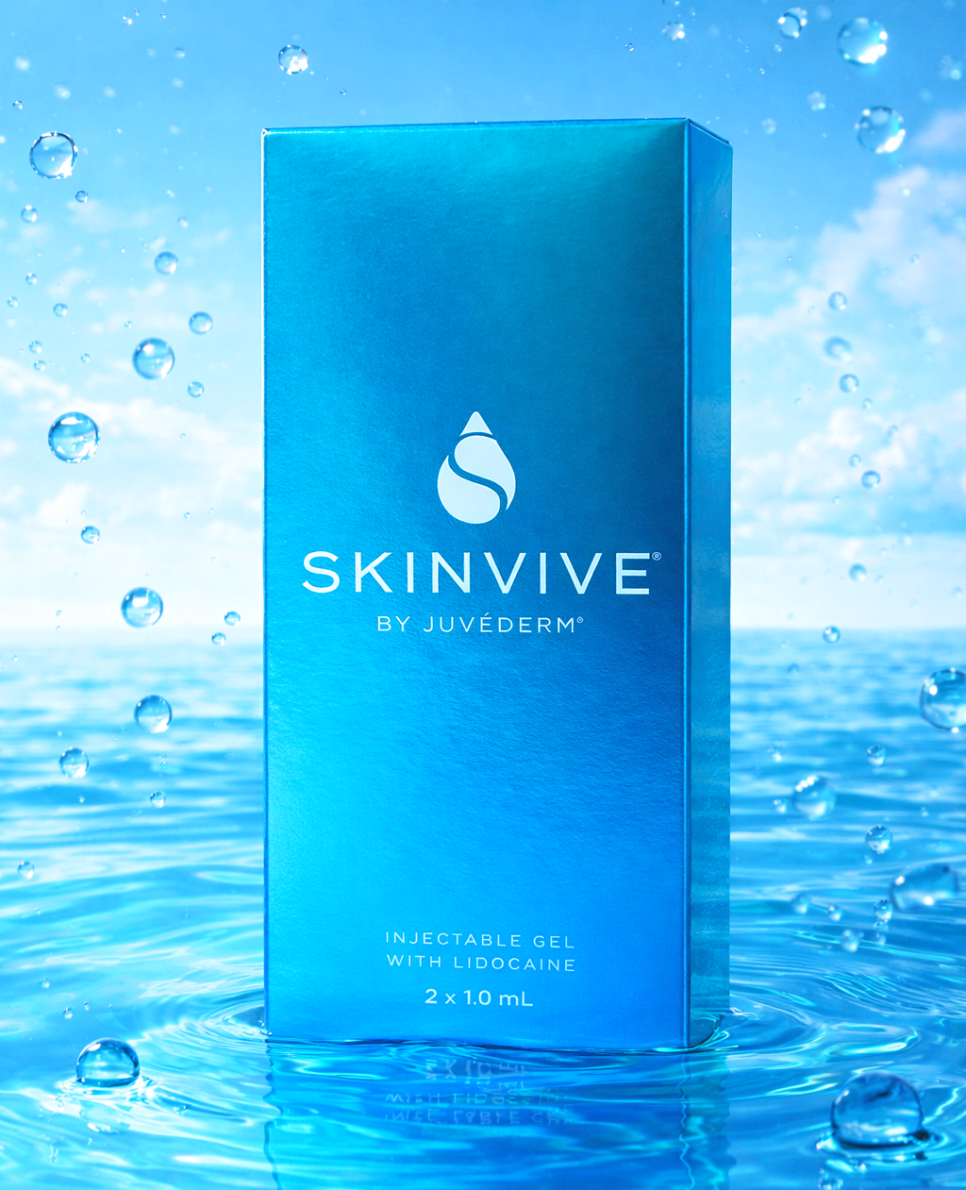
Skinvive is not just a simple 'water-glow injection'
Skinvive differs in both purpose and the layer it acts on from what is commonly called a water-glow injection.
A typical water-glow injection uses hyaluronic acid
and mainly aims for temporary hydration centered on the epidermis.
In this case, the effect tends to last for a relatively short period.
In contrast, Skinvive uses cross-linked hyaluronic acid.
Because the molecular structure is interconnected, it breaks down slowly in the dermis,
and on average, you can expect it to last for about 6 months.
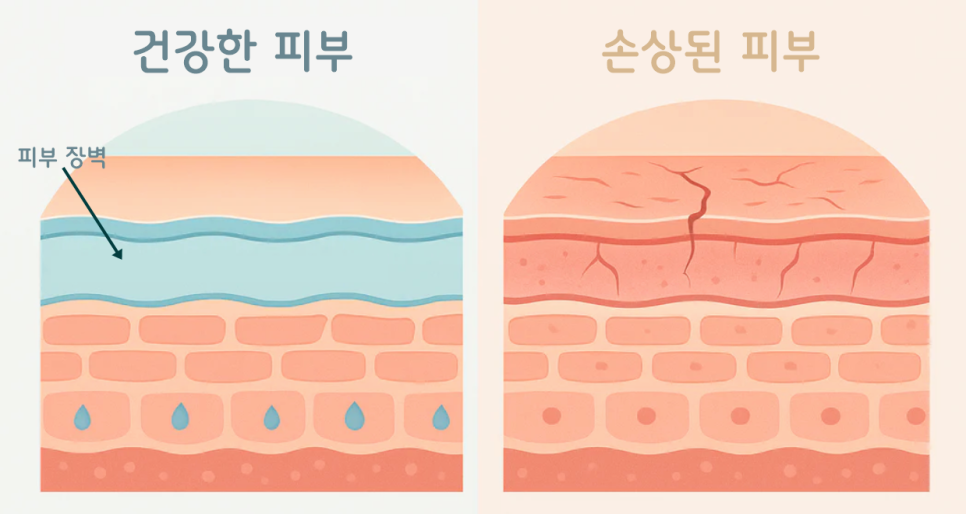
The key is not simply 'adding' moisture,
but creating an "environment" that allows moisture to be maintained within the dermis.
In the dermis, there are extracellular matrix components and fibroblasts,
and when this space becomes dry and unstable, the skin becomes thinner and loses elasticity.
Skinvive stabilizes this environment,
helps fibroblasts function properly,
and induces a gradual improvement in skin texture, fine lines, and overall skin condition.
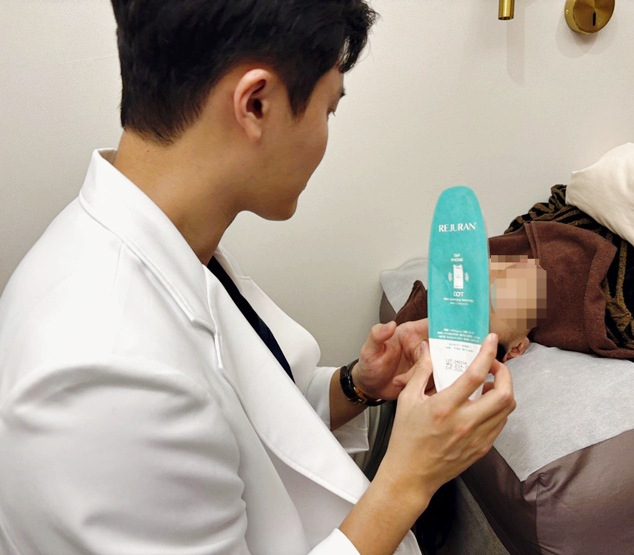
Why does it feel less painful than Rejuran?
The difference in pain comes more from the physical properties of the formulation than from individual differences.
Rejuran Healer is a highly viscous formulation,
and when injected, it creates significant pressure as it opens up the skin tissue.
As a result, many people feel deep pain or a heavy, pressing sensation.
Skinvive has a relatively lower viscosity,
and is structured to spread smoothly within the tissue.
Even when the same amount is injected, the momentary pressure placed on the tissue is lower,
so it is often perceived as less painful.
In addition, because it contains a local anesthetic,
many patients feel that the pain decreases as the procedure progresses.
That is why people with experience with Rejuran often say Skinvive feels relatively more comfortable.

What determines the result is the 'injection depth' and 'plan'
Skinvive must reach the dermis accurately to deliver its true effect.
If it is injected too superficially, embossing or translucency may appear,
and if it is injected too deeply, the moisture-retention and skin-texture improvement effects may be insufficient.
Therefore, it is important to design the injection depth and spacing by considering skin thickness, elasticity, and the characteristics of each area.
This is an area where the product itself matters, of course,
but the experience and judgment of the medical staff are what determine the outcome.
Swelling, bruising, and temporary embossing after the procedure
may occur as part of the process of the hyaluronic acid settling in,
and in most cases, they improve naturally with time.
However,
if the pain becomes severe or is accompanied by changes in skin color,
immediate medical evaluation is needed.

To summarize?
Skinvive
is closer to a treatment that restores the basic environment the skin can maintain,
rather than a procedure that creates dramatic changes in a short period.
Through cross-linked hyaluronic acid, it stabilizes the dermal moisture environment,
comes with a relatively lower pain burden,
and can deliver good results when the injection depth and plan are accurate.
More important than what you do is
whether it is the right choice for your current skin condition.
If approached with that standard in mind,
Skinvive can be a very reasonable choice.
Thank you. This was Dr. Park.