Skin scales are just like the roof of a house.
They act as the very first protective barrier that shields us from external elements such as sunlight, rain, and wind.
Without these scales, our skin would be exposed directly to outside irritation and would become very sensitive.
In addition, skin scales do more than simply protect the skin. They also play a major role in preventing moisture from evaporating and keeping the skin hydrated.
But what happens if these protective scales build up excessively?
In short, it can become like layers of old paint piling up until the wall can no longer breathe.
Not only that, but as the skin loses room to create new cells, the skin overall can become rough and thick, and the likelihood of progressing to an inflammatory condition may increase.
Those of you reading this now may also be feeling stressed because your skin scales are getting thicker day by day.
Today, I’d like to talk in detail about ‘psoriasis,’ which can be a cause of thick skin scales, so I hope you can find helpful information in the following post.
- Causes of psoriasis
- Ingredients in psoriasis ointment
- Care methods during psoriasis treatment


Causes of psoriasis, this may be the reason.
Psoriasis is like a tangled ball of thread, making it difficult to unravel the cause.
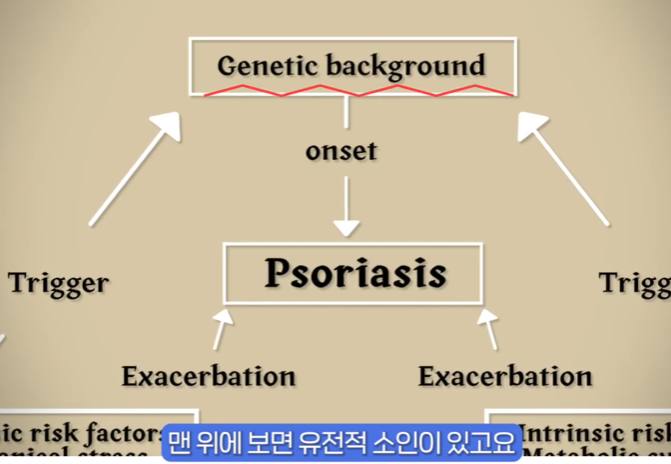
Based on reports so far, the biggest cause of psoriasis is known to be an ‘abnormality in the immune system.’
Our body’s immune system acts like an ‘army’ that defeats bacteria and viruses invading from outside.
However, if something goes wrong with the immune system, this army may mistakenly identify the enemy and attack the normal cells of our skin.
As a result, skin cells are produced about 5 to 7 times faster than normal, forming a thick, scale-like outer layer.
In addition, if a parent or sibling has psoriasis, this phenomenon may appear even more prominently.
Environmental factors also have a major influence on triggering or worsening psoriasis.
First, continuous exposure to a dry environment can weaken the skin barrier and make psoriasis symptoms worse.
Lastly, the ‘Koebner phenomenon’ caused by external irritation can also be a cause of psoriasis, and tonsillitis or pharyngitis may also stimulate the immune system and trigger psoriasis symptoms.


How should psoriasis be treated?
Because psoriasis is a multifaceted condition, it may not be solved with just one treatment method.
Psoriasis treatment, like a puzzle completed piece by piece, must take many different factors into account and be approached in a customized way for each patient.
The starting point for psoriasis treatment is usually psoriasis ointment for the skin.
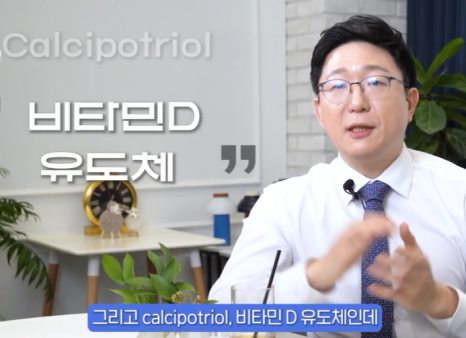
This is carried out using ointments containing steroid ingredients and vitamin D derivatives.
Among them, steroids can help calm inflammatory reactions in the skin, while vitamin D derivatives play a role in controlling the excessive proliferation of skin cells.
Through this, you can expect the psoriasis symptoms to gradually improve.
In addition, because ointment treatment is done by applying it yourself at home, it can also reduce some of the inconvenience of having to visit the hospital every day.
However, psoriasis ointment for the skin is a treatment method that can be applied to mild or early-stage psoriasis, so if the symptoms have progressed to some extent, it may be advisable to plan for phototherapy.
I plan to cover phototherapy in more detail in a future column, so please add the blog as a neighbor to get useful information.


The importance of psoriasis ointment treatment and management: a puzzle of balance completed together
Psoriasis treatment is not simply a matter of applying one ointment and being done with it.
Ointment is the foundation, and only when care is added on top of it can you expect satisfying symptom improvement.
It is like maintaining a good car: you not only need to put in fuel, but also regularly inspect it, wash it, and replace the tires.
In particular, psoriasis patients often have skin that remains dry, so it is advisable to apply moisturizer frequently to maintain skin hydration.
Also, when using moisturizer, you should choose one with mild ingredients that is not irritating.
When showering, take a short shower with lukewarm water and use a gentle cleanser with low irritation.
Lastly, stress is a hidden enemy of psoriasis, so it is advisable to keep your mind at ease through activities such as meditation, yoga, and light walks.
Also, because psoriasis treatment methods may change depending on the course of treatment, it is important to keep checking your current skin condition through regular checkups.

Psoriasis is not just a simple skin disease.
This condition is like a complex puzzle formed by the intertwining of the body’s immune system, skin health, and lifestyle habits.
And because of that, treatment requires enough time and steady effort.
Please remember that psoriasis treatment is a long-term journey, not something that ends in the short term, and approach treatment with that in mind.
I hope everyone reading this becomes more focused on psoriasis treatment and management, and kinder to their own skin.
If you have any questions beyond what I shared today, feel free to ask in the comment box below^^
I will answer kindly.
Thank you for reading to the end.
| This post was written for the purpose of providing information in compliance with Article 56, Paragraphs 1–15 of the Medical Service Act. All treatments carry the risk of side effects and complications depending on the individual. Before treatment, please be sure to make a full consultation with medical staff who have extensive experience before making a decision. |