Have you ever been bitten by a mosquito and then scratched your skin until the wound got worse?
At first, it only itches, but if you absentmindedly scratch it, before long the skin turns red, and in severe cases it may become darkly pigmented or even develop a depression.
Atopic dermatitis is the same.
Atopic dermatitis is a representative chronic inflammatory skin condition, and one of its main features is severe itching.
But if you cannot resist the itch and scratch it indiscriminately, the likelihood of leaving scars on the skin may increase.
In severe cases, it can lead to pigmentation, and it may even cause 'hard scars' due to damage to skin tissue.
Also, once a scar forms, it does not recover naturally, and the symptoms may gradually worsen over time, so it is best to plan treatment as early as possible.
Today, I would like to share information that may be helpful for those who are experiencing various levels of stress from atopic scars.
I hope this post from the atopic hyperpigmentation treatment clinic will be helpful to those who want healthy and clear skin^^
- How to deal with atopic itching
- How to treat atopic scars
- Precautions for atopic scar treatment
Atopic dermatitis: Do this instead of scratching!
Atopic dermatitis is a chronic condition in which the skin barrier is damaged and inflammation recurs, making itching worse.
And if you cannot resist the itching and scratch your skin, the lesions can worsen rapidly.
In severe cases, discharge may occur, or the skin may crack, leading to a secondary bacterial infection and increasing the risk of other complications.
In addition, it may develop into a noticeable 'atopic scar.'
As mentioned at the beginning, atopic scars are difficult to recover from naturally, so it is best to avoid scratching the affected area as much as possible.
In particular, when you feel itchy, using a cold wet towel or an ice pack to lower the skin temperature may help.
Also, because itching caused by atopic dermatitis occurs when the skin cannot retain moisture, it may be advisable to apply moisturizer thoroughly on a regular basis to help prevent itching.


Atopic dermatitis: How to treat pigmentation scars!
As mentioned earlier, if you cannot tolerate the itching from atopic dermatitis and keep scratching the skin, the skin may turn dark or develop uneven scars.
In particular, if scars form on visible areas such as the face, arms, or legs, they can be even more concerning.
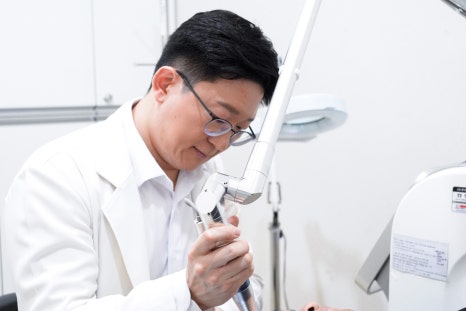
Picosecond laser treatment is a procedure that can be applied to various pigmentation issues, including atopic scars.
It uses a wavelength of 1064nm to finely break down the problematic melanin within the skin.
As the broken-down melanin pigment is naturally expelled from the body, you can expect the dark atopic scars to improve.
In addition, because picosecond lasers deliver energy at a speed of one trillionth of a second, they may help reduce thermal damage to the skin.
Also, because the laser exposure time is short, the time during which the patient has to endure pain is shorter, and the stimulation is mild enough that scabbing is barely formed.
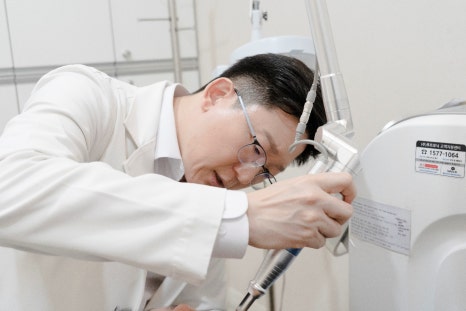

Precautions for picosecond laser treatment!
Picosecond lasers have the advantage of targeting problematic skin tissue while having little effect on the surrounding normal skin tissue.
In addition, by breaking down melanin pigment while also promoting collagen regeneration, they can help the damaged area recover to its previous state.
As such, picosecond laser treatment has many advantages.
However, the expected results of this procedure can vary greatly depending on how carefully the medical staff performs it.
In particular, if too much energy is delivered at once, the skin may suffer thermal damage, which can actually make pigmentation worse.
In addition, the risk of exposure to various secondary complications and side effects may increase.
Therefore, if you want a satisfying and safe result, it is advisable to receive the procedure from a medical team with extensive clinical experience.
Also, please visit a clinic that has enough consultation time to thoroughly check the patient's skin condition and the depth and severity of the scars.
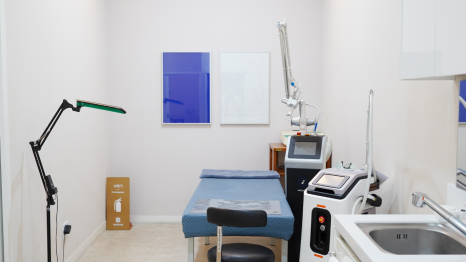
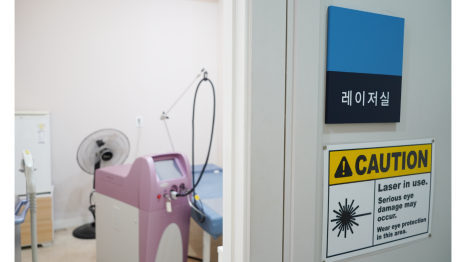
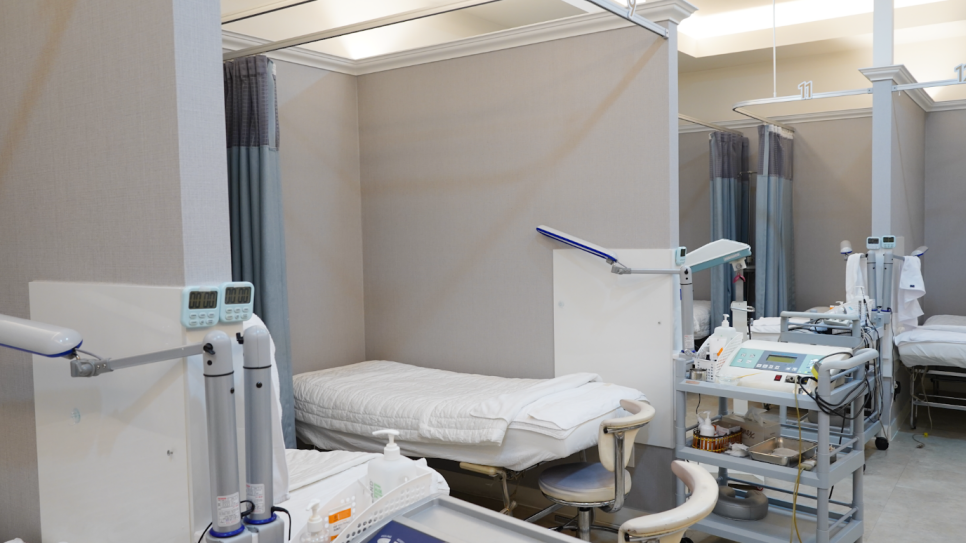
Atopic scars are not just marks left on the skin.
As itching and inflammation repeat, the skin barrier is damaged, and the resulting scars do not easily disappear over time.
And if scars remain, they can cause not only appearance-related concerns but also reduced confidence and psychological withdrawal.
Therefore, it may be advisable to actively plan treatment at an early stage.
Even for scars that have already formed, please remember that with appropriate treatment, sufficient improvement can be expected^^
I hope today's information from the atopic hyperpigmentation treatment clinic was helpful, and I'll end the post here.
If you have any questions beyond what was covered above, please leave them in the comments below.
The atopic hyperpigmentation treatment clinic will kindly answer them.
| This post was written for informational purposes in compliance with Article 56, Paragraphs 1 to 15 of the Medical Service Act. All treatments carry the risk of side effects and complications depending on the individual. Before treatment, be sure to have a thorough consultation with a medical team with extensive experience before making your decision. |