Have you ever had trouble sleeping because of itching?
When you scratch your skin because of a mosquito bite or because your skin is dry, it can feel like it gets itchier and itchier.
But what if this itching does not last for a day or two, but every day for years on end?

Atopic dermatitis is a skin condition that causes severe itching.
And the worse the itching becomes, the more your concentration can drop, and it can become difficult to get a good night’s sleep.
In addition, while scratching your skin, you may become more sensitive and feel increased anxiety, which can lead to accumulated stress and feelings of depression.
In other words, it is more than just a simple discomfort and can greatly interfere with daily life, mental health, and social life.
Repeated scratching can also cause secondary infection, pigmentation, wounds, and scars due to damage to the skin barrier.
So if you are experiencing discomfort from itching caused by atopic dermatitis, it is a good idea to visit a clinic and receive appropriate help.
Today, I would like to share information that may be helpful for those planning atopic dermatitis treatment at an atopic steroid prescription clinic, so please read the following carefully^^
-
Causes of atopic dermatitis and how to prevent worsening
-
Treatment with atopic steroid ointment
-
How to prevent symptoms of atopic steroid rebound


Atopic dermatitis, why itching occurs / how to prevent worsening
As mentioned in the introduction, atopic dermatitis is a skin condition that causes severe itching.
The itching caused by atopic dermatitis occurs when the immune system overreacts and skin inflammation develops.
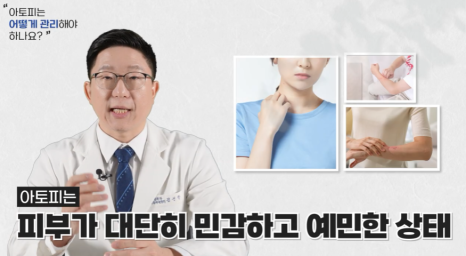
In other words, you can think of atopic skin as a state in which the “wall” protecting our body from the external environment has become weak, allowing outside irritants to easily enter the skin.
Also, if you cannot resist the itching and scratch your skin, the skin that is already vulnerable to external stimuli can become even more sensitive, and atopic symptoms can rapidly worsen.
For that reason, it is desirable to avoid scratching the affected area as much as possible and maintain consistent care.
In particular, atopic itching can worsen due to various environmental factors, so it is better to pay extra attention to moisturizing care so that the skin does not become dry.
Also, irritating chemical products can have a major impact on worsening atopic dermatitis, so you should avoid using chemical products, detergents, and perfumes as much as possible.
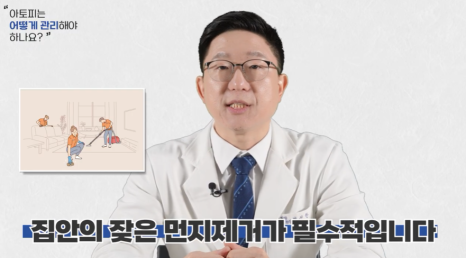
Lastly, house dust mites can also be an allergen, so please remove allergy-triggering factors through regular cleaning.

Can atopic dermatitis treatment be done with ointment?
Atopic dermatitis is not simply dry skin, but a chronic skin disease in which inflammation continues to occur within the skin.
As a result, severe itching can develop, the skin can become red, wounds can appear, and inflammation can worsen.
Therefore, if you want to control atopic symptoms, you need to suppress the “inflammatory response,” which is the fundamental cause of atopic dermatitis.
Steroid ointment is a treatment tool that can help suppress inflammation within the skin, and it plays a role similar to the brake that controls a car’s speed.
Through this, the inflammatory response in the skin is suppressed, giving the skin barrier time to recover properly, and you can expect improvement in itching and red rashes caused by atopic dermatitis.
It can also be very helpful in preventing secondary infection, oozing, and scars.

If you stop steroid ointment treatment, will atopic dermatitis get worse?
While using steroid ointment, you may suddenly wonder:
'If I stop using the ointment, will the symptoms get worse?'
'If I use the ointment once, do I have to keep using it?'
Such concerns can arise.
In fact, when steroid ointment use is stopped, the skin sometimes becomes more sensitive and symptoms may instead worsen.
This phenomenon occurs due to steroid rebound symptoms.
Steroid rebound is a unique property of steroid ingredients and appears when steroid ointment has been used for a long time and treatment is suddenly stopped.
However, if you understand steroid ointment properly and proceed with treatment accordingly, you can expect stable results without worrying about steroid rebound symptoms.
Steroid ointments are divided into a total of seven levels according to their potency, and if you are using a strong medication in levels 1, 2, or 3, you need to gradually taper off the ointment to prevent rebound symptoms.
Also, if your symptoms are not severe, using a weak ointment in levels 6 or 7 can help prevent steroid rebound.
If you have read this far, you probably understand that you need to choose a medication strength suitable for you^^
So, to ensure that a steroid ointment appropriate for each patient’s skin condition, lesion extent, and symptom severity can be prescribed, please visit a clinic that pays close attention to skin examination.

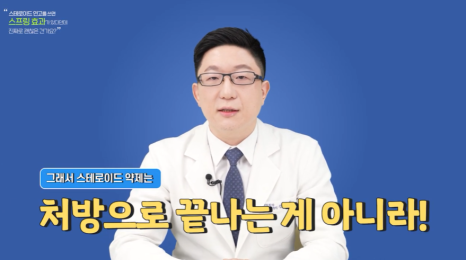

Atopic dermatitis is a chronic inflammatory skin condition that requires ongoing care.
Also, if it is not properly treated and managed, the skin barrier can become weaker, and the condition may repeatedly relapse and worsen, greatly reducing quality of life, so treatment should be planned as early as possible.
In addition, because one-size-fits-all treatment alone makes it difficult to expect satisfactory symptom improvement, it is important to proceed with treatment that is right for you through consultation with medical staff.
I hope the information shared today was helpful for patients with atopic dermatitis^^
If you have any questions beyond what was covered above, please ask in the comments below.
We will kindly answer at the atopic steroid prescription clinic.
Thank you for reading the post from the atopic steroid prescription clinic to the end.
| This post was written for informational purposes in compliance with Article 56, Paragraphs 1 to 15 of the Medical Service Act. All treatments carry the risk of side effects and complications depending on the individual. Before treatment, please be sure to make a sufficient consultation with experienced medical staff before making a decision. |