When the long winter passes and warm breezes begin to blow, we naturally start changing the way we dress.
But the moment you try to wear short sleeves, a thought may suddenly come to mind:
"What should I do about this scar?"
Some articles say that this summer will last from April to November.
In other words, summer begins as soon as spring arrives, and the heat continues for a while even when autumn comes.
That means we may have to spend more than half of the year in short clothing.
When summer comes, scars and wounds that were hidden under long sleeves and long pants can become increasingly difficult to ignore.
In particular, if you have atopic scars, this concern can feel even greater.
Atopic scars are not simple scars; they are marks left behind after repeated itching and inflammation over a long period of time. Because of that, there is a high possibility of severe pigmentation or uneven skin texture.
And since they do not naturally recover and may worsen over time, it is best to plan treatment without delay.
With that in mind, today I would like to share information that may help those who are experiencing inconvenience in daily life due to atopic scars, so please read the following post carefully^^
- Why atopic scars form + How to deal with itching
- Atopic Pico Laser procedure
- Precautions after atopic scar treatment


Why do atopic scars form?
Atopic dermatitis is a chronic inflammatory skin condition. Unlike simple skin trouble, it is characterized by repeated inflammation and a weakened skin barrier.
In severe cases, the skin becomes red and itchy, and if you keep scratching or touching the affected area, it can increase the likelihood of chronic scarring.
In addition, bacteria can enter through cracks in the skin tissue, worsening the inflammation and potentially leading to lichenification, a condition in which the skin becomes rough and thickened.
This is precisely why one of the most common things atopic dermatitis patients hear is, "Don’t scratch!"
But holding back the itch caused by atopic dermatitis is not easy^^;
That is why, when you feel itching, it may be advisable to control the symptom through appropriate early action.
First, because itching occurs when blood gathers in one area, it is good to apply a cold compress using a towel soaked in cold water or an ice pack.
After the cold compress, it may also be advisable to apply plenty of moisturizer to protect the skin.
Also, dry environments can make the skin more sensitive and trigger even worse itching, so it helps to maintain proper indoor humidity by using a humidifier.
Dermatology atopic scar treatment method: Pico Laser procedure
Atopic scars can be said to be a condition in which damage has occurred deep within the skin.
That is why, without proper treatment, the symptoms may not improve easily.
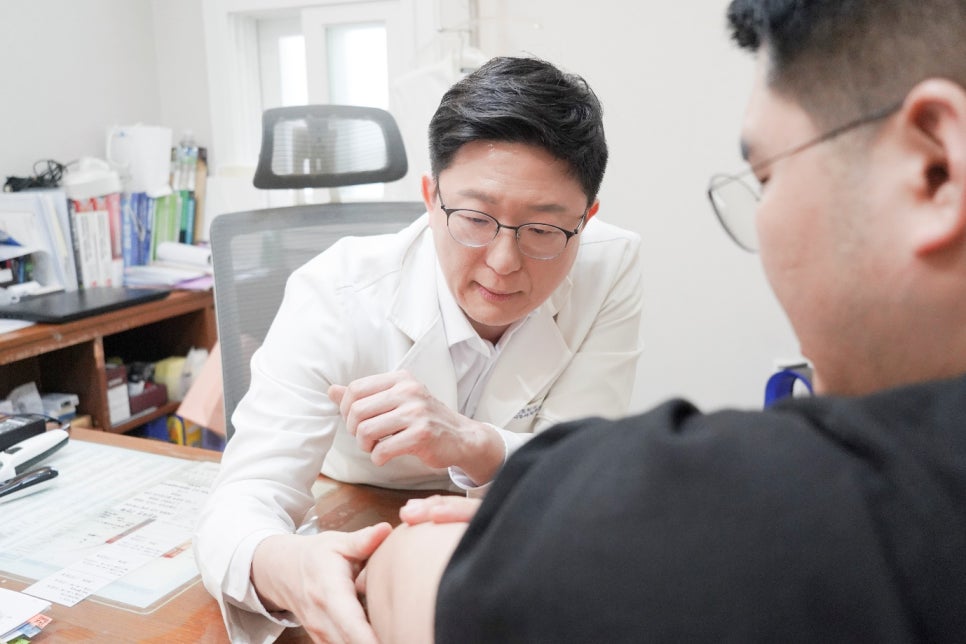
Therefore, if you are stressed by noticeable atopic scars, it may be advisable to visit a clinic and receive treatment tailored to your condition.
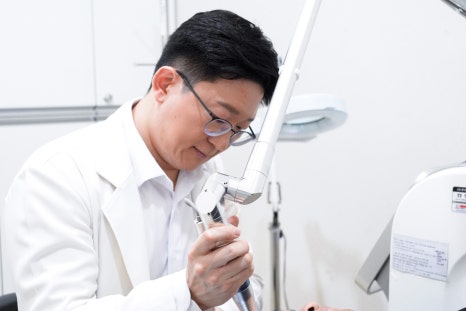
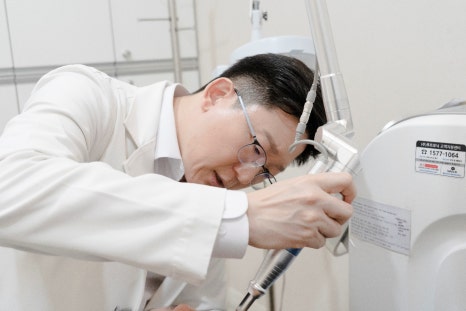
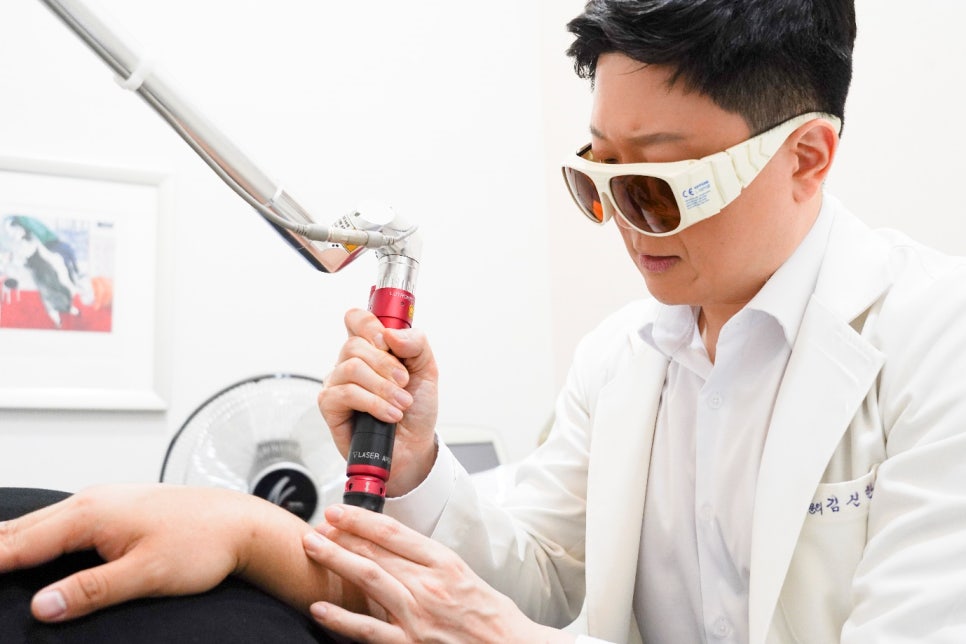
The Pico Laser I will explain today is a procedure widely used in the treatment of atopic scars.
As the name suggests, this procedure delivers ultra-fast light to the skin using picosecond units (one trillionth of a second).
It also has the characteristic of breaking the scar tissue into fine particles with the energy delivered into the skin, helping the body absorb it more easily.
In this way, the finely broken scar tissue is expelled from the body, and you can expect the atopic scars to gradually improve.
In addition, because Pico Laser directs laser energy only to the problematic area, it has the advantage of having less effect on the surrounding normal skin tissue.
Also, because side effects such as swelling and pain are relatively minimal, it can be applied even to sensitive skin such as atopic skin without much burden.
After dermatology atopic scar treatment with Pico Laser, what should you do from here?
After receiving Pico Laser treatment, you may feel, "That’s it, I’m done!"
However, because Pico Laser is performed in a way that affects the deep layers of the skin, there may be slight changes immediately after the procedure.
In particular, certain areas of the skin may become red and feel hot.
However, this is a temporary reaction caused by laser energy, and in most cases, it subsides within a few hours.
The area where the laser energy was delivered may also temporarily become dry, and in severe cases, slight flaking may occur.
This is a completely natural phenomenon that appears as new skin is formed, so please do not try to peel off the flaking skin by force, and wait until it falls off naturally.
Also, if you want a smoother recovery, it may help to apply moisturizer more generously than usual to protect the skin.
Acne scars are not just a skin problem; they are a skin condition that can significantly affect confidence and daily life.
And scar treatment is not something that ends in a short period of time, but a process that requires continuous effort and care.
That is why it is advisable to receive treatment according to the number of sessions and treatment intervals recommended by the medical staff, and to continue steady care.
Also, it would be helpful to check the skin condition from time to time and adjust the treatment intensity.
Because our skin has the ability to heal itself, the expected results can vary greatly depending on how each person manages it.
I hope the information shared today has been of some help to those who were stressed by atopic scars.
If you have any questions beyond the dermatology atopic scar treatment information covered here, please leave them in the comment box below.
I will kindly answer. Thank you.
| This post was written for informational purposes in compliance with Article 56, Paragraphs 1 to 15 of the Medical Service Act. All treatments carry the risk of side effects and complications depending on the individual. Before treatment, please be sure to have a thorough consultation with experienced medical staff before making a decision. |