Today, I’d like to talk about a skin condition called psoriasis.
Imagine a volcanic eruption.
When a volcano erupts, lava trapped deep underground bursts out all at once, spewing massive flames and smoke.
Psoriasis is similar.
It may be quiet most of the time, but suddenly the skin turns red, white flakes appear, and in severe cases, itching and pain can also occur.
In short, you can think of it as a skin condition like a volcano inside the skin.

Psoriasis is not just a simple skin problem; it is a chronic inflammatory disease.
In particular, once symptoms begin, the skin can turn red and thick scales can build up, making the condition uncomfortable to even look at.
In addition, the skin can easily crack, which may lead to bleeding.
On top of that, if symptoms appear on areas with a lot of exposure, such as the arms and legs, you may feel burdened even by wearing short sleeves or shorts, and you may become self-conscious about other people’s attention, which can make social interactions feel more difficult.
That is why, rather than waiting and hoping it will get better, it is advisable to visit a hospital early, receive an accurate diagnosis, and plan appropriate treatment.
We hope the information shared here about psoriasis laser treatment at a dermatology clinic will help you in planning your psoriasis treatment.
- Differences between psoriasis and atopic dermatitis, and how to tell them apart
- How to prevent psoriasis from worsening
- Psoriasis laser treatment method

Psoriasis vs. Atopic Dermatitis
Similar-looking, but completely different skin conditions!
Psoriasis is characterized by symptoms that are very similar to those of atopic dermatitis.
Of course, both conditions share common features such as red rashes, itching, and scaling on the skin.
However, there are some differences in the causes, progression, and treatment methods of the two conditions.
That is why it can be risky to assume, just because your skin is dry and itchy, that it must be atopic dermatitis.
First, atopic dermatitis is a skin condition in which itching is the main symptom, and the itching can be so severe that it interferes with sleep.
Psoriasis, however, tends to have less severe itching than atopic dermatitis, and the symptoms can gradually worsen without you even realizing it, even if you do not scratch the affected area.
Also, while atopic dermatitis can cause the entire skin to become dry, psoriasis may cause severe dryness only in the affected areas.
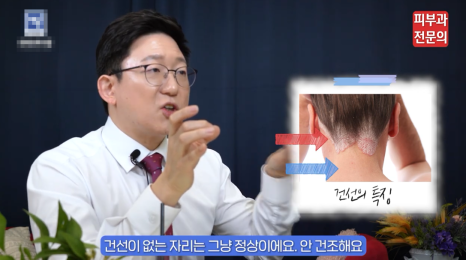
Lastly, atopic dermatitis tends to be concentrated in areas where the skin folds, such as the inner elbows, behind the knees, the neck, and behind the ears, whereas psoriasis more commonly occurs on areas with prominent bones, such as the outer elbows, the upper knees, the shins, and the scalp.


Psoriasis, the ember inside the skin that grows over time
How can worsening be prevented?
Psoriasis is like a pile of firewood with embers still burning.
Even if it looks calm on the outside, inflammation continues inside, and even small irritations can cause the symptoms to flare up.
In severe cases, it can affect the whole body and may lead to arthritis or cardiovascular disease.
That is why it is good to understand the causes of psoriasis in detail and then carry out management to help prevent it from worsening.
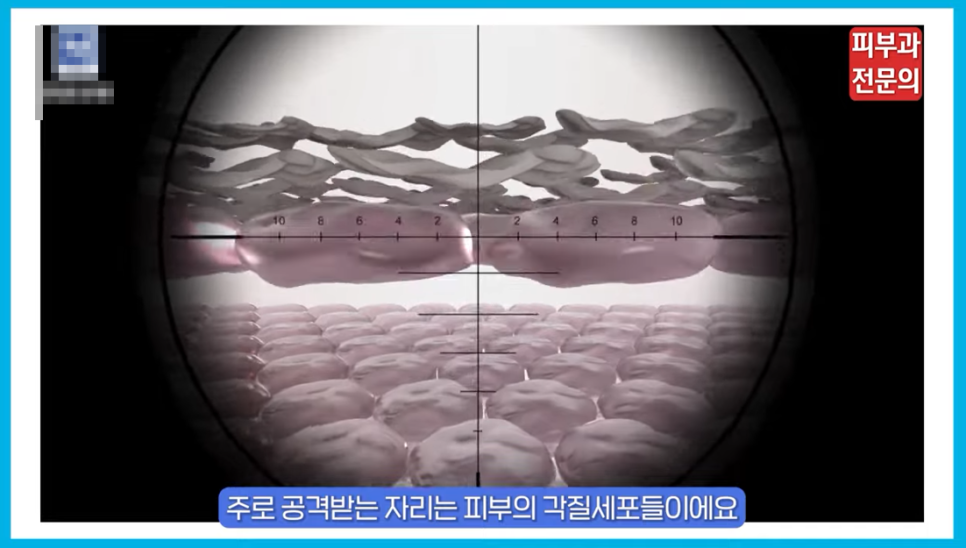
Psoriasis is a type of autoimmune disease, in which the body’s immune system mistakenly identifies normal skin cells as enemies and attacks them.
As a result, the skin cell turnover cycle becomes abnormally short, which can lead to thick scaling in the affected areas.
Therefore, to help your body maintain a healthy immune system, it is good to manage stress by getting enough sleep and rest.
Also, you should maintain healthy habits such as not smoking and limiting alcohol.
In addition, psoriasis can easily worsen due to dry weather and skin irritation, so it is good to apply moisturizer frequently to prevent the skin from becoming dry, and it is advisable to avoid scrubs that may irritate the skin.


Psoriasis treatment: What happens at the hospital?
Psoriasis laser treatment method!
With the management methods mentioned above, psoriasis symptoms can be helped from worsening.
However, self-care alone will not completely make psoriasis symptoms disappear.
Of course, correcting lifestyle habits can help relieve symptoms, but to address the underlying cause, hospital treatment may be necessary.
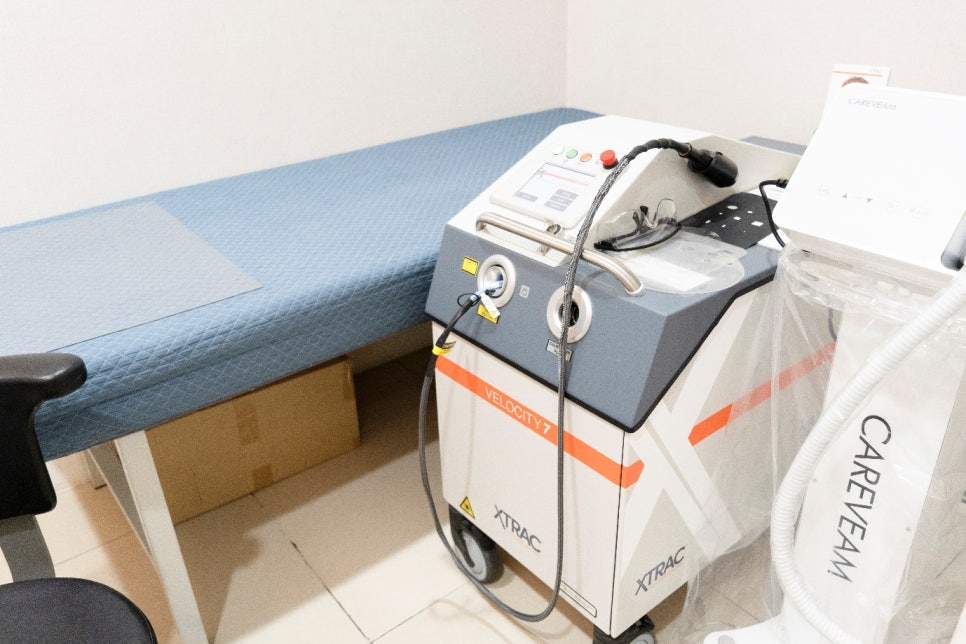
There are various treatment methods for psoriasis, but the excimer laser introduced today is a treatment method widely applied to various skin conditions.
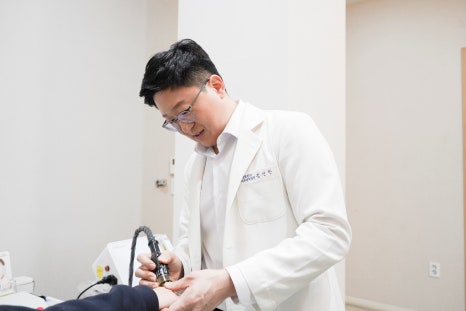
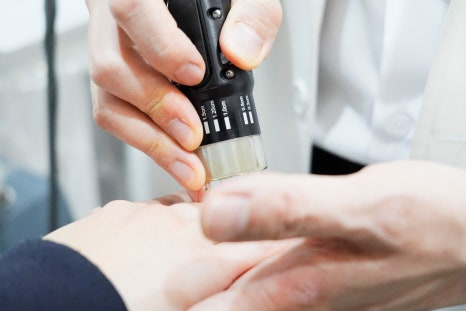
The excimer laser is a treatment that uses a wavelength of 308 nm, and it is performed by directly irradiating the affected area with special light.
Through this, the skin’s immune response is regulated, and the skin cell turnover cycle can be expected to normalize.
In addition, it can help reduce inflammation and balance immune function.
Furthermore, unlike general light therapy that irradiates a wide area, it can selectively treat only the areas affected by psoriasis, which can also help reduce unnecessary skin irritation.
However, if the intensity is too strong, there is a risk of burns, so medical supervision is essential.
Because psoriasis can recur even after treatment, it is good to continue regular skin care and follow-up checkups after treatment.
And rather than expecting results in a short period of time, the focus should be on gradually relieving symptoms and preventing recurrence.
The most important thing in psoriasis treatment is to avoid impatience and maintain consistent care.
If you are struggling with psoriasis, do not try to solve it alone; visit a nearby hospital and plan a treatment that is right for you.
If you have any questions beyond the psoriasis laser treatment information, please ask the psoriasis laser treatment dermatology clinic through the comment box below.
Thank you for reading the post from the psoriasis laser treatment dermatology clinic to the end.
| This post was written for informational purposes in compliance with Article 56, Paragraphs 1–15 of the Medical Service Act. All treatments carry the risk of side effects and complications depending on the individual. Before treatment, be sure to have a thorough consultation with experienced medical professionals before making a decision. |