When you think of the season when your skin becomes dry and rough, which one comes to mind first?
Most of you would probably shout, “Winter!”
When exposed to cold, dry air, moisture in the skin evaporates in an instant, and our face, elbows, and even shins can crack like a desert.
But this roughness does not only happen in winter.
Even in the sweltering heat of midsummer, your skin can suddenly become dry and develop thick flakes.
At times like this, many people think:
'Ah, I must not have applied enough moisturizer.'
'I guess I neglected exfoliation care.'
In fact, the cause of the dryness your skin is showing may not simply be a lack of home care.
Ordinary dryness may improve to some extent with consistent moisturizing and exfoliation care.
However, if the symptoms do not easily improve despite ongoing care, you may want to suspect psoriasis, a chronic skin condition.
Today, let’s take a look at what psoriasis is and how it should be treated.
- Types and characteristics of psoriasis by symptoms
- Causes of psoriasis and prevention tips
- Treatment methods using psoriasis ointment


The identity of psoriasis, and its many faces
Psoriasis is a chronic skin condition that causes white, thick scales.
And beneath those white scales, there is a magma-like “inflammatory reaction” hidden inside.
Psoriasis is classified into a wide variety of types depending on how the symptoms appear.
First, plaque psoriasis is the most common and representative form of psoriasis, and it is characterized by thick, broad plaque-like lesions.
It tends to occur on areas where the bones protrude, such as the elbows, knees, and scalp.
Guttate psoriasis presents as round-shaped lesions and is often seen in children, adolescents, or after a cold.
This condition can appear in dozens of spots on the back, arms, and legs. It may appear suddenly and then improve after some time, but if not properly managed, it can recur repeatedly.
Now, let’s talk about pustular psoriasis.
A pustule simply refers to an inflammatory blister filled with pus.
As the name suggests, pustular psoriasis causes pus-filled lesions on the palms and soles, and in severe cases the symptoms can spread throughout the body, accompanied by systemic symptoms such as chills and fatigue.
Lastly, erythrodermic psoriasis is considered the most severe form among psoriasis types.
When erythrodermic psoriasis occurs, the entire skin turns red, large amounts of scaling fall off, and a body-wide inflammatory reaction can occur.


Why does psoriasis occur, and how can it be prevented?
Psoriasis is not simply a disease caused by not moisturizing enough.
It is a type of autoimmune disease and can arise from a wide variety of factors.
An autoimmune disease is a phenomenon in which immune cells in our body mistake normal cells for enemies and attack them. If they attack healthy skin cells among the many cells in the body, psoriasis symptoms can occur.
As a result, the skin cells become confused and begin to proliferate 5 to 10 times faster than normal.
This leads to white, thick scales building up in various areas of the skin.
For that reason, it is advisable to maintain consistent care so that an excessive immune response does not occur.
First of all, when stress builds up, the immune system in our body begins to run hot.
Therefore, managing stress through activities such as listening to music, going for a walk, meditating, or taking a half-body bath can help prevent psoriasis.
Getting enough sleep can also be the first step toward maintaining a healthy immune system, so please keep that in mind.
In addition, when the skin is dry, the skin barrier breaks down and immune cells can easily attack the skin.
So it is good to protect the skin through consistent moisturizing, and it may be advisable to apply a generous layer of moisturizer within 3 minutes after showering.


Can psoriasis also be treated with ointment?
When you face psoriasis lesions, it is very easy to feel flustered.
At times like this, do not leave it untreated just because you feel overwhelmed; if treatment is started at the proper time, you can expect faster symptom improvement.
Psoriasis treatment can first be done with topical medications.
This is where steroids and vitamin D analogues come in.
Among them, psoriasis steroid ointment plays a role in calming inflammatory reactions in the skin, as many people already know, and vitamin D analogues function like a brake that helps regulate the rate of skin cell production.
Therefore, when psoriasis steroid ointment and vitamin D analogues with these roles are applied to the lesion area, the underlying causes of psoriasis can be corrected, and the skin can be expected to return to a normal state.
However, in order to expect satisfying improvement, it is important to use the ointment correctly.
In particular, using psoriasis steroid ointment excessively can actually have a major negative effect on the skin, so it is advisable to spread an appropriate amount thinly only over the affected area.
Also, when applying a vitamin D analogue, you may feel as though the skin is flaking. This is a completely natural phenomenon that appears as a result of applying the ointment, and it will naturally disappear after some adaptation time, so there is no need to worry too much.
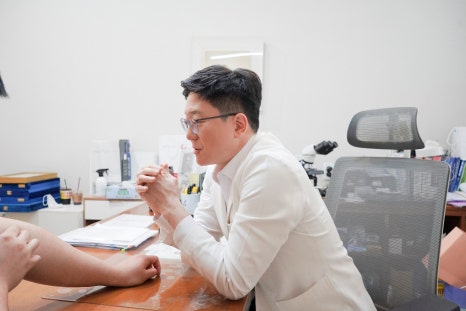
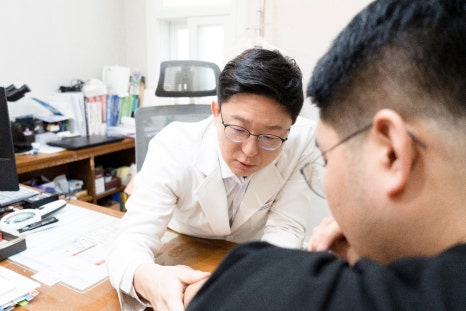
When I first heard the name psoriasis, it may have seemed like a strange and vague skin condition.
This condition can affect not only the skin, but also quality of life, emotions, and relationships with others.
That is why it is important to look at the issue a little more seriously.
And with the mindset of understanding and caring for yourself more, you should actively set up a treatment plan.
Please remember that treating psoriasis is “taking time to talk with your body.”
If you have any questions beyond what I shared today, please ask in the comments below.
I will kindly answer them.
Thank you for reading to the end.
| This post was written for informational purposes in compliance with Article 56, Paragraphs 1–15 of the Medical Service Act. All treatments carry a risk of side effects and complications depending on the individual. Before treatment, be sure to consult thoroughly with a medical professional with extensive experience before making a decision. |