Our skin is much like a single canvas.
And the color, texture, and tone expressed on it reflect a person’s health, lifestyle habits, and even emotions.
Therefore, an even skin tone is not only of aesthetic value; it also plays the role of a mirror that reflects a healthy life.
However, an even skin tone can be disrupted more easily than you might think.
When exposed to strong ultraviolet rays for a long time, when stress and fatigue build up, or when hormonal balance begins to break down, the skin tone starts to shift as well.
Of course, if the skin has simply been tanned, consistent self-care may help it return to its original tone.
But if one side of the skin has turned white and lost pigment, the story can be a little different.
The skin can lose pigment due to various factors, but if it is a depigmented patch caused by vitiligo, it does not recover naturally and may gradually worsen over time.
Today, we will take a deep look at vitiligo, a chronic skin condition.
- Vitiligo: Causes of depigmented patches
- Vitiligo: Prevention and management methods
- Vitiligo: Excimer laser
Vitiligo: The secret behind pigment that disappears and turns white
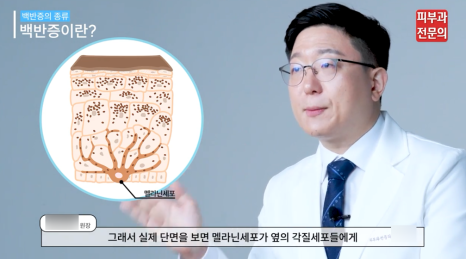
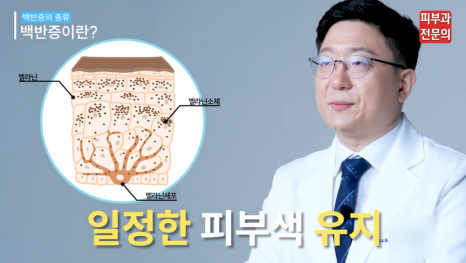
Melanocytes in our skin work like pigment production factories every day.
And in these factories, melanin pigment is steadily produced, then distributed evenly across the skin, forming a person’s overall skin tone.
However, when something goes wrong in our body, the melanocytes that produce melanin can be destroyed, and distinct white patches with clear borders may form in various areas of the skin.
Vitiligo is a type of autoimmune disease that occurs when the body’s immune system attacks the melanocytes that form skin color.
It also has the characteristic of progressing more quickly when there is a family history or when excessive stress has accumulated.
In addition, strong sunlight, skin injury, and chemicals can also be factors that trigger depigmented patches on the skin.

Vitiligo: How can it be prevented from occurring and worsening?
Once melanocytes are destroyed, they do not easily regenerate, no matter how consistently you care for your skin.
In addition, in patients with non-segmental vitiligo, the speed of symptom progression may gradually increase, and the lesions may spread throughout the body.
That is why it may be advisable to maintain consistent care to help prevent vitiligo from occurring or worsening.
As mentioned earlier, vitiligo is closely related to the immune system, so it is good to get enough sleep so that the body can maintain healthy immunity, and it is advisable to manage stress through meditation and exercise.
In addition, the hot midday sun can tire melanocytes and, in severe cases, even cause tissue damage.
Therefore, on days when ultraviolet rays are strong, it may be advisable to protect the skin by carefully applying sunscreen with a high SPF.
Also, repeatedly scratching the skin or leaving inflammatory conditions such as eczema untreated for a long period may lead to vitiligo due to the Koebner phenomenon.
So it is a good idea to be careful at every moment so that the skin is not irritated, and it is advisable to choose clothing made of soft materials as well.



Why excimer laser treatment is needed for vitiligo treatment
Vitiligo is a skin condition in which melanocytes are attacked by the immune system and gradually disappear, and if left untreated, its symptoms may continue to worsen.
It can even progress to a chronic stage where treatment becomes difficult.
Therefore, if white patches begin to appear on various parts of the skin, it is best not to delay and to establish a treatment plan suited to your condition.
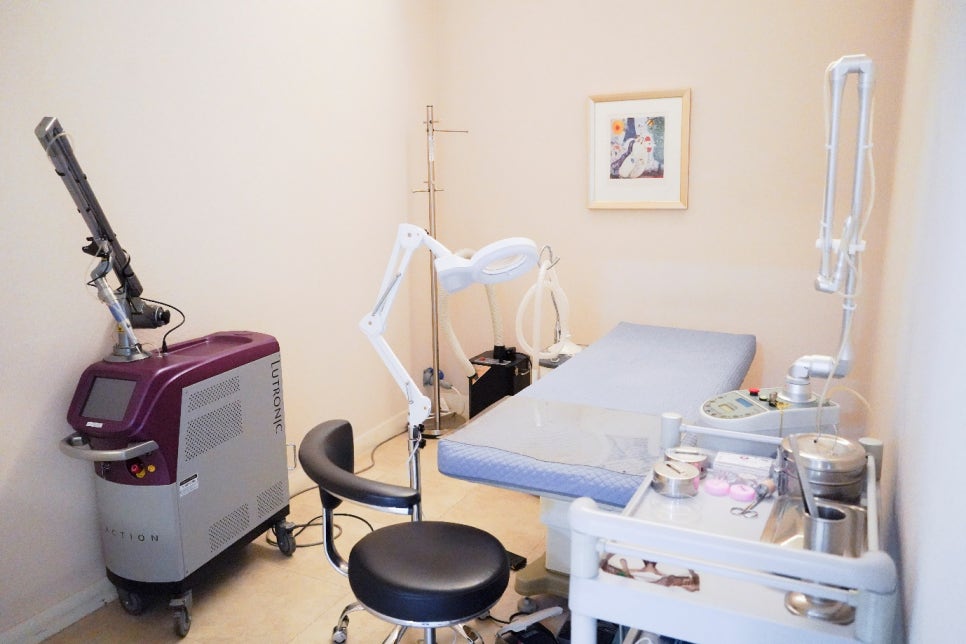
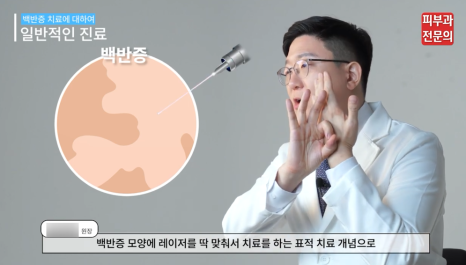
The excimer laser used to treat vitiligo is a treatment device that uses a 308nm wavelength and is characterized by suppressing the loss of melanocytes and helping reactivate pigment cells.
As a result, the skin color in the depigmented area gradually returns, and you can expect the symptoms of vitiligo to ease over time.
In addition, because the laser energy reacts only to the lesion area, it has the advantage of causing less impact on the surrounding normal skin tissue.
However, since vitiligo is a skin condition that occurs as various factors accumulate over time, symptoms may not improve properly with just one treatment.
So if you want proper symptom improvement, please approach treatment with the mindset of continuing consistent care.


Today, I explained vitiligo treatment methods in detail.
The name vitiligo may not be unfamiliar, but when it appears on your own skin, the white marks can feel very unfamiliar.
That is especially true if it appears in a noticeable area.
However, vitiligo is only a skin condition; it does not define who you are.
Losing skin color does not mean losing your self-esteem as well.
But if you want to lead a healthier and happier life, vitiligo treatment may be necessary, so please keep this in mind.
I hope today’s column was of some help to patients with vitiligo.
If you have any questions related to vitiligo treatment methods beyond what was covered above, please ask through the comment box below.
Thank you for reading to the end.
| This post was written for informational purposes in compliance with Article 56, Paragraphs 1 to 15 of the Medical Service Act. All treatments carry the risk of side effects and complications depending on the individual. Before treatment, please make sure to have a thorough consultation with medical staff with extensive experience before making a decision. |