Our skin is a part of the body that carries out its job faithfully every day.
Especially, it produces keratinocytes at a steady pace each day, and after a certain amount of time, these cells naturally shed, renewing the skin cells.
This cycle is usually about 28 days, like a monthly calendar for the skin.
However, when something goes wrong with this cycle, the skin can suddenly become thicker than necessary, and various other problems may occur.
Put simply, you can understand this as a situation in which the overall health of the skin breaks down.
In severe cases, it can even lead to psoriasis, where the skin flakes lift up and red rashes form.
Today, through Yangpyeong Station Dermatology Recommendation, we would like to take an in-depth look at the causes and treatment methods of psoriasis.
We hope this post from Yangpyeong Station Dermatology Recommendation can be of some help to those who are spending difficult days suffering from psoriasis symptoms.
-Today's column outline-
- The relationship between psoriasis and the immune system
- Differences between psoriasis and atopic dermatitis
- Psoriasis treatment methods

Psoriasis: The moment your skin's immune system loses its way
Our body's immune cells play a role in protecting us against germs and viruses, helping maintain a healthy physical condition.
But if these immune cells mistake normal skin cells for enemies and attack them, the keratin production cycle can become disrupted, and thick scales may start to build up across the skin.
This kind of problem can arise due to various factors, but it often develops as mental stress, overwork, and sleep deprivation accumulate over time.
That is why it may be advisable to manage mental stress by listening to music you like or taking a walk for even 10 minutes a day.
In addition, getting enough sleep may help promote skin regeneration.
And because dry skin can be considered the greatest enemy of psoriasis, it is good to apply moisturizer generously at least twice a day.
Also, tight clothing, frequent friction, and trauma can trigger "psoriasis symptoms" through the Koebner phenomenon.
Therefore, it is advisable to be careful at all times so that unnecessary irritation is not applied to the skin, and we recommend avoiding scrubbing the skin and wearing tight clothing.



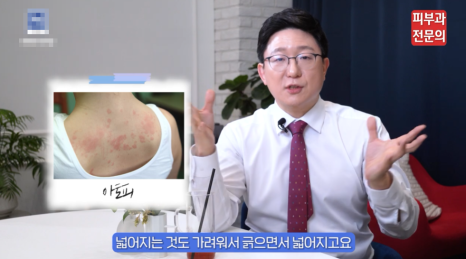
What is the difference between psoriasis and atopic dermatitis?
Psoriasis and atopic dermatitis share some similarities in that the skin becomes red and develops flakes.
However, even if the two skin conditions look similar on the surface, their causes, characteristics, and management methods are clearly different.
First, psoriasis is an error in the immune response, meaning it is close to an autoimmune disease.
On the other hand, atopic dermatitis is centered on a weakened skin barrier and allergic reactions, and it is characterized by the possibility of more severe itching compared to psoriasis.
Also, while atopic dermatitis causes dryness throughout the skin, psoriasis can cause a severe feeling of dryness only in the affected areas.
In addition, atopic dermatitis mainly appears in the folds of the arms, behind the knees, and the neck, whereas psoriasis tends to occur on protruding areas such as the elbows, the outer knees, the scalp, and the waist.
Of course, based on the points above alone, patients themselves may feel certain that "this must be the disease I have."
However, psoriasis and atopic dermatitis can show mixed patterns in the early stages, and it is not uncommon for both conditions to exist at the same time, so it is best to visit a clinic and receive a careful skin examination.


Psoriasis: Why it should not be left untreated
Psoriasis is a skin condition that causes thick scales, red rashes, and itching, and its symptoms can gradually worsen over time.
In severe cases, it can have a serious impact on overall health.
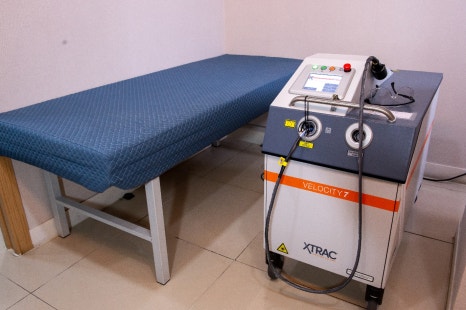
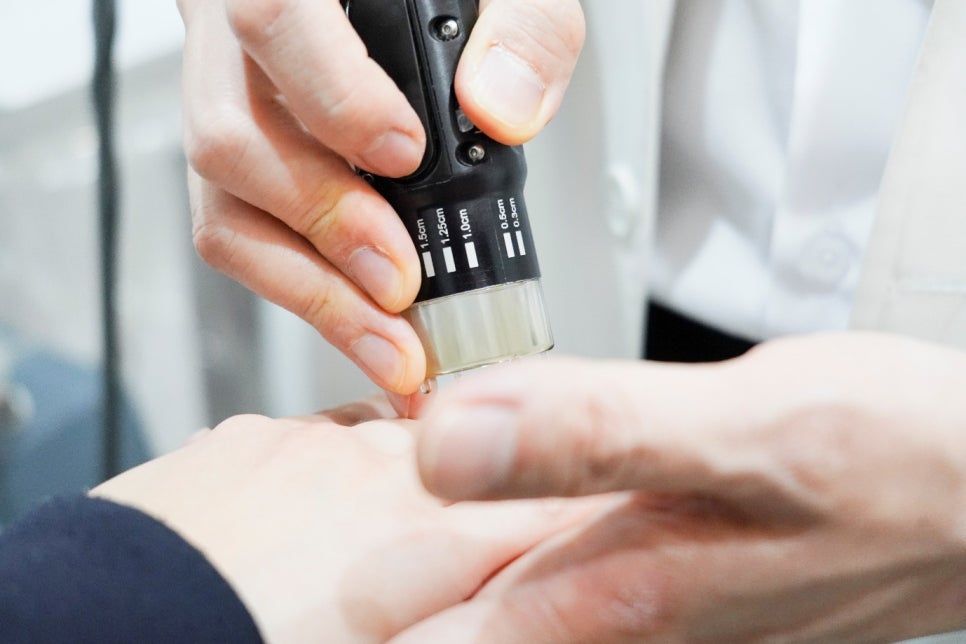
The treatment method introduced today is excimer laser treatment.
This treatment is carried out by directly irradiating the affected area with specific ultraviolet light at a wavelength of 308 nm.
In this way, the immune and inflammatory responses that are the fundamental causes of psoriasis are regulated, and improvements in the red rash and thick scaling caused by psoriasis can be expected.
In addition, because the irradiation area of the laser can be broadly adjusted according to the size of the lesion, it has the advantage of causing less impact on the surrounding normal skin tissue.
However, because this is a treatment method that uses a specific type of energy, if laser is applied without first understanding the patient's skin condition, the skin may suffer minor or major damage.
Therefore, after a sufficient examination process, the laser intensity and treatment interval should be carefully adjusted.
Also, after treatment, the skin may temporarily become sensitive, so you need to pay more attention than usual to sun protection and moisturizing care.

Many people take psoriasis too lightly and miss the right time for treatment.
In severe cases, some people only plan treatment after being hurt not only physically but also emotionally.
Psoriasis is not just a simple skin problem; it is a skin condition that can have a huge impact on a person's entire life.
Therefore, if various changes that were not present before begin to appear on your skin, it is best not to delay and visit a clinic for a detailed examination.
And do not think that treatment means it is over; you must maintain healthy skin through consistent self-care.
We hope this post from Yangpyeong Station Dermatology Recommendation was helpful.
If you have any questions beyond the content above, please ask through the comments section below.
We will kindly answer you at Yangpyeong Station Dermatology Recommendation.
Thank you for reading to the end.
| This post was written for informational purposes in compliance with Article 56, Paragraphs 1 to 15 of the Medical Service Act. All treatments carry the risk of side effects and complications depending on the individual. Before treatment, please make sure to have 충분 consultation with experienced medical staff before making a decision. |