Smooth skin plays a role in shaping your mood and self-esteem throughout the day.
However, the skin is the barrier that protects you from the outside of your body, and for that reason it is the first to respond to various external environments, changes, and psychological states.
Fine dust, stress, improper cleansing, lack of sleep... all of these leave behind traces on the skin in the form of dead skin cells.
Dead skin cells are a phenomenon that occurs as part of the skin’s natural regeneration process.
But if these dead skin cells begin to build up thickly at some point, the entire skin can look very rough and dirty.
Of course, this often improves through regular exfoliation and sufficient moisturizing.
However, if dead skin cells repeatedly accumulate, do not recover on their own, and even flake off like fish scales, you may want to suspect psoriasis, a chronic skin condition.
The skin is like a traffic light for your health.
Therefore, when the red light of psoriasis turns on, you need to stop and look into the cause properly.
Today, let’s take a detailed look at the causes of psoriasis, ways to prevent its onset and worsening, and information about treatment at a hospital that prescribes psoriasis ointment.
- Causes of psoriasis and how to prevent its onset and worsening
- What happens if psoriasis is left untreated
- Ingredients in psoriasis ointment and precautions when using ointment

Psoriasis: Why does it occur and how can it be prevented?
Psoriasis is a type of autoimmune disease that occurs when the immune system acts on its own.
Simply put, it is a condition in which the immune system, which should attack harmful substances, mistakes normal cells for the enemy.
In particular, with psoriasis, the immune system attacks skin cells, causing the skin cell turnover cycle to speed up by about 5 to 7 times, which can lead to unorganized clusters of dead skin cells appearing on various parts of the skin.
That is why, to prevent the onset and worsening of psoriasis, you need to work on correcting this immune system.
The immune system can easily become unbalanced due to psychological stress.
The saying that the mind’s illness comes out through the skin is not just a simple metaphor.
Stress actually increases the release of inflammatory substances, playing a direct role in spreading psoriatic lesions.
Therefore, it may be advisable to manage the stress built up inside you by engaging in hobbies you enjoy, such as yoga, walking, light reading, or binge-watching your favorite drama.
Also, overwork and lack of sleep are closely related to the body’s immune system, so it is good to get enough sleep once a day.
In addition, frequent colds, sore throats, and tonsillitis are also among the causes that can trigger psoriasis.
So, to avoid exposure to these conditions in daily life, it may help to wear a mask and make staying hydrated a habit.
Moreover, excessive peeling, using products containing alcohol, and washing your face with hot water can further irritate already sensitive skin, so it is better to avoid harsh skin care and, if possible, use products with mild ingredients.

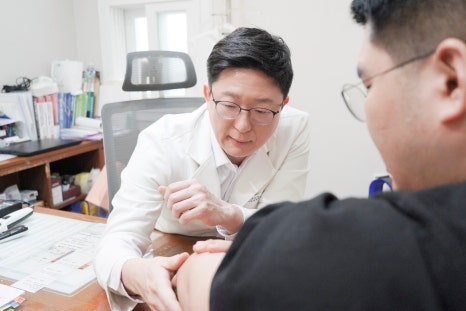
Psoriasis: Why it should be treated in time
The most typical symptom of psoriasis is thick, white, raised dead skin.
And beneath it lies a red rash, an inflammatory reaction caused by overactive immune cells.
In addition, these symptoms mainly occur on areas where the bones protrude, such as the knees, shins, and elbows, and they can become especially noticeable in summer when more skin is exposed.
However, many people think of psoriasis as merely a skin cosmetic issue and leave it untreated.
But if psoriasis is left untreated, several unexpected problems can arise, and these problems are by no means minor.
First, if psoriasis is left untreated, the fingertips may swell and bend, and joint stiffness may make it difficult to move each morning, causing significant discomfort.
This is called psoriatic arthritis, and it is known to be found in about 30% of actual psoriasis patients.
In addition, psoriasis can have a major impact on overall health and, in severe cases, can even be a cause of cardiovascular disease.
Furthermore, if psoriasis symptoms persist, they can trigger numerous psychological issues, such as feeling withdrawn about one’s appearance and fear of other people’s gaze.
Therefore, if unfamiliar patterns keep appearing on your skin, do not worry alone—visit a hospital and receive appropriate treatment.
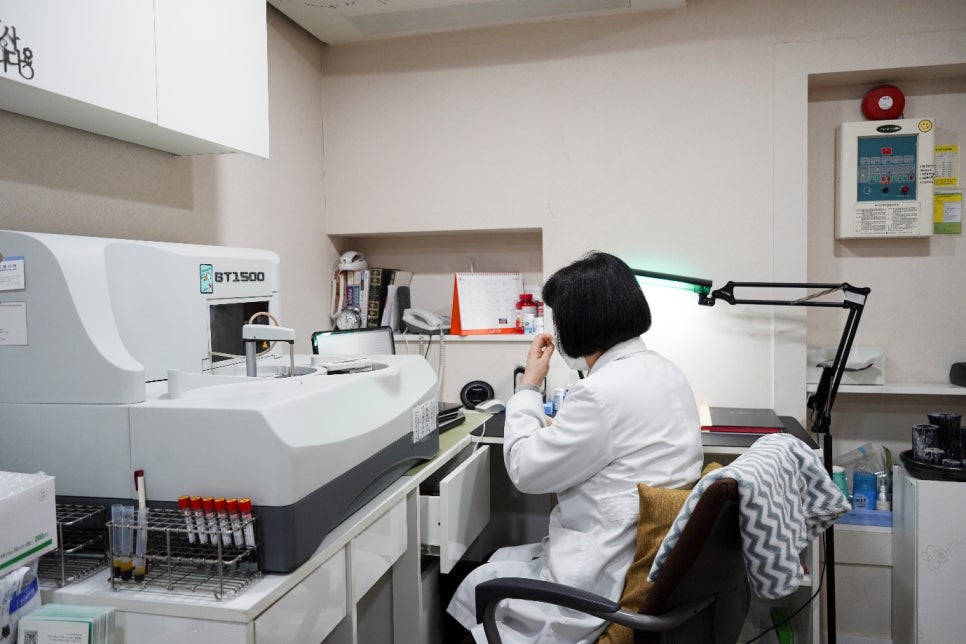
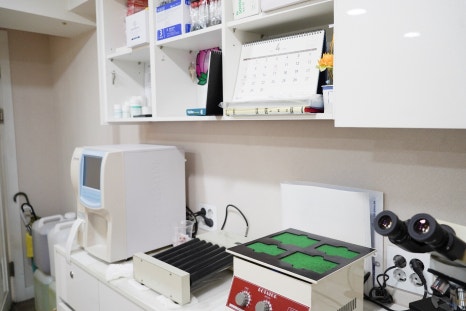

What ingredients are used in psoriasis ointment treatment?
The ointment ingredients used to treat psoriasis are steroids and vitamin D derivatives.
Among them, steroids calm inflammation in the skin and help control excessive immune reactions.
Vitamin D derivatives, meanwhile, help regulate the abnormal speed of cell regeneration.
Therefore, when steroids and vitamin D derivatives with these functions are applied to the affected area, the underlying causes of psoriasis can be corrected, and the skin can be expected to recover to a normal state.
However, like any medication, the expected effects of steroids and vitamin D derivatives can vary greatly depending on how they are used.
In particular, if steroids are used excessively, they can expose the skin to various side effects such as skin atrophy and vasodilation, so it is advisable to select and use a medication that matches the patient’s skin condition.
Also, be sure to follow the one-time application amount, duration of use, and frequency provided by the medical staff.
In addition, vitamin D derivatives have an oily texture, so it may be better to apply them before bedtime rather than during the day.
Also, depending on the patient’s skin condition, it may feel like the dead skin is flaking off more, but this is a reaction that appears during the medication adaptation process, so there is no need to worry too much.


 Previous image
Next image
Previous image
Next image
If you dismiss the dead skin caused by psoriasis by thinking, “Isn’t it just that the skin is a bit dry?”, patients become accustomed to hiding themselves.
But there is something we must remember.
Psoriasis is not just a symptom that appears on the skin, but a complex signal in which a disrupted inner rhythm is revealed through the skin.
That is why you should not take it lightly and should visit a hospital as soon as possible to receive treatment.
And since psoriasis is a chronic skin condition, you need to carry out consistent care along with treatment.
Please remember that small choices, such as sleeping 30 minutes longer or applying moisturizer even one more time, can ultimately affect your skin as well.
I hope this column from the hospital that prescribes psoriasis ointment was helpful.
Thank you for reading the hospital’s post about psoriasis ointment prescriptions all the way to the end.
| This post was written for informational purposes in compliance with Article 56, Paragraph 1 through Paragraph 15 of the Medical Service Act. All treatments carry the risk of side effects and complications depending on the individual. Before treatment, please be sure to have a 충분한 consultation with experienced medical staff and make your decision after that. |