Many people think that flaking skin is something that happens because the skin is dry.
Of course, that is true.
When the skin is exposed to a dry environment, moisture leaves the skin, and the cells that have lost moisture separate from one another, causing a lifted, flaky appearance.
However, flaking skin does not occur only because of dryness; it is also a completely natural phenomenon that happens through the skin’s normal renewal process.
Through this process, dead cells, or flakes, are shed, helping keep the skin healthy and clear.
But if the flakes that should normally shed do not come off and instead remain in a specific area of the skin, you may want to suspect a chronic skin condition called psoriasis.
Psoriasis is a skin disease that causes red rashes and thick scales.
It can have a major impact on appearance, and it can also cause physical discomfort such as itching and stinging.
In short, it can greatly affect both psychological and physical well-being.
Today, a dermatology specialist at Boramae Station will share information that may be helpful for those who are stressed by flakes that do not go away no matter how much they care for them.
-Today's article outline-
- Symptoms and features that may suggest psoriasis
- Psoriasis phototherapy methods
- Rules for preventing psoriasis recurrence

What kind of features does psoriasis have?
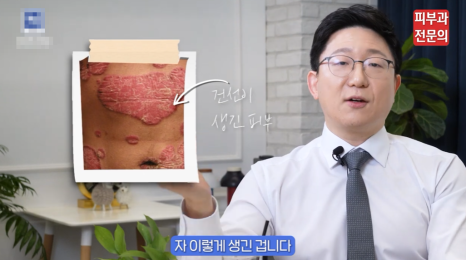
Psoriasis is a skin disease that causes white, lifted scales and redness.
These symptoms most commonly occur on protruding areas rather than on areas that fold, such as the elbows, knees, and scalp.
In addition, red rashes may appear, and silvery, scale-like flakes can form over them.
However, because there are so many skin conditions with similar symptoms, many people have difficulty telling them apart.
Unlike common eczematous conditions that cause itching, psoriasis does not usually come with severe itching.
And unless the affected area is scratched hard, oozing is also rare.
Also, while skin conditions such as atopic dermatitis can make the entire body dry, psoriasis may cause only the affected area to become hard and dry.
The shape of the affected area can also vary widely, appearing as round patches, plaques, and more.


Psoriasis, the principles and expected effects of phototherapy
Psoriasis symptoms can gradually worsen over time, and in severe cases, the condition can spread throughout the body.
That is why you should not take it lightly and must actively plan treatment.
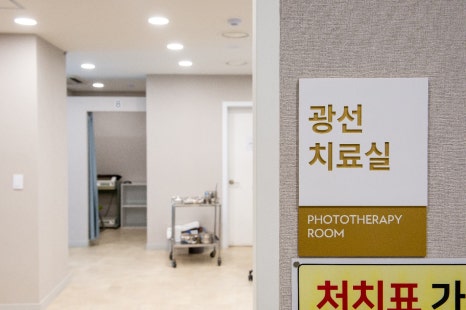
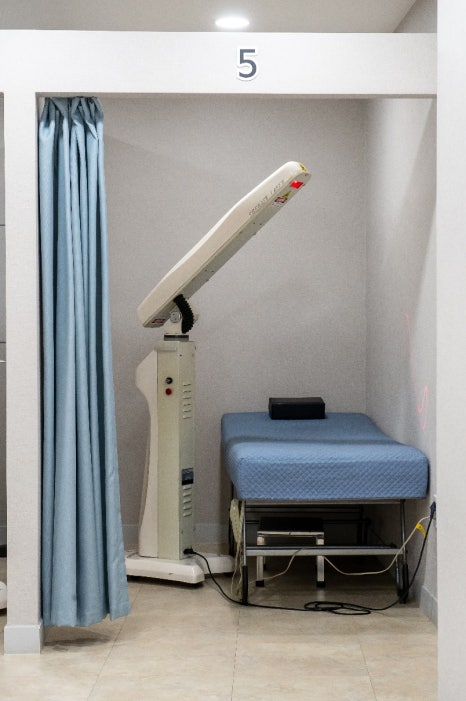
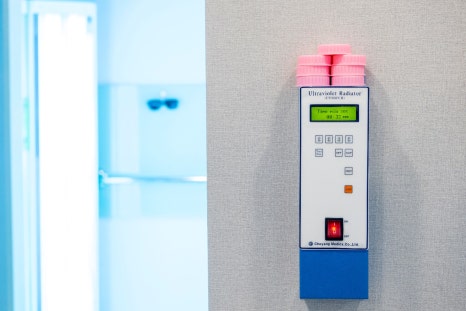
Depending on the symptoms, various treatment methods may be applied to psoriasis. Among them, the phototherapy explained today is characterized by the use of ultraviolet light.
Phototherapy, as the name suggests, is a method of exposing the skin to light of a specific wavelength.
The light used in this treatment can help suppress inflammation and regulate immune responses.
Through this process, the underlying causes of psoriasis can be corrected, and you can expect improvement in red rashes and thick scales.
Also, because it is a treatment that works by exposing the skin to light, it may be less burdensome for those who have difficulty taking medication for long periods of time.
However, since this treatment uses light, it may be difficult for patients with photosensitivity or cataracts, so please visit the hospital and receive detailed guidance.
Psoriasis does not end just because you have been treated.
Psoriasis is a type of chronic skin disease, and there is always a risk of recurrence.
That is why ongoing care is necessary along with treatment.
First, psoriasis is a condition that starts when the immune system in the body mistakenly sees the skin as an enemy and attacks it.
Simply put, you can understand it as being caused by a malfunction of the immune system.
For that reason, you need to manage your body so that it can maintain a healthy immune system.
First, when you are stressed, the hormone cortisol is secreted, which can lead to severe inflammation and an overactive immune response. So you should manage stress through regular sleep and light aerobic exercise.
Also, illnesses such as colds, pharyngitis, and tonsillitis can trigger psoriasis, so it is best to be careful to avoid exposure to these conditions.
Lastly, rubbing the skin to remove dead skin, scrubbing, and exfoliation can all damage the skin barrier.
So you should absolutely avoid the behaviors above, and you should apply enough moisturizer to protect your skin more than usual.



When we hear the word psoriasis, we often worry about too many things.
Especially because of visible lesions, we become conscious of others’ gazes, a careless comment can make us feel broken, and even choosing a single outfit can become difficult.
Of course, it is true that psoriasis is not an easy condition to make disappear.
However, the way we deal with it can make a significant difference in how the symptoms appear.
In particular, if you combine systematic treatment with consistent care, you can expect enough improvement in symptoms, so please visit a nearby hospital and receive a detailed consultation.
I hope this column by a dermatology specialist at Boramae Station has been helpful for those who are stressed by psoriasis symptoms.
If you have any questions beyond what the Boramae Station dermatology specialist has shared, please ask through the comment box below.
We will kindly answer. Thank you.
| This post was written for informational purposes in compliance with Article 56, Paragraphs 1–15 of the Medical Service Act. All treatments carry a risk of side effects and complications depending on the individual. Before treatment, please be sure to make a decision only after receiving sufficient consultation with medical staff who have extensive experience. |