Acne is often called the symbol of puberty, but that does not mean it ends when puberty is over.
Acne can, in fact, appear on our faces in even more complex ways after we become adults.
It is a skin condition that occurs as a result of many different factors becoming intricately intertwined. Genetic factors, hormones, lifestyle habits, cosmetics, and external environmental influences can all accumulate and eventually appear as acne.
In reality, when you are under stress or after you eat late at night, red acne that was not there yesterday may suddenly appear.
Acne is caused by a wide range of factors, but it has one common feature.
That is, it has a major impact on appearance and self-confidence.
And if you try to cover it with heavy makeup, the thick layers of cosmetics can clog pores, and bacteria can multiply inside the blocked pores, leading to more severe acne symptoms.
That is why, rather than trying to cover it up indiscriminately, it is advisable to visit a hospital and receive appropriate treatment.
Today, we will explain in detail the acne treatment methods that can be applied to red, inflamed acne at an acne medication prescription hospital in Seoul.
- The difference between non-inflammatory acne and inflammatory acne
- Oral medication treatment for acne
- Rules for preventing acne recurrence
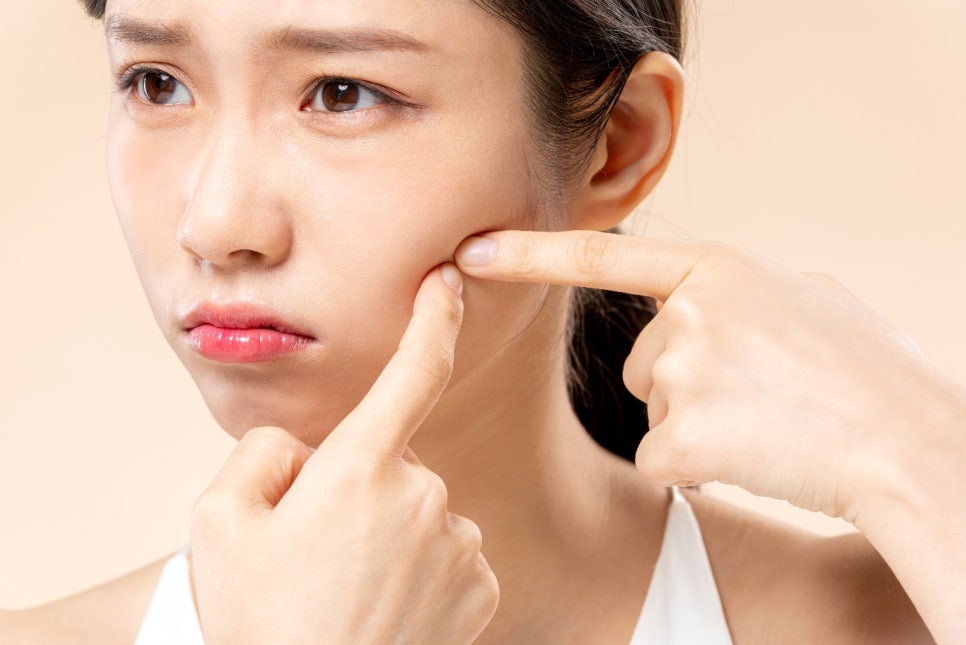
Acne is divided into two types.
Acne actually has two characteristics.
First, non-inflammatory acne occurs when sebum and dead skin cells are not smoothly discharged from the skin and become trapped inside the pores.
This appears in forms many people are familiar with, such as whiteheads, blackheads, and small acne bumps.
Among these, whiteheads are a state in which white sebum accumulates inside closed pores, while blackheads refer to the state in which this material is exposed to air, oxidizes, and turns black.
Fortunately, non-inflammatory acne is still in a stage before bacteria have multiplied, and since it is not accompanied by significant pain or itching, some improvement can be expected through thorough cleansing.
However, inflammatory acne is a little different.
Inflammatory acne occurs when acne-causing bacteria multiply inside blocked pores.
As a result, the affected area may swell and turn red, and itching or pain may occur.
In severe cases, inflammation can penetrate deep into the skin and lead to cystic acne, so you should establish a treatment plan as soon as possible.
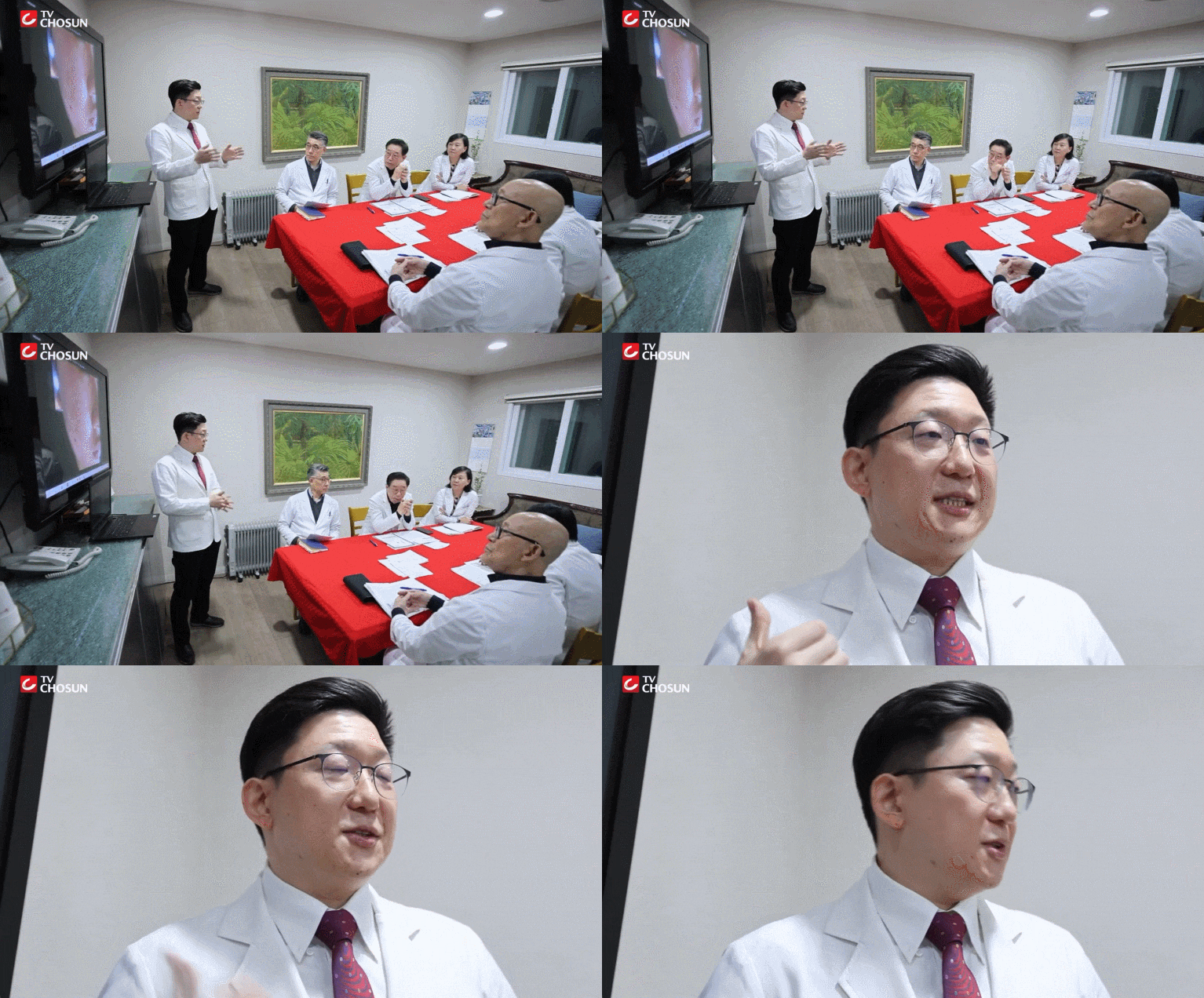
How is oral medication used to treat acne?
If acne keeps appearing and your skin becomes red and painful as if it has broken out, you may want to consider oral medication treatment.
The medications used to treat acne are antibiotics, which can help suppress Cutibacterium acnes, the bacteria most commonly involved in acne-prone skin.
And, if necessary, vitamin A derivatives may also be used to help regulate the activity of the sebaceous glands.
However, starting oral medication treatment does not mean your skin will become clear the very next day.
Oral acne medication treatment usually requires about 2 to 3 months, so it is advisable to establish a somewhat long-term treatment plan.
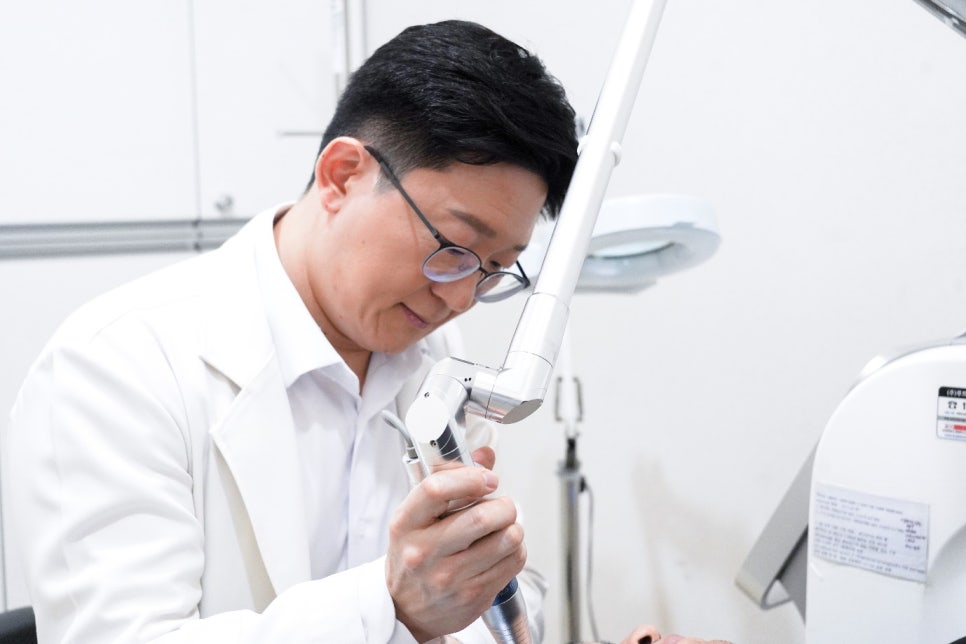
If symptoms do not improve with oral medication treatment alone, combining it with sebaceous gland laser treatment may be helpful.
However, the appropriate treatment method may vary depending on the patient's skin condition, so please plan treatment after consulting with the medical staff.
How can you maintain healthy skin for a long time after acne treatment?
It is no exaggeration to say that acne is a skin condition that inherently tends to recur.
That is because acne is not simply a problem that appears on the surface of the skin, but a "chronic skin condition" that begins with the sebum secretion system itself.
Therefore, even after treatment, you need to maintain healthy skin through consistent care.
The first way to prevent acne recurrence is thorough cleansing.
As we go through the day, sebum, dead skin cells, and various impurities accumulate on the skin.
Therefore, you should cleanse your face thoroughly twice a day to remove impurities accumulated on the skin.
It is also advisable to avoid using oily cosmetics, and if you have a habit of touching your face, correcting that habit may be beneficial.
In addition, visiting a dermatologist regularly to check your skin condition and take additional measures if needed can be helpful.
Acne may seem like an external issue, but many emotions and discomfort are tied up within it.
That is why it is advisable to be aware of acne and be sure to manage it actively.
Please remember that good skin is not just a matter of beauty, but can also become a source of strength that helps steady the mind.
However, in order to expect satisfying results from acne treatment, a customized plan according to symptoms is necessary, so please meet with a doctor who carefully considers as many factors as possible.
If you have any questions beyond what was shared today by the acne medication prescription hospital in Seoul, please ask in the comment box below.
We will kindly answer your questions.
Thank you for reading the post from the acne medication prescription hospital in Seoul to the end.
| This post was written for informational purposes in compliance with Article 56, Paragraphs 1 through 15 of the Medical Service Act. All treatments carry the risk of side effects and complications depending on the individual. Before treatment, be sure to have a thorough consultation with a medical team with extensive experience before making your decision. |