Today, I’d like to talk about atopic dermatitis, a skin condition that many people experience but that has been misunderstood for a long time.
When people hear “atopic dermatitis,” many think of a skin condition that causes severe itching.
That is true, of course, but atopic dermatitis can go beyond simple itching and become a factor that disrupts one’s overall quality of life.
In particular, the skin may turn red and hot, ooze fluid, or even peel.
In addition, scratching the skin every night can reduce sleep quality, and as a result, daytime concentration can also drop significantly.
This may also lead to severe psychological stress, anxiety, and more.
That is why it may be advisable to maintain awareness of atopic dermatitis and make a proactive treatment plan.
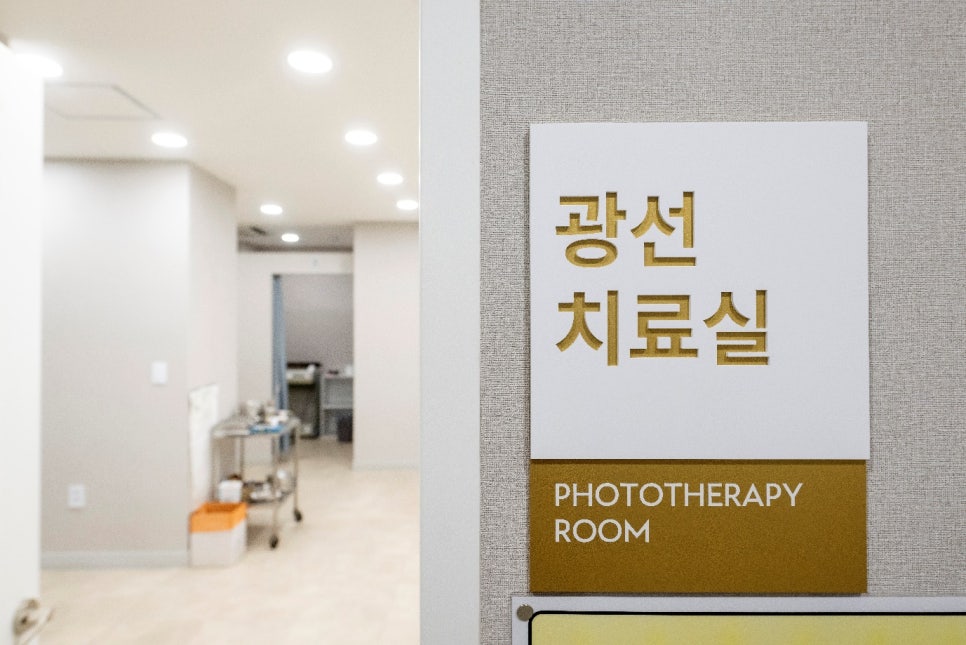
Today, we would like to share information that may be helpful for patients suffering from atopic dermatitis symptoms at an atopic dermatitis phototherapy clinic.
-Column outline for the atopic dermatitis phototherapy clinic-
-
What happens if atopic dermatitis is left untreated
-
Atopic phototherapy methods
-
Care guidelines after atopic phototherapy
Why atopic dermatitis should be treated right away
Atopic dermatitis is a type of chronic skin disease characterized by persistent inflammation and itching.
This condition often develops in infancy or childhood.
From 2 months after birth to 2 years of age, red rashes may appear on both cheeks, and the symptoms can spread to the scalp.
From age 2 and older, severe itching and red rashes may occur on the inner sides of the arms and legs.
In this way, atopic dermatitis shows different symptom patterns depending on age and can repeatedly appear across the skin.
However, the problem does not end there.
If these symptoms are simply left untreated without awareness of atopic dermatitis, they can worsen, leading to oozing or yellow crusts. If this vicious cycle repeats, lichenification lesions may develop, causing the skin to thicken abnormally.
In addition, atopic hyperpigmentation may develop, making the skin look very blotchy overall.
Therefore, if atopic dermatitis symptoms are suspected, it is advisable to receive a detailed diagnosis early and plan treatment suited to your condition.
How does atopic phototherapy work?
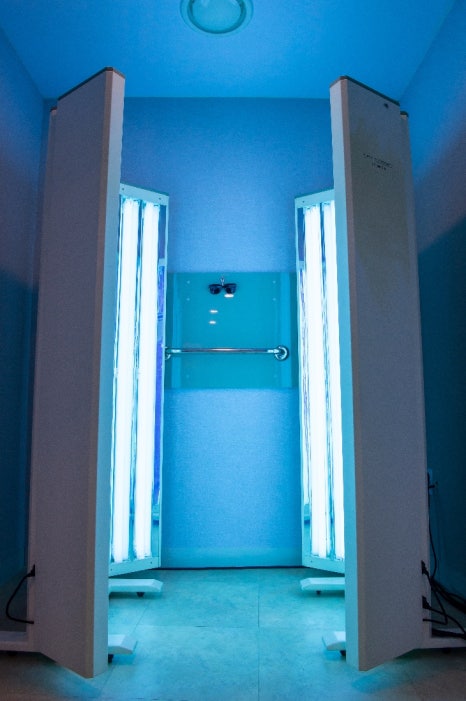
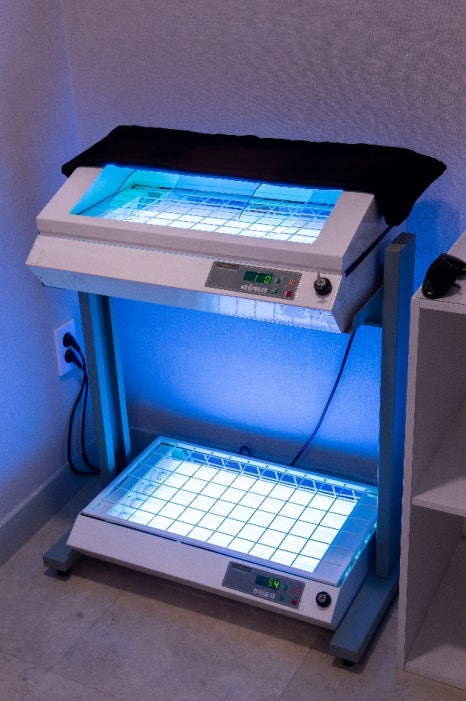
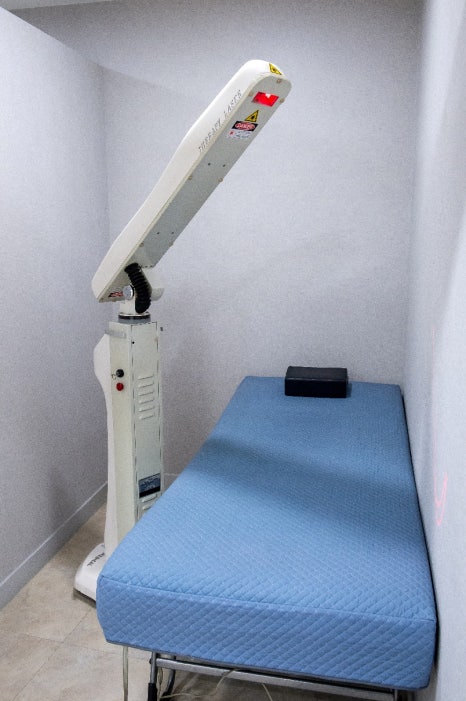
Atopic phototherapy is a treatment in which ultraviolet light of a specific wavelength is directed at the skin. It may help control inflammatory responses and restore the skin’s immune balance.
Through this, improvements in itching and red rashes caused by atopic dermatitis can be expected.
In addition, since this treatment does not use separate medications or injections, it has the advantage of relatively short treatment time and no accompanying pain.
However, symptoms of atopic dermatitis do not disappear completely after just one treatment.
Atopic phototherapy requires a long-term plan and may need consistent treatment for at least 3 to 6 months.
Furthermore, if excessive amounts of ultraviolet light are applied, it can instead cause skin damage. Therefore, the intensity of light exposure must be adjusted in detail according to the patient’s skin condition and the severity of the lesions.
How can you manage atopic dermatitis to help prevent recurrence?
Atopic dermatitis is a chronic skin disease with a high chance of recurrence.
In other words, it is not a condition that ends just because it gets better once.
To help prevent recurrence, you must follow daily care guidelines.
First, atopic skin is dry and thin, so it can be easily irritated by the external environment.
Therefore, it may be advisable to apply a sufficient amount of moisturizer frequently to protect the skin.
In particular, it is good to apply moisturizer within 3 minutes after showering, and it is advisable to use products that are less irritating.
Also, the fabrics we wear without thinking, the detergents we use, and dust and mites in the air can all irritate the skin and worsen immune responses.
Therefore, it is important to wash bedding frequently and control indoor humidity and temperature.
Lastly, stress management is important.
Atopic dermatitis can worsen not only due to simple external irritation but also due to the cortisol hormone triggered by psychological stress, so it is good to relieve stress through regular rest and hobbies.

Atopic dermatitis may sound familiar just by hearing the name, but it should never be taken lightly.
It is a skin disease that changes the rhythm of the day, disrupts sleep, and has a major impact on a child’s growth and an adult’s daily life.
That is why it is important to maintain awareness and make an active treatment plan.
However, different treatment methods may be applied depending on the severity of the symptoms and the skin condition.
In some cases, several treatment methods may be used together.
So, it is best to plan treatment after a thorough skin examination.
Thank you for reading the atopic dermatitis phototherapy clinic’s column to the end.
| This post was written for informational purposes in compliance with Article 56, Paragraphs 1 through 15 of the Medical Service Act. All treatments carry a risk of side effects and complications depending on the individual. Before treatment, be sure to make a decision only after sufficient consultation with experienced medical staff. |