There are times when round, pale white spots appear on the skin without any warning.
However, many people tend to brush this off as nothing serious.
But if those spots gradually grow larger and begin spreading to other areas, the story can become a little different.
Vitiligo is an acquired depigmenting skin disorder that forms white spots in various areas of the skin.
Unfortunately, these white spots do not recover on their own like a sunburn mark or excessive flaking.
In addition, if the symptoms gradually worsen, they can go beyond a simple skin issue and lead to psychological withdrawal, social stress, and discomfort in interpersonal relationships.
That is why, if you begin to notice white spots on your skin that were not there before, it is best to visit a clinic as soon as possible and plan treatment according to your condition.
Today, we will explain vitiligo, a chronic skin condition, in detail at the Yeongdeungpo vitiligo clinic.
- Column order for the Yeongdeungpo Vitiligo Clinic -
-
How to perform a Wood's lamp examination for vitiligo
-
How excimer laser treatment for vitiligo is performed
-
Precautions for excimer laser treatment for vitiligo

How is vitiligo diagnosed?
As mentioned at the beginning, vitiligo is a skin condition that forms white spots in various areas of the skin.
However, there are many other skin conditions that can cause such symptoms.
In particular, pityriasis alba, which mainly occurs in children, can also cause white spots on the skin just like vitiligo.
In addition, tinea versicolor and post-inflammatory depigmentation can also be causes of white spots.
Because each condition requires different treatment methods, it is advisable to undergo a sufficient skin examination before treatment.
This is where the Wood's lamp examination comes in.
A Wood's lamp is a type of ultraviolet light. When the lights in the examination room are turned off and the Wood's lamp is shone on the affected area, the lesion appears to glow clearly like fluorescence.
And if the cause of the white spots is vitiligo, a specific light such as a bluish fluorescent glow may be observed.
However, depending on the need, a small piece of skin may need to be removed and examined under a microscope to check for the presence of melanocytes, so please visit a clinic and receive detailed guidance.
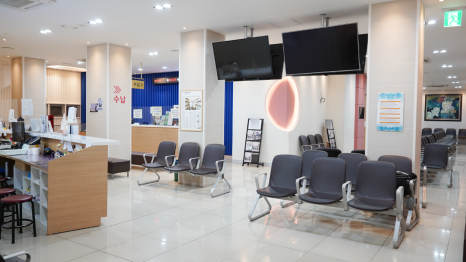

How is excimer laser treatment for vitiligo performed?
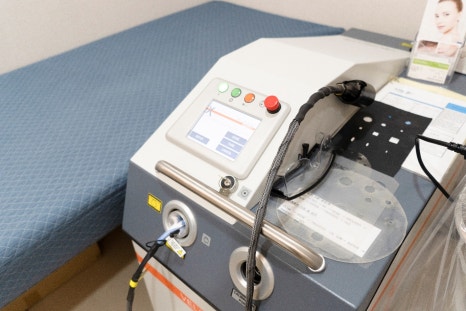
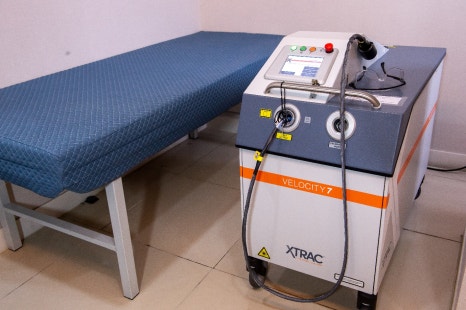
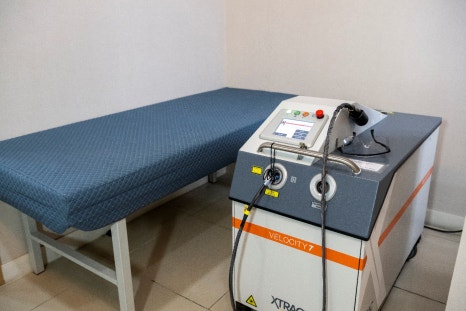
There are several treatment methods that can be used for vitiligo, and among them, excimer laser treatment is characterized by the use of a specific ultraviolet wavelength of 308 nm.
By directing this light at the affected area and stimulating the melanocytes, pigmentation re-formation can be induced, and the white spots may gradually fade.
In addition, by regulating excessive immune responses, it may help maintain a healthy and even skin tone for a long time.
Another feature of the excimer laser is that it does not simply apply ultraviolet light broadly to a large area; instead, it can deliver the light only to the exact area that needs it.
As a result, its effect on the surrounding normal skin tissue may also be somewhat reduced.
It may also be used together with other drug treatments or topical steroid treatments.

What are the precautions for excimer laser treatment?
In this way, excimer laser treatment has several advantages.
However, no matter how good a treatment method may be, there are certainly precautions to keep in mind.
The first precaution is not to expect treatment effects to appear in a short period of time.
The expected effects of excimer laser treatment tend to appear gradually, and especially with vitiligo, the effects may appear slowly, so it may be advisable to establish a long-term treatment plan.
The second is consistent ultraviolet protection.
As mentioned earlier, excimer laser is a treatment method that uses ultraviolet light of a specific wavelength.
And because the treated area is sensitive to external irritation for a while, it is a good idea to pay careful attention to ultraviolet protection not only on the day of treatment but also afterward.
The third is regular follow-up observation.
The number and frequency of vitiligo treatments can vary depending on the patient's skin condition, so it is important to visit the dermatology clinic regularly, check the current skin condition, and adjust the number and frequency of treatments in detail.

Vitiligo means more than just a simple lack of skin pigment.
It is an autoimmune disease caused by problems with melanocytes, and its forms are very diverse, with the speed of progression varying from person to person.
In particular, early lesions may begin as small, localized areas, but if treatment is delayed, the lesions can spread widely, so it is best to plan treatment as soon as possible.
We hope this column from the Yeongdeungpo vitiligo clinic will be helpful to those who are stressed by white spots on their skin.
If you have any questions other than what we covered today, please leave them in the comment box below.
We will kindly answer them. Thank you.
| This post was written for informational purposes in compliance with Article 56, Paragraphs 1 through 15 of the Medical Service Act. All treatments carry the risk of side effects and complications depending on the individual. Before treatment, be sure to have a thorough consultation with experienced medical staff before making a decision. |