Today, I’d like to talk about a problem many people experience but find difficult to mention: atopic scars.
When you think of atopic dermatitis, what comes to mind first?
Most patients answer in unison.
“It's so itchy.”
That’s right.
Atopic dermatitis is not simply a condition that causes dryness and redness.
The essence of this disease is intense itching, and it can disrupt overall quality of life.
In particular, itching that worsens at night can interfere with sleep, and in children, it can also lead to reduced concentration and emotional instability.
In adults, it often extends into problems at work, in interpersonal relationships, and even in dating.
Also, if you repeatedly scratch your skin unconsciously, the skin barrier can be damaged, leading not only to inflammation and oozing but also to dark pigmentation.
Today, I’ll explain in detail how to prevent and treat atopic pigmentation.
-
How to prevent atopic pigmentation
-
How to treat atopic pigmentation
-
How to care after treatment for atopic pigmentation

How can atopic pigmentation be prevented?
Atopic pigmentation is one of the most common aftereffects of atopic dermatitis, and if it is not actively treated, it can remain for a long time and affect quality of life.
So why does atopic pigmentation occur?
Skin affected by atopic dermatitis already has weakened skin barrier function.
As a result, it becomes sensitive to external刺激, inflammatory reactions occur easily, and even a small amount of scratching can place significant stress not only on the epidermis but also on the dermis.
And during this process, excess melanin may be produced, leaving noticeable atopic pigmentation.
In particular, areas such as the face, neck, inner arms, and backs of the hands are easily exposed to ultraviolet rays, so pigmentation may become darker and last longer.
To prevent atopic pigmentation, the key is not to scratch the skin.
At times like this, applying enough moisturizer to keep the skin from becoming drier is helpful, and using a steroid ointment that helps calm inflammation may also be advisable.
And because melanin is produced more in response to ultraviolet rays, it is a good idea to apply sunscreen carefully and consistently.


How should atopic pigmentation be treated?
Atopic pigmentation is not just a simple skin mark, but a form of skin damage that can have significant psychological, social, and medical effects.
And if this symptom remains in highly visible areas, it can directly affect self-esteem.
In addition, scar areas have weakened skin barriers, dilated capillaries, and a tendency for itching to return even with slight irritation.
In other words, a vicious cycle of scar -> inflammation -> scratching again -> recurrence -> larger scars keeps repeating endlessly.
So if you are stressed by noticeable atopic pigmentation, it is important to establish an active treatment plan.
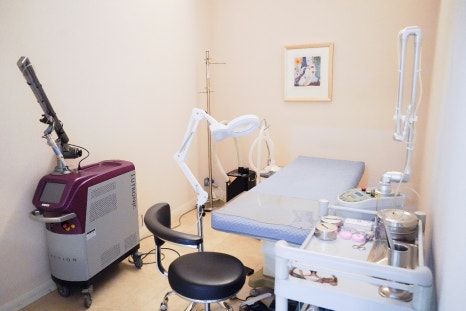
Laser toning, which many people are familiar with, can be applied to atopic pigmentation.
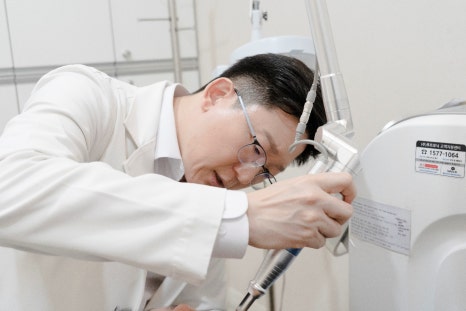
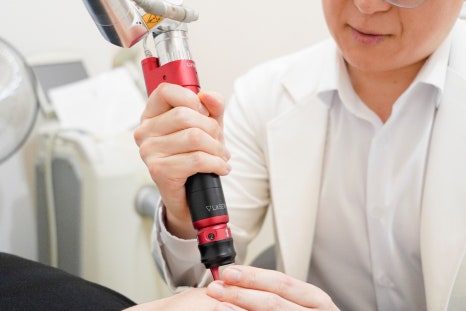
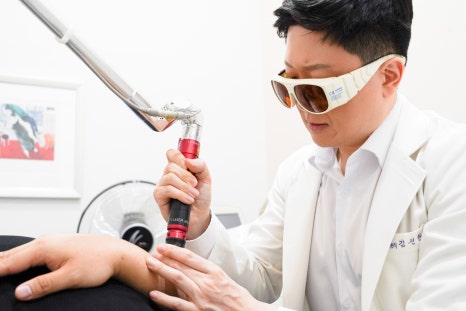
Laser toning works by using a picosecond laser device with energy at multiple wavelengths to destroy abnormal melanin pigment within the skin.
As the small, evenly fragmented melanin is expelled outward through the body’s metabolic process, you can expect the scar area to improve more cleanly.
In addition, by delivering micro-thermal stimulation to the dermis, it may also help induce collagen production.
What precautions should be taken after laser toning treatment for atopic pigmentation?
Atopic scar laser toning targets only abnormal melanin within the skin, so it has the advantage of having little effect on the surrounding normal skin tissue.
In other words, it is a treatment method with minimal impact on the skin surface.
However, if you manage the period after treatment well, the pigmentation can be properly reduced and the scar area can be smoothed out.
First of all, sunscreen after laser toning is not optional; it is essential.
After atopic scar laser toning, the skin is temporarily more sensitive, and if it is exposed to ultraviolet rays during this period, melanin may become active again, which can paradoxically make the pigmentation darker.
Therefore, even indoors, it may be advisable to apply sunscreen 2 to 3 times a day.
And when going outside, it may also be helpful to combine physical protection from UV rays by using a hat, sunglasses, a mask, and a parasol.
Also, right after the procedure, mild flaking may appear on the skin, and if you forcibly peel it off, the skin barrier can be damaged and pigment may settle more deeply.
So please never rub or scrub the skin with your hands, and wait while keeping it well moisturized until the dead skin naturally falls off.
Atopic pigmentation is not just a cosmetic issue, but an aftereffect left behind by skin inflammation.
That is why, rather than expecting it to improve on its own over time, early atopic scar laser treatment and systematic care may be needed.
However, to expect proper results, it may be advisable to undergo repeated treatments according to the medical staff’s instructions.
And since lifestyle management such as sun protection and moisturizing must also be carried out at the same time, please keep this in mind.
I hope today’s column was helpful for those who are feeling stressed because of atopic pigmentation.
Thank you for reading to the end.
| This post was written for informational purposes in compliance with Article 56, Paragraphs 1–15 of the Medical Service Act. All treatments carry the risk of side effects and complications depending on the individual. Before treatment, please be sure to have 충분한 상담 with experienced medical staff and make your decision after thorough consultation. |