The skin is the first place people notice when they meet someone.
That is probably why many people think of skincare routines like lotion, masks, and exfoliation when they hear “skin care.”
However, today’s topic, psoriasis, is a skin condition that will not back down with those kinds of care alone.
Shall we look at the main symptoms of psoriasis first?
It is characterized by itching that makes you want to scratch all day, red swollen rashes, and silvery-white scales that flake off like white snow powder.
When these appear on the elbows, knees, scalp, lower back, and other areas, they are both noticeable and uncomfortable.
The problem is that once it starts, it does not easily go away.
Thinking, “It will get better if I just leave it alone,” does not apply to psoriasis.
Today, at the dermatology clinic specializing in excimer laser treatment for skin psoriasis, we will explain in an easy-to-understand way what causes psoriasis and how it should be treated.
If you are feeling stressed because of persistent skin symptoms, please focus on reading the rest of this article.
- Causes of psoriasis
- Why rapid treatment for psoriasis is necessary
- Psoriasis excimer laser treatment
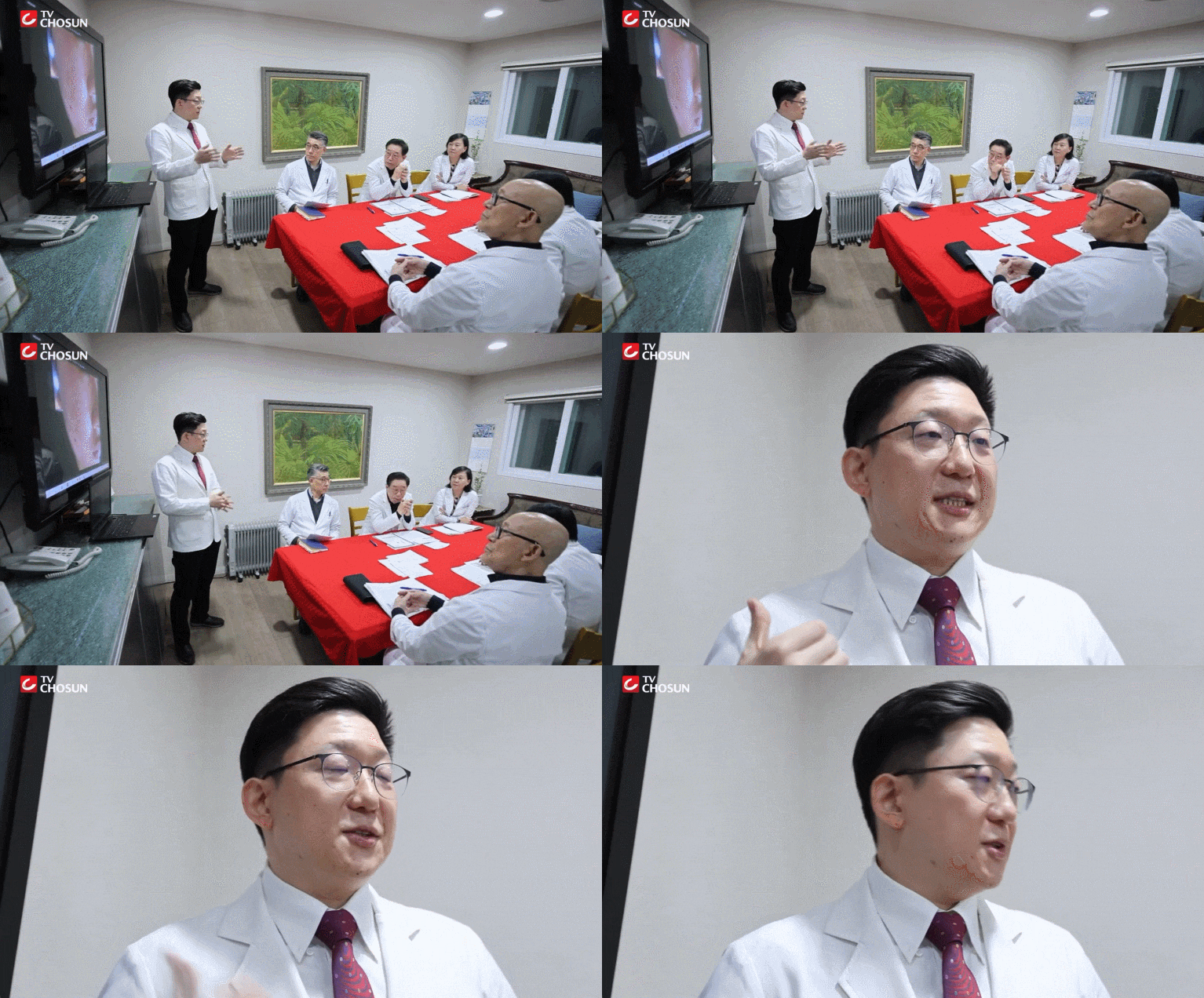
Why does psoriasis occur?
First, psoriasis is not simply a condition in which white dead skin cells build up on the skin.
The visible scale-like flakes and red rashes are only the “result”; behind them lie complex causes.
Like the tip of an iceberg, immune, genetic, and environmental factors are intertwined beneath the symptoms you can see.
The most important cause is an abnormality in the immune system.
Normal skin cells are produced and shed on a roughly 28-day cycle, but in patients with psoriasis, this cycle speeds up dramatically to 3 to 5 days.
This happens because the immune cells that protect the skin become overactive and continuously send the signal, “Make more cells!”
As a result, cells accumulate on the skin surface and thicken into scales.
In addition, environmental factors are also mentioned as causes of psoriasis.
In particular, dry environments can disrupt the skin’s immune system and may trigger thick scales and itching.
Finally, skin trauma can also be a cause.
A representative example is the Koebner phenomenon, in which psoriasis develops in the affected area after abrasions, wounds, or severe sunburn.
In other words, if the skin is damaged once, psoriasis lesions can appear at that spot.



Why you should never ignore psoriasis
Because psoriasis sometimes improves and then worsens again, and there are periods when the symptoms are not very noticeable,
people often think, “It will probably get better if I leave it alone.”
However, psoriasis is a chronic inflammatory skin disease.
In other words, it is not just a problem that appears on the skin surface; it is a disease that affects immune responses within the skin and even overall health.
First, if psoriasis is left untreated, the skin symptoms may gradually worsen.
In particular, the red rashes and silvery-white scales spread to wider areas, and the itching becomes more severe.
If the skin is damaged through scratching, a secondary bacterial infection can also occur.
In more severe cases, psoriatic arthritis may develop, and as a result, the joints of the fingers, toes, knees, and lower back may become swollen and painful.
In addition, movement becomes uncomfortable, the range of motion may be limited, and in severe cases, joint deformity can occur.
Therefore, rather than enduring psoriasis symptoms and leaving them untreated, it is advisable to visit a hospital and plan appropriate treatment.


What is the laser treatment for psoriasis?
Psoriasis is a chronic skin condition in which skin cells multiply too quickly, causing scale-like flakes to build up and inflammation to occur underneath.
At this time, ultraviolet B (UVB) phototherapy can help reduce the excessively activated proliferation of skin cells and relieve inflammation.
Excimer laser treatment is a type of phototherapy performed using a 308 nm wavelength.
Through this process, the skin’s immune response and inflammatory response are regulated, and improvement in symptoms caused by psoriasis can be expected.
In addition, excimer laser treatment has the feature of allowing the irradiation area to be widely adjusted, making it possible to target only the lesion area.
As a result, the impact on nearby normal skin tissue can be reduced, allowing for more stable outcomes.
However, steady skin care is needed after treatment.
After excimer laser treatment, you should take care not to expose the skin to strong sunlight for long periods, and you should apply sunscreen more carefully than usual.
Also, because laser treatment must have its intensity and number of sessions adjusted according to the size and location of the lesion and the condition of the skin, you must follow the instructions of the medical staff.
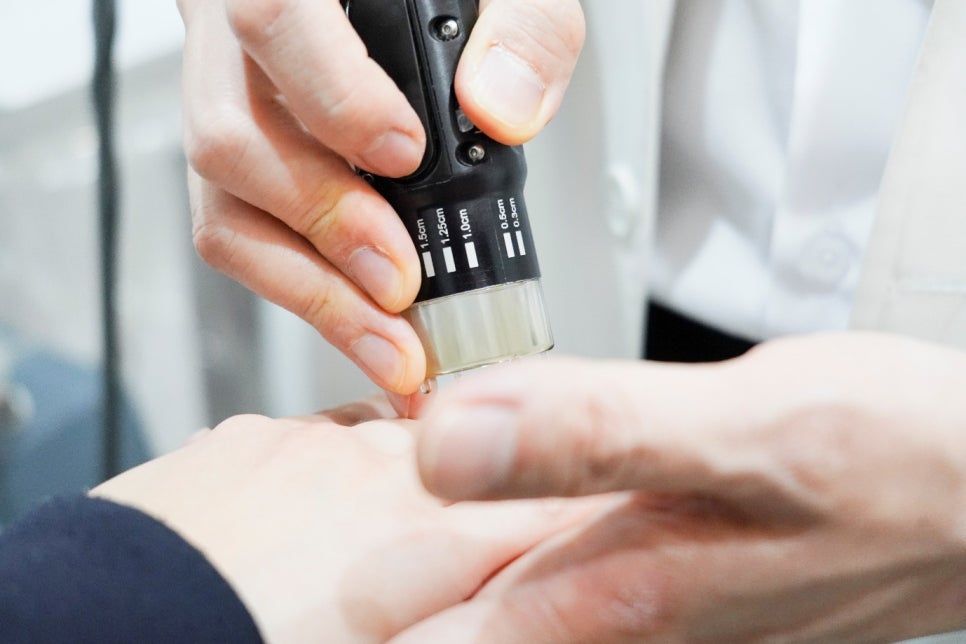
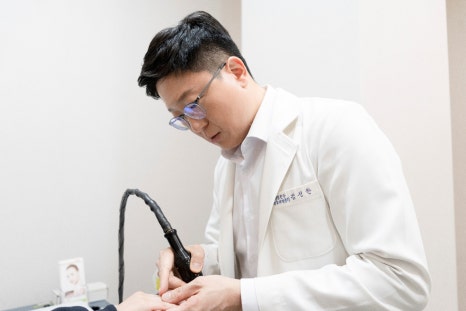
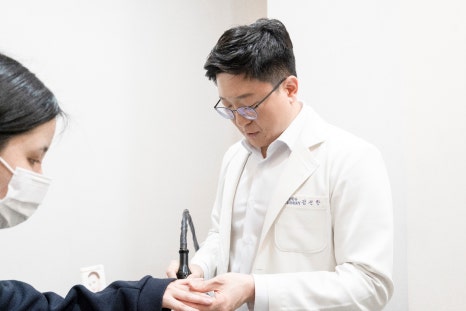
Psoriasis is not simply a skin disease that affects appearance; it is a chronic condition linked to immunity and overall health.
Therefore, treatment should aim not for temporary symptom relief, but for long-term management and prevention of recurrence.
If detailed diagnosis and treatment are started early, it can help prevent the lesions from spreading and reduce a decline in quality of life.
In addition, daily management such as lifestyle control, stress management, and minimizing skin irritation is essential for maintaining the expected effects for a long time.
Lastly, because the causes and aggravating factors of psoriasis differ from person to person, a personalized treatment plan tailored to you is important.
So please receive treatment through medical staff who have a good understanding of skin conditions.
If you have any questions beyond the information shared today about psoriasis excimer laser treatment at the dermatology clinic, please leave a question in the comment box below.
We will kindly answer.
Thank you for reading to the end of the post about psoriasis excimer laser treatment at the dermatology clinic.
| This post was written for informational purposes in compliance with Article 56, Paragraphs 1 through 15 of the Medical Service Act. All treatments carry a risk of side effects and complications depending on the individual. Before treatment, be sure to have a thorough consultation with medical staff who have extensive experience and then make your decision. |