When people think of atopic dermatitis, many often think,
'It itches'
'The skin turns red and raised'
.
In fact, atopic dermatitis is more than a simple skin problem; it is a chronic inflammatory skin disease that can have a major impact on overall quality of life.
Atopic dermatitis often begins in young children, but it is also characterized by symptoms that often persist into adulthood or recur later on.
In other words, it is a condition with far-reaching effects that cannot simply be dismissed as “a skin disease you get when you are young.”
In addition, patients with atopic dermatitis lose sleep because of severe itching, have reduced concentration, and experience significant inconvenience in daily life.
As the skin damage becomes more severe, it can even lead to chronic erythema and pigmentation changes.
For that reason, rather than dismissing atopic dermatitis symptoms as trivial and leaving them untreated, it is advisable to visit a clinic and establish an active treatment plan.
I hope this article by a dermatology specialist in Singil-dong will be helpful for patients with atopic dermatitis.
-Article order by the dermatology specialist in Singil-dong-
-
Causes of atopic dermatitis
-
How to prevent worsening of atopic dermatitis
-
Atopic dermatitis ointment treatment and phototherapy

Why understanding the causes of atopic dermatitis is necessary
The cause of atopic dermatitis is not just one thing.
Rather, it should be seen as the result of many factors piling up and then erupting on the skin.
The first is genetic factors.
In fact, if parents have atopic diseases such as atopic dermatitis, asthma, or allergic rhinitis, the likelihood of these appearing in their children is higher.
The second is environmental factors.
External environments such as dry weather, fine dust, and sudden temperature changes can easily damage the skin and worsen atopic dermatitis symptoms.
For example, in winter, when indoor air becomes dry because of heating, patients with atopic dermatitis have an especially hard time.
The third is lifestyle habits.
Excessive stress, irregular sleep, and a diet centered on instant foods weaken the skin barrier and disrupt immune balance.
People who say, “I was fine when I was young, but my atopic dermatitis got worse after becoming an adult” are usually closely related to these lifestyle patterns.


How can worsening of atopic dermatitis be prevented?
When atopic dermatitis worsens, it goes beyond simple skin discomfort and has a major impact on overall quality of life.
First, the itching at night prevents proper sleep, which reduces concentration in school or at work.
Children feel tired at school, and adults become less efficient at work.
In addition, scratches can create wounds, and if bacteria enter through those wounds, a secondary infection can occur.
The key to preventing worsening of atopic dermatitis comes down to two things.
Strengthening the skin barrier and avoiding unnecessary irritation.
At this time, applying enough moisturizer can help prevent moisture loss and skin dryness.
Environmental management is also important. Dust, mites, and mold in the home are major causes of worsening atopic dermatitis, so it may be advisable to wash bedding regularly and maintain a clean indoor environment using a humidifier or air purifier.

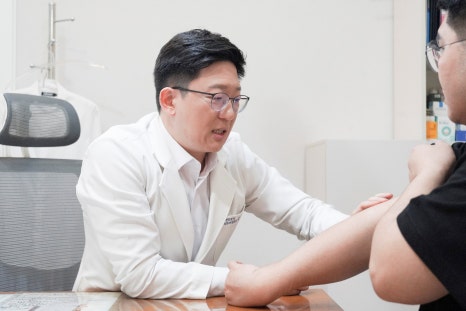
How should atopic dermatitis be treated?
The foundation of atopic dermatitis treatment is controlling skin inflammation and restoring the skin barrier.
The first treatment often considered in this process is topical application, that is, ointment treatment.
Ointment treatment may use steroid ingredients, and steroids can help suppress inflammation and relieve itching.
However, if symptoms become more severe and the affected area becomes wider, it may be difficult to expect satisfactory improvement with ointment treatment alone.
At that point, phototherapy may be performed.
Phototherapy is a treatment method that uses ultraviolet light of a specific wavelength, and it has the characteristic of helping to regulate skin inflammation and immune responses.
Accordingly, it may help relieve itching, rash, and dryness.
However, there are also clear precautions.
Because phototherapy involves repeated exposure to ultraviolet light, skin redness, burns, pigmentation changes, and skin aging can occur.
Therefore, it may be advisable to undergo treatment only under the prescription and monitoring of medical staff.


Atopic dermatitis is common, but it is by no means a condition that should be treated lightly.
We must remember that the symptoms that appear on the skin are only the visible part, and that it is a chronic condition that affects the patient’s overall quality of life.
Modern medicine has developed in the direction of controlling and managing atopic dermatitis rather than eliminating it completely.
Therefore, the goal of treatment is to prevent symptoms from worsening and to help patients reduce discomfort in daily life and maintain a healthy lifestyle.
The key to atopic dermatitis treatment lies in regular consultations and patient-specific treatment plans.
In addition, if you consistently use moisturizer, manage your environment, and adjust your lifestyle habits, you can expect the symptoms of atopic dermatitis to improve.
If you are stressed by atopic dermatitis symptoms, please make sure to review the information shared today and establish a systematic treatment plan.
Thank you for reading the dermatology specialist’s column in Singil-dong to the end.
| This post was written for informational purposes in compliance with Article 56, Paragraphs 1 to 15 of the Medical Service Act. All treatments carry the risk of side effects and complications depending on the individual. Before treatment, be sure to have a thorough consultation with experienced medical staff before making a decision. |