When you look in the mirror, what do you check first?
Some people think of wrinkles, some of acne, and others of spots or blemishes.
But in the end, the way we look at skin comes down to how even the skin tone is.
An even skin tone gives a healthy and lively impression.
If your complexion is consistent, you can look less tired even when you are exhausted, and you may appear younger even as you age.
On the other hand, if the skin tone is uneven, the overall impression becomes dull no matter how smooth the skin is or how few blemishes there are.
Changes in skin tone can be severely affected by many different factors, such as strong ultraviolet rays and accumulated fatigue.
In such cases, you can expect some recovery by consistently using sunscreen, keeping the skin well moisturized, and maintaining healthy lifestyle habits.
However, if the cause of the problem is vitiligo, the story can be different.
Today, we will take a detailed look at how vitiligo should be treated, according to a dermatology specialist at Omokgyo Station.
-Column outline by the dermatology specialist at Omokgyo Station-
- Characteristics of segmental vitiligo and non-segmental vitiligo
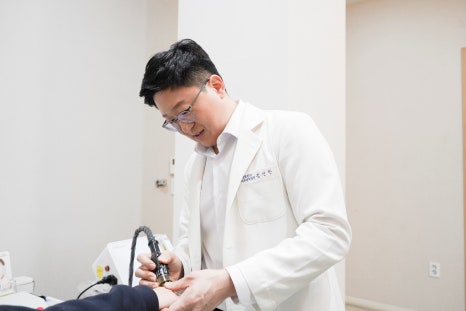
- Vitiligo excimer laser treatment
- How to manage vitiligo
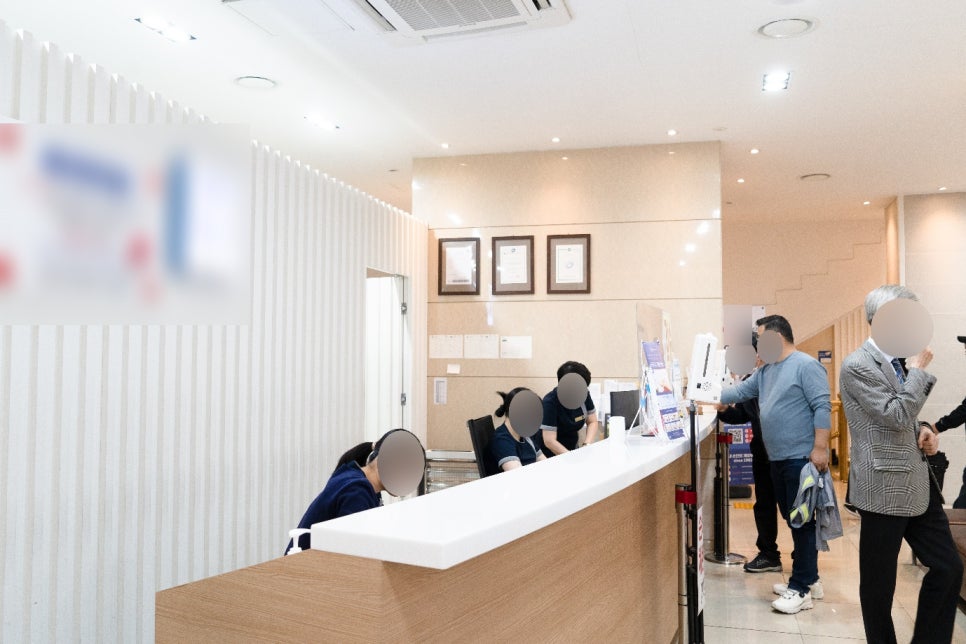
Segmental vitiligo, non-segmental vitiligo
Vitiligo is divided into segmental vitiligo and non-segmental vitiligo depending on how the symptoms appear.
First, segmental vitiligo, as the name suggests, is a type that appears on one side, that is, in a specific area along a nerve distribution.
It often appears on one side of the body, or in a clearly defined area such as the face, neck, or arms.
Segmental vitiligo is characterized by an early onset and rapid progression, but it often becomes stable after a certain point.
In other words, it spreads quickly at first and then the symptoms stop progressing.
By contrast, non-segmental vitiligo has a slightly different pattern.
Non-segmental vitiligo often occurs symmetrically in multiple areas of the body, regardless of nerve distribution.
For example, it may appear in nearly the same locations on both backs of the hands, the knees, or both sides of the face.
Its progression is also different from segmental vitiligo in that it spreads gradually and may continue to expand over a lifetime.
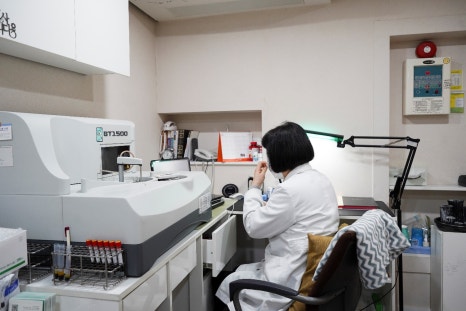

What is vitiligo excimer laser treatment?
When people think of vitiligo treatment, they often think lightly, “Wouldn’t applying medicine be enough?”
However, when melanocytes have lost their function, it is difficult to expect improvement with simple moisturizing or whitening cosmetics alone.
At this point, one option to consider is excimer laser treatment.
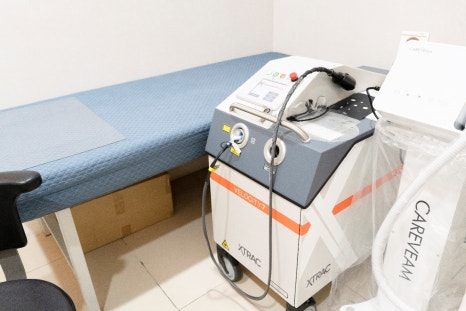
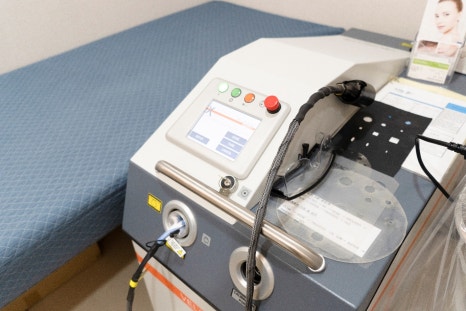
An excimer laser is a light therapy that uses ultraviolet light with a wavelength of 308 nm, and this wavelength stimulates melanocytes and promotes pigment formation.
Simply put, it helps damaged melanocytes become active again and creates an environment where new pigment can take hold.
The biggest feature of excimer laser treatment is that the laser can be applied selectively only to the lesion, with little effect on the surrounding normal skin tissue.
However, as with any treatment, there are also precautions to keep in mind.
First, in areas such as the hands and feet where there are fewer melanocytes, the expected effect may appear somewhat more slowly, so you need to approach treatment with steady patience.
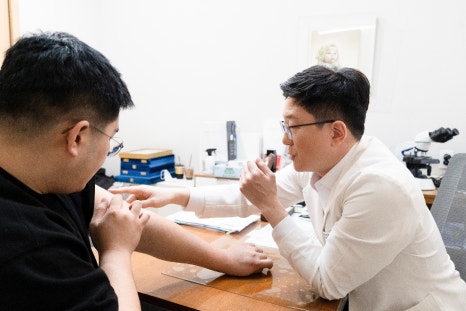
In addition, the laser intensity may vary slightly depending on the patient’s skin condition, so diagnosis and consultation with medical staff are necessary.
How to prevent recurrence of vitiligo
Vitiligo is a skin condition that requires ongoing management along with treatment.
The first point of management is sun protection.
Because vitiligo is a condition in which melanocytes have weakened, exposure to ultraviolet rays can make the color difference from the surrounding skin more noticeable.
Therefore, it is essential to make a habit of consistently applying sunscreen regardless of the season or weather.
The second is maintaining regular daily habits.
Lack of sleep, excessive stress, and irregular eating habits can affect the immune system and worsen vitiligo.
In particular, because stress can trigger an autoimmune response, it is helpful to relieve tension through meditation or light exercise.
The third is skin moisturizing care.
Dry skin becomes more vulnerable to external irritation, and symptoms can worsen even with minor damage.
Therefore, it is important to apply enough moisturizer every day to keep the skin barrier strong.
The fourth is minimizing skin irritation.
The habit of scratching or rubbing the affected area forcefully can damage the skin and create new lesions.
It is also best to avoid irritating skin procedures or excessive use of whitening products.

Vitiligo is a chronic skin condition that directly affects a patient’s quality of life and psychological stability, beyond simply causing an uneven skin tone.
At present, it is important to clearly understand that control and management are the key points rather than the concept of a complete cure.
And when suspicious symptoms appear, it is advisable to consult medical staff rather than trying to resolve them on your own.
In the end, the most appropriate way to respond to vitiligo is to recognize it as a condition that is managed together and continue consistent attention and effort.
I hope the column by the dermatology specialist at Omokgyo Station was helpful to patients with vitiligo.
If you have any questions beyond the content above, please ask through the comment box below.
We will kindly answer them.
Thank you for reading the dermatology specialist at Omokgyo Station to the end.
| This post was written for informational purposes in compliance with Article 56, Paragraphs 1 through 15 of the Medical Service Act. All treatments carry a risk of side effects and complications depending on the individual. Before treatment, please be sure to make a decision only after sufficient consultation with medical staff with extensive experience. |