Psoriasis is not simply a condition where the skin becomes dry or develops scales.
It is a chronic inflammatory skin disease that can last from as short as a few weeks to as long as several years.
When psoriasis develops, many people experience discomfort in daily life due to itchy skin, excessive scaling, and red rashes. In particular, if it appears on highly visible areas such as the elbows, knees, or scalp, it can also cause psychological stress.
Today, at Daebang Station Dermatology, we will take time to explain why psoriasis occurs, how treatment is carried out, and in particular, how ointment treatment and phototherapy among the treatment methods are performed in detail.
-Today's column outline-
-
Psoriasis: Why does it happen?
-
Psoriasis treatment method - Ointment treatment
-
Psoriasis treatment method - Phototherapy

Psoriasis: Why does it happen?
Psoriasis is a condition that occurs when skin cells are produced faster than the normal cycle.
In normal skin, cells are usually renewed on a 28-day cycle, but in patients with psoriasis, new cells are created in just 3 to 5 days.
As a result, thick scales build up on the skin, along with rashes, itching, and even pain.
Because this response happens when the immune system becomes overactive, it cannot simply be seen as a problem caused only by “dry skin.”
In particular, stress, overwork, drinking, smoking, infections such as colds or sore throats, and certain medications can also worsen psoriasis.
In other words, psoriasis is not a disease that can be resolved in a short period of time; it is a chronic condition that requires consistent management.
That is why treatment should focus on reducing inflammation and minimizing recurrence.

Psoriasis treatment method - Ointment
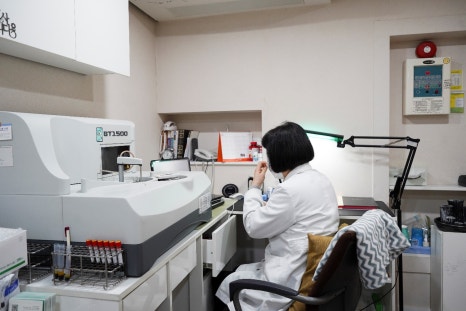
The most basic method in psoriasis treatment is ointment therapy.
Steroid ointments, vitamin D analog ointments, or combination ointments that mix the two are commonly used.
These ointments reduce inflammatory reactions on the skin surface and suppress excessive scale formation.
In the early stages of psoriasis symptoms, ointment treatment alone can lead to significant improvement without any other treatment.
However, there are also precautions to keep in mind.
If steroid ointments are used incorrectly, they can thin the skin or cause pigmentation changes, so after a specialist's diagnosis, it is important to adjust the treatment area and duration of use.
Also, vitamin D ointments soften scales and relieve inflammation, but people with sensitive skin may feel stinging or mild irritation.
In such cases, it is best to apply a thin layer once a day in the evening.
In summary, ointment treatment can be considered a foundational step that calms inflammation and can increase the expected effectiveness of subsequent phototherapy.
Psoriasis treatment method - Phototherapy
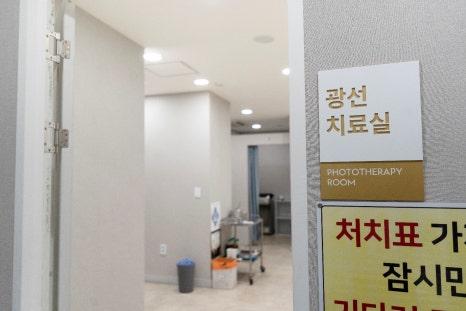
If symptoms do not improve even with the ointment treatment explained above, or if the affected area has spread widely, it is a good idea to combine phototherapy.
As the name suggests, phototherapy is a treatment method that controls inflammation by exposing the skin to ultraviolet light of a specific wavelength.
This ultraviolet light lowers the activity of immune cells that cause inflammation and suppresses excessive skin cell proliferation, helping to reduce redness and scaling.
It also allows the treatment area to be adjusted, making it suitable for localized areas such as the face, hands, feet, and knees.
It is usually carried out consistently about 2 to 3 times a week, then gradually spaced out for maintenance.
At first, improvement and recurrence may repeat, but with consistent treatment, the recurrence interval can gradually become longer.

Psoriasis, which I explained today, is not a disease that can be completely cured in a short period of time, but it is a condition that can be managed with consistent treatment.
By calming inflammation with ointment treatment and stabilizing immune responses within the skin through phototherapy, improvement in symptoms can be expected.
Above all, the most important thing is not to stop treatment midway and to continue management according to the specialist's guidance.
If you have any questions other than what was covered above, please leave them in the comment box below.
We will kindly answer them.
Thank you for reading to the end.
| This post was written for informational purposes in compliance with Article 56, Paragraphs 1 to 15 of the Medical Service Act. All treatments carry the risk of side effects and complications depending on the individual. Before treatment, be sure to make a sufficient consultation with experienced medical staff before making a decision. |