When white spots appear on the skin, most people tend to think they are simply caused by dryness or sun exposure and do not take them too seriously.
However, vitiligo, a skin condition that causes white spots to appear on the skin, is a chronic autoimmune disease that occurs when melanocytes in the skin are lost.
In the early stages, the symptoms can be very subtle, so many people leave them untreated. But as time passes, the spots can become larger and spread to the surrounding skin, so caution is needed.
If treatment is delayed at this stage, the function of melanocytes may be completely lost, and the condition can progress to a stage where color is difficult to restore.
In other words, vitiligo is a condition in which “how quickly treatment is started” determines the prognosis of the symptoms.
Today, we will take a closer look at why vitiligo should be treated early, as well as treatment methods and daily management tips, at the Yeouido Station vitiligo clinic.
-Yeouido Station Vitiligo Column Outline-
-
Causes and early symptoms of vitiligo
-
Why early treatment is necessary
-
Treatment methods and lifestyle management


Causes and Early Symptoms of Vitiligo
Vitiligo is a condition that occurs when melanocytes, which produce skin pigment, are destroyed by an immune response.
In other words, it is known to arise from an autoimmune abnormality in which the body’s immune system recognizes its own melanocytes as enemies and attacks them rather than foreign substances.
This immune imbalance can appear more easily when genetic factors or physical and mental stressors such as stress and fatigue accumulate.
In addition, excessive sun exposure can reduce melanocyte function and speed up the progression of vitiligo.
Ultimately, vitiligo is a condition caused by a combination of immune, environmental, and genetic factors rather than a single cause.
In the early stage of symptoms, one or two small, faint white spots often appear, and they tend to show up especially on areas with frequent friction such as the face, hands, around the mouth, knees, and elbows.
At this stage, the borders are unclear, so it is easy to simply think it is just flaking or dryness. However, if left untreated in the early stage, the spots may gradually grow and spread outward, causing discomfort.

Why Vitiligo Should Be Treated Early
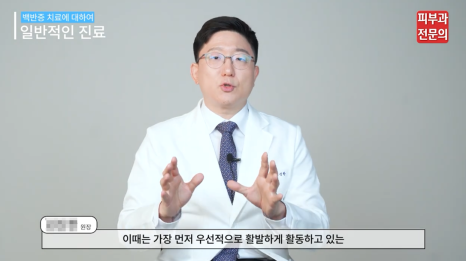
Vitiligo is an immune disease in which the recovery ability of melanocytes declines over time.
If treatment begins early, the melanocytes that remain may still recover their function, but if the condition has progressed for a long time, the cells may disappear completely, making pigment restoration difficult.
In addition, because vitiligo causes visible changes in the skin’s appearance, it can lead to psychological withdrawal or stress in social relationships.
These psychological factors can in turn worsen the immune imbalance again, often aggravating the symptoms of the disease.
Therefore, even if vitiligo symptoms are mild, it is important to receive an early diagnosis and begin active treatment while melanocytes are still present.



Vitiligo Treatment Methods and Lifestyle Management
Treatment for vitiligo varies depending on the patient’s condition, the affected area, and the degree of progression.
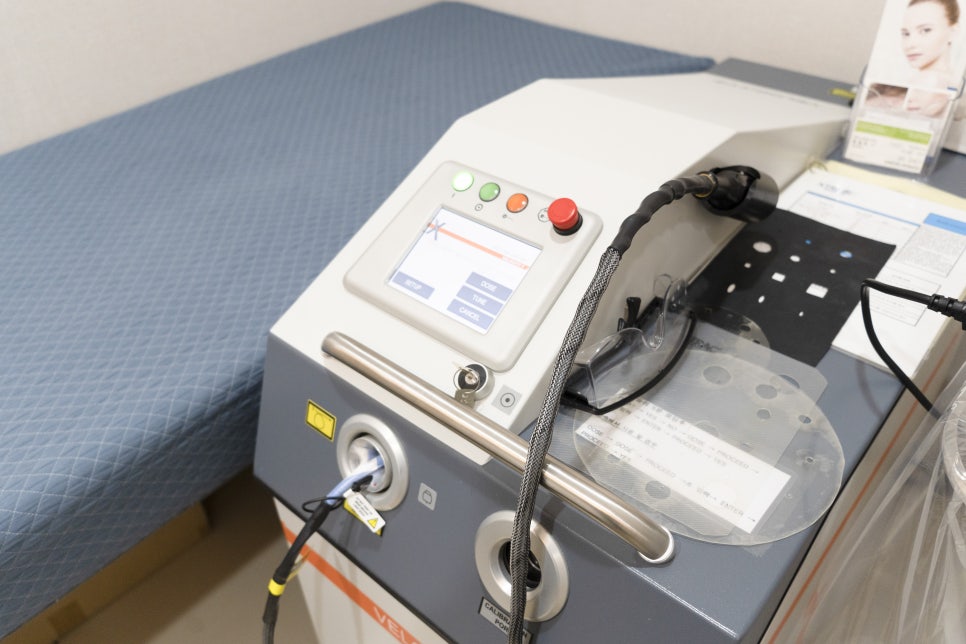
A representative treatment is excimer laser therapy.
Excimer laser is a form of phototherapy that uses ultraviolet light with a wavelength of 308 nm, and this wavelength stimulates melanocytes and helps induce pigment formation.
Simply put, it helps damaged melanocytes become active again and creates an environment where new pigment can take root.
The biggest advantage of this treatment is that the laser can be applied selectively only to the lesion area, so it has little effect on the surrounding normal skin tissue.
Along with this laser treatment, it is recommended to consistently use sunscreen in daily life and avoid strong cosmetics or friction that may irritate the skin.
In addition, adequate sleep, a balanced diet, and stress management can help stabilize immunity and may help improve expected results.


Vitiligo is not simply a symptom of the skin turning white; it is a chronic autoimmune disease caused by an abnormal immune system.
In particular, because symptoms are not very noticeable in the early stage, people may be hesitant to seek treatment. But if this period is missed, recovery becomes more difficult and symptom progression can also speed up.
Therefore, if you are considering treatment for vitiligo, it is advisable to consult a medical professional rather than trying to resolve it on your own.
I hope today’s Yeouido Station vitiligo column was helpful for patients with vitiligo.
If you have any questions beyond the information above, please leave them in the comment box below.
We will answer kindly. Thank you.
| This post was written for informational purposes in compliance with Article 56, Paragraphs 1–15 of the Medical Service Act. All treatments carry a risk of side effects and complications depending on the individual. Before treatment, please be sure to make a thorough consultation with a medical professional with extensive experience and then make your decision. |