You may have experienced dry skin and flaky scales at least once.
However, there are cases where it is hard to regard it as simple dryness.
If thick scales repeatedly build up in a specific area and are accompanied by red patches, you may suspect psoriasis, a chronic skin condition.
Psoriasis is a condition caused by an imbalance in the immune system, and it mainly appears in areas that experience frequent friction, such as the elbows, knees, and scalp.
Once it develops, it does not go away easily and tends to recur and worsen repeatedly, so it is important to plan appropriate treatment early.
Today, I will share general information about psoriasis, which does not easily disappear without care, as well as phototherapy and lifestyle habits.
-
What is psoriasis?
-
Psoriasis treatment methods, phototherapy
-
Psoriasis, prevention of recurrence, and management methods

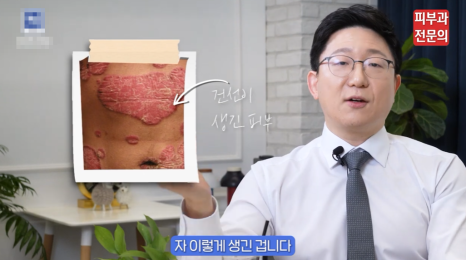

What is psoriasis?
Psoriasis refers to a chronic condition in which the skin cell regeneration speed becomes abnormally fast due to an overactive immune system, resulting in thick scales and red rashes.
What distinguishes it from other skin conditions is that the rash tends to concentrate on protruding areas such as the elbows, knees, and scalp, accompanied by silvery-white scaling, and that the feeling of dryness is limited to specific areas rather than the entire body.
Symptoms may also recur due to seasonal changes, stress, and other factors.
If these characteristics appear, it is advisable not to think of it as simple skin dryness, but to establish an early diagnosis and treatment plan for psoriasis.
This is because leaving the symptoms untreated can lead not only to physical discomfort but also to psychological stress.

Psoriasis treatment methods, phototherapy
As mentioned earlier, psoriasis is a skin condition caused by an imbalance in the body’s immune system.
Therefore, to improve it, the imbalance must be corrected.
One of the treatment methods is excimer laser treatment.
An excimer laser is a treatment method that uses a specific wavelength of light and may help control inflammatory reactions and excessive immune responses in the skin.
It also has the advantage of allowing the irradiation range and intensity to be finely adjusted according to the lesion area and skin condition.
In addition, because it is a treatment method that does not use medication, even those who are sensitive to steroids can undergo treatment more comfortably.
However, if excessive energy is delivered during excimer laser treatment, it can lead to side effects such as skin burns, so caution is needed.
Therefore, it is advisable to appropriately adjust the laser intensity and number of sessions according to the lesion area and skin condition.
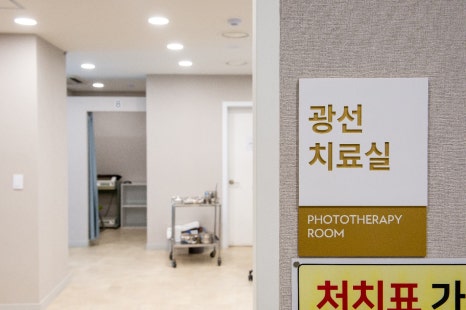
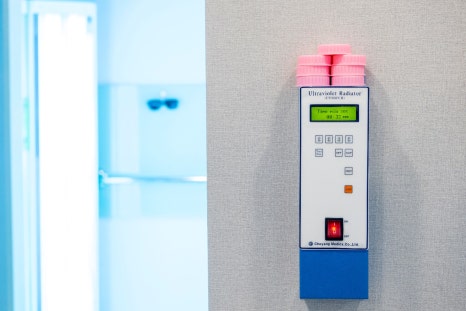
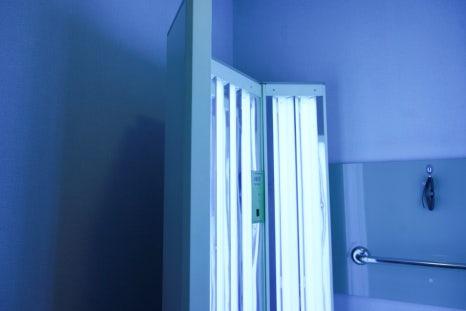
Psoriasis, prevention of recurrence and management methods
Because psoriasis is a chronic condition, it is better not to stop at treatment alone but to also manage it in daily life.
Since the skin is in a sensitive state immediately after treatment, strong irritation should be avoided and the skin barrier should be protected through sufficient moisturizing.
In addition, stress, lack of sleep, and colds can affect immune responses and worsen symptoms, so it is important to manage stress through regular sleep and light exercise.
Behaviors that damage the skin barrier should be avoided, and lifestyle habits should be managed so that the immune system remains stable through a balanced diet, appropriate exercise, and sufficient sleep.
In this way, if consistent care and lifestyle improvements are carried out together with treatment, the chances of recurrence can be minimized and symptom improvement can be expected.
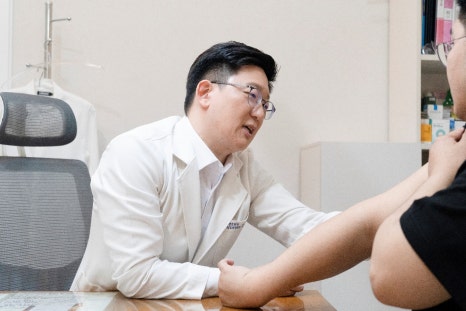
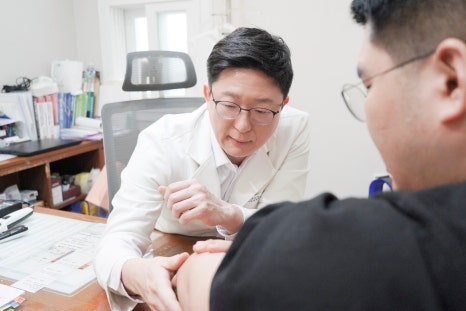
Although psoriasis is a condition that is difficult to cure completely, if early diagnosis, systematic treatment, and consistent management are combined, it is possible to expect meaningful symptom improvement.
In particular, phototherapy performed at a hospital may help directly affect the skin while reducing the burden of medication.
However, it is important not to forget that treatment alone is not enough; long-term skin health can be maintained only when daily care such as skin protection after treatment, sun protection, lifestyle management, and immune system stabilization is also carried out.
If you are feeling discomfort because of noticeable scales and rashes, or if repeated recurrences are causing stress, do not worry alone—visit a nearby hospital to check the treatment plan and management methods that are right for you.
I hope the information shared today will be helpful to those struggling with psoriasis.
If you have any questions other than those covered above, please ask in the comments below.
Thank you.
| This post was written for informational purposes in compliance with Article 56, Paragraphs 1 to 15 of the Medical Service Act. All treatments carry the risk of side effects and complications depending on the individual. Before treatment, please be sure to have a thorough consultation with medical staff who have extensive experience before making a decision. |