Psoriasis is not simply a symptom of dry skin or temporary flaking.
It is a chronic inflammatory skin disease in which inflammatory reactions are repeated due to abnormalities in the immune system within the skin, and as a result, skin cells form faster than in the normal cycle, causing rashes and thick scaling.
At first, it may seem like a common skin issue, but over time the scaling can become thicker, and the skin may crack or even become painful.
In particular, symptoms often appear in areas with a lot of friction, such as the elbows and knees, so they can also cause discomfort in daily life.
Today, we will take time at Dangsan-dong Dermatology Clinic to explain the overall symptoms of psoriasis and its treatment methods, ointment therapy and phototherapy.
-
Psoriasis is not a simple skin disease.
-
How are ointment therapy and phototherapy performed?
-
Ongoing management is needed even after treatment.

Psoriasis is not a simple skin disease.
Psoriasis is a condition in which the body’s immune function reacts too sensitively, causing inflammation in the skin.
Normal skin produces and sheds cells on a regular cycle, but when psoriasis develops, this cycle becomes abnormally short, causing excessive buildup of dead skin cells.
Because of this, red patches and scaling appear on the skin, along with symptoms such as dryness, itching, stinging, and a tight feeling in the skin.
Psoriasis commonly occurs in areas with frequent friction, such as the elbows, knees, and scalp, and symptoms can worsen due to stress, seasonal changes, or fatigue.
In the early stages, only localized red patches may be visible, but if left untreated, the condition can gradually spread to wider areas, so early treatment is important.


How are ointment therapy and phototherapy performed?
The basis of psoriasis treatment is to reduce inflammation and control the proliferation of skin cells.
The first method used for this is ointment treatment.
Ointments are broadly divided into steroids and vitamin D derivatives.
Steroids quickly relieve inflammation and itching, while vitamin D derivatives help control scaling and cell proliferation, preventing the skin from becoming excessively thick.
If symptoms are not controlled with the ointment treatment described above, or if the lesions are widespread, phototherapy should be performed.
Phototherapy uses specific wavelengths to precisely target only the affected areas, suppressing inflammatory responses and stimulating melanocytes to promote skin regeneration.
The advantage of this treatment is that it has almost no medication-related side effects and, because the light is delivered precisely only to the needed areas, it places less burden on the surrounding normal skin.
The treatment schedule may vary depending on the individual’s symptoms, but it is usually performed consistently about 2 to 3 times per week.
As treatment progresses, the interval should be gradually extended in order to expect symptom relief.

Ongoing management is needed even after treatment.
Psoriasis is not a condition that ends once it improves.
Because immune responses and lifestyle habits are closely related, ongoing management is necessary even after treatment.
After psoriasis treatment, the skin may become sensitive, so moisturizer should be used.
In addition, stress, lack of sleep, frequent drinking, and smoking can disrupt immune balance and worsen symptoms, so caution is needed.
It is also important to maintain indoor humidity, avoid prolonged exposure to ultraviolet rays, and keep regular meals and proper sleep habits.
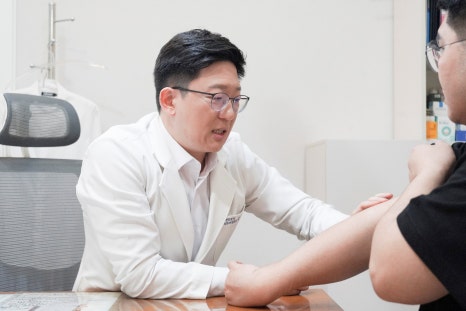
In particular, even after treatment is complete, visiting the clinic to check the skin condition can help prevent symptoms from recurring.

Psoriasis is not merely a symptom of white flaking skin or itching, but a chronic disease caused by abnormalities in the immune system and skin renewal cycle.
Therefore, rather than short-term treatment, consistent treatment and lifestyle management must go hand in hand.
By calming inflammation with ointment treatment and stabilizing the immune response within the skin through phototherapy, improvement in symptoms can be expected.
For psoriasis, persistence, along with steady management and an accurate treatment direction, is key.
To that end, it is important to undergo systematic treatment with a specialist, regularly check the skin condition, and adjust the treatment intensity and frequency according to the symptoms.
If you have any questions beyond the information above, please ask in the comments below.
We will kindly answer them.
Thank you for reading to the end.
| This post was written for informational purposes in compliance with Article 56, Paragraphs 1 to 15 of the Medical Service Act. All treatments carry a risk of side effects and complications depending on the individual. Before treatment, please be sure to have sufficient consultation with experienced medical staff before making a decision. |