If white patches suddenly appear on your face or body, anyone would feel alarmed.
At first, you might brush it off lightly, thinking, “Is my skin just dry?” or “Have I been in the sun too much?” But if the color does not return over time or the patches seem to become more distinct, you should suspect vitiligo.
Vitiligo is not simply a change in skin color. It is a chronic skin condition that develops when melanocytes are damaged due to abnormalities in the immune system.
In most cases, there is little to no itching or pain in the early stages, so treatment is often delayed. However, if that happens, the affected area can spread, making prompt diagnosis and step-by-step treatment important.
Today, I will explain what to check when vitiligo is suspected, the treatment process, and the care methods needed to help prevent recurrence.
-Today’s column outline-
-
Why does vitiligo occur?
-
Vitiligo treatment process
-
Lifestyle management points to help prevent recurrence

Why does vitiligo occur?
Vitiligo is a condition that appears when melanocytes in the skin are damaged by an immune response. Outwardly, it looks like white depigmented patches, but internally, a breakdown in immune balance is also taking place.
In the early stages, it may look like small spots or faint patches on the body, but over time the borders become more distinct and the area tends to expand.
The affected areas are usually those exposed to a lot of sunlight or areas that experience frequent friction, and because there is no special pain or itching, it is easy to leave untreated.
Therefore, rather than brushing it off as a simple change in color, it is important to get an accurate evaluation at a clinic and confirm your current condition if you notice even a slight abnormality.


Vitiligo treatment process
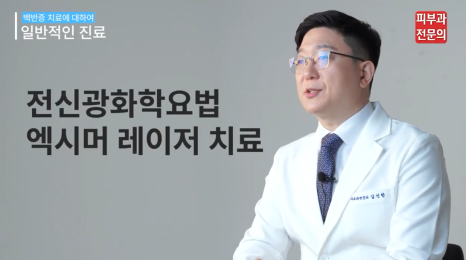
One of the most commonly used methods in the professional treatment of vitiligo is the excimer laser.
This treatment works by directly irradiating the vitiligo lesions with light of a specific wavelength, helping damaged melanocytes recover and stabilizing an overactive immune response.
Excimer laser treatment is usually planned step by step according to the size, depth, and progression speed of the lesion.
In the early stage, the laser is focused on the area where changes have appeared, helping build a foundation for color to return.
In the next stage, the intensity and frequency are adjusted while monitoring the treatment response so that pigmentation can recover naturally.
Once some color has returned, the treatment interval is gradually widened to help maintain the condition.
Laser treatment is not something that ends after just a few sessions, and the best response can be expected when treatment is carried out consistently.
Because the treatment plan changes depending on the condition of the lesion, it is safer to proceed systematically in consultation with a specialist rather than stopping treatment or adjusting the interval on your own.


Lifestyle management points to help prevent recurrence
Even if vitiligo responds well to treatment, it can reappear depending on irritation in daily life or the state of the immune system, so treatment and consistent management are essential.
After laser treatment, the skin becomes more sensitive and more easily affected by external刺激, so care should be taken to protect it.
After treatment, even minor irritation can make the skin more sensitive, so it is good to reduce irritants such as sunlight, heat, and friction, and apply moisturizer 2 to 3 times a day to keep the skin barrier strong.
Vitiligo is especially vulnerable to ultraviolet rays, so it is helpful to apply sunscreen consistently when going outside, and on days with many outdoor activities, to use a hat or parasol as well.
In addition, stress, overwork, and lack of sleep can upset immune balance and worsen symptoms, so maintaining a stable body rhythm through regular sleep, meals, and light exercise plays a major role in helping preserve the expected benefits for a longer time.
Even after symptoms improve, visiting the clinic at regular intervals to check the condition helps prevent recurrence and allows the treatment direction to be adjusted appropriately.

Vitiligo may seem like a simple loss of skin color, but behind it is a chronic condition in which immune responses and skin recovery capacity work together in complex ways.
If you receive a detailed diagnosis early and begin step-by-step treatment such as excimer laser therapy, you can prevent progression of the lesions and expect pigmentation to recover much faster.
However, in many cases, complete recovery cannot be expected through treatment alone.
Because it is also affected by small irritations in daily life and changes in the immune system, everyday care such as consistent moisturizing, sun protection, and stress management must also be carried out together.
When treatment and management are balanced, you can expect to reduce recurrence of vitiligo and maintain a stable skin condition for a longer period.
If you suspect symptoms, rather than worrying alone or leaving them untreated, please consult a specialist, establish a treatment plan suited to you, and follow it consistently.
I hope the information about vitiligo shared today was helpful to you.
If you have any questions beyond what was covered above, please leave them in the comments below.
I will respond kindly.
Thank you for reading to the end.
| This post was written for informational purposes in compliance with Article 56, Paragraphs 1 to 15 of the Medical Service Act. All treatments carry the risk of side effects and complications depending on the individual. Before treatment, please be sure to have a 충분한 consultation with medical staff who have extensive experience before making your decision. |