When white patches start to become noticeable on the skin, anyone would naturally feel anxious.
Especially in areas that are frequently exposed, such as the face or hands, the changes are more visible, which can make people self-conscious when going out and cause inconvenience in daily life.
At first, it is easy to think it is just dryness or a temporary skin change, but vitiligo is not simply a condition in which skin color becomes lighter for a short time. It is a chronic disease in which decreased melanocyte function and changes in immune responses occur together.
Even if the initially discovered lesion is small, it can spread to surrounding areas if left untreated, so it is most important to receive a diagnosis early and start appropriate treatment.
Today, I will explain vitiligo laser treatment and recurrence prevention at the Omokgyo Station vitiligo clinic.
- Vitiligo: Why should it be checked early?
- Excimer laser treatment: How is it carried out?
- Management methods to prevent recurrence


Vitiligo: Why should it be checked early?
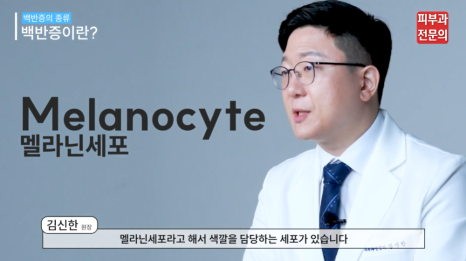
Vitiligo is a condition in which skin develops clearly defined white patches as the cells that produce melanin lose their function due to immune system responses.
Although it may look as if only the color has disappeared on the surface, in reality a complex process is occurring deep within the skin, where pigment cells and immune cells influence each other.
In the early stages, clearly defined white patches appear, and they tend to develop in areas that are frequently exposed to sunlight or friction. Another characteristic is that there is no itching or pain.
Early vitiligo lesions may appear as a slight loss of color, so they are sometimes mistaken for temporary dryness of the skin.
However, because this is a stage in which color changes and treatment response can be rapid and the possibility of recovery may be high, it is important to visit a clinic if even mild changes are suspected.

Excimer laser treatment: How is it carried out?
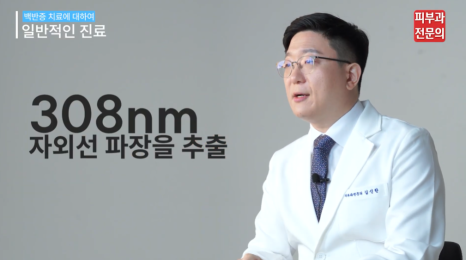
One of the most widely used methods in vitiligo treatment is the excimer laser.
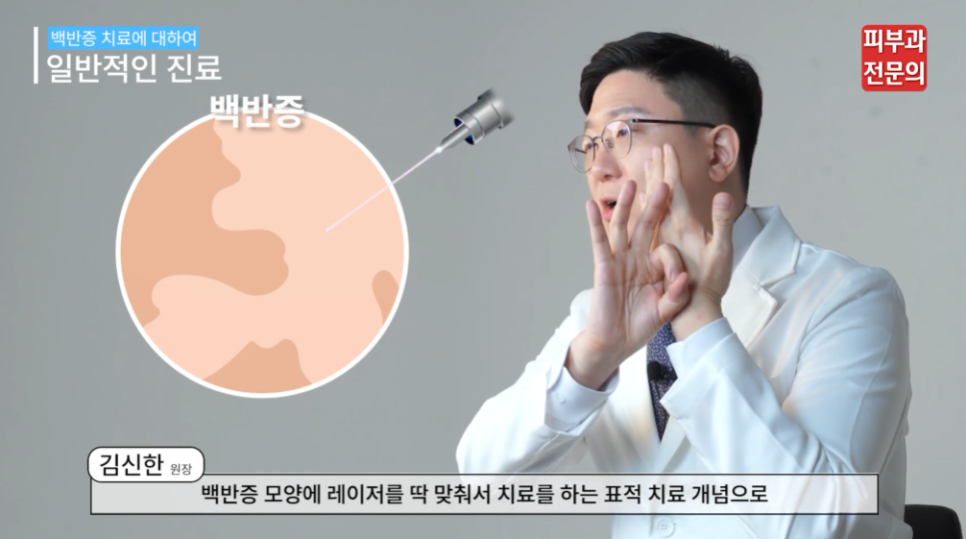
This laser treatment selectively applies light of a specific wavelength only to the lesion area, helping damaged melanocytes recover and regulating abnormally active immune responses.
The actual treatment is not carried out simply by shining the laser. It proceeds through the following stages.
✅ Initial treatment stage
The laser is applied intensively to newly formed lesions or areas with the lightest color.
This is a process that helps melanocytes produce color again, and properly capturing the early response is the key to treatment.
✅ Mid-course adjustment stage
The treatment response is checked by observing whether skin color is gradually returning and whether the lesion is spreading, and then the intensity, interval, and number of treatment sessions are adjusted.
Because the speed of response differs from person to person, regular checkups and personalized adjustments are essential.
✅ Maintenance treatment stage
Even after the lesion has recovered to some extent, treatment is continued while gradually extending the intervals.
Since vitiligo can recur even after color returns following treatment, maintenance treatment plays an important role in keeping the expected effects for a longer time.
In summary, the excimer laser has the advantage of being suitable for long-term treatment because it carries a low risk of damaging surrounding normal skin and does not involve medication burden.

Management methods to prevent recurrence
Vitiligo is not a condition that ends just because treatment goes well.
That is because management habits directly affect the frequency of recurrence.
Therefore, treatment and lifestyle management must be carried out at the same time in order to expect stable improvement.
In particular, vitiligo can react sensitively even to small stimuli, so daily management is very important.
Habitually washing the face excessively, taking showers with water that is too hot, or irritating the skin through strong friction such as rubbing the affected area forcefully can make vitiligo lesions unstable, so it is best to avoid these habits.
Ultraviolet rays are also a factor that affects vitiligo.
An appropriate amount of ultraviolet exposure may help treatment, but excessive exposure can worsen pigment damage.
So when going out, it is best to apply sunscreen carefully and avoid strong sunlight.
Vitiligo may appear to be a simple change in color, but it is a complex chronic skin disease in which the immune system and skin barrier work together.
Therefore, stable recovery can be expected only when laser treatment, moisturizing, ultraviolet control, and lifestyle management are carried out together rather than through short-term treatment alone.
I hope the information about vitiligo shared today was helpful to those preparing for vitiligo treatment.
If you have any questions beyond what was covered above, please ask in the comments below.
I will answer kindly.
Thank you for reading to the end.
| This post was written for informational purposes in compliance with Article 56, Paragraphs 1–15 of the Medical Service Act. All treatments carry a risk of side effects and complications depending on the individual. Before treatment, be sure to make a sufficient consultation with a medical professional with extensive experience before making your decision. |